이 부분은 아직 번역되지 않아 영어로 표시됩니다.
역사
Yunus Khan (1416-1487) descended from Chaghatai, Genghis Khan’s second son, and ruled Moghulistan, the eastern part of the old Chaghatai realm4,6. In 890 AH (1485), amid quarrels among the Timurid princes, Tashkent and its district passed to him5. According to Tukhtabekov, the settlement that gave him the city was brokered by Khwaja Ahrar, the Sufi master whose disciple Yunus Khan had become4. His daughter Qutlugh Nigar Khanum was the mother of Babur, the future founder of the Mughal dynasty in India4,7. Yunus Khan died in 892 AH (1487), two years after taking the city, and his son Sultan Mahmud Khan succeeded him there4,5,6.
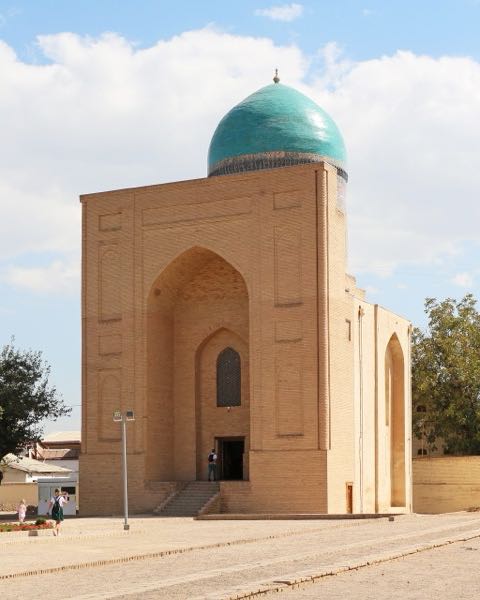
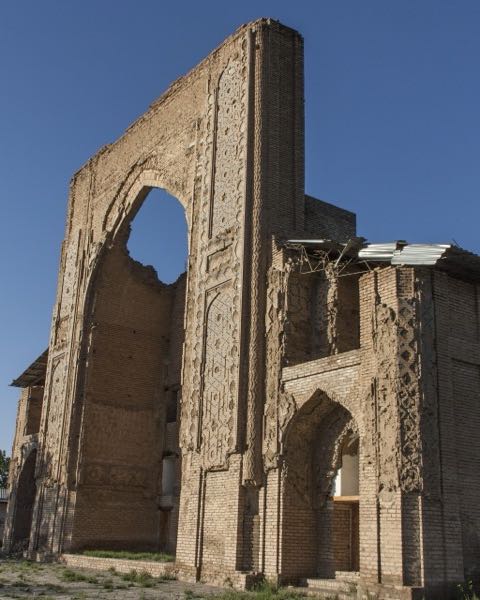
According to Tukhtabekov, he was buried with Khwaja Ahrar’s consent in the cemetery of Shaykh Khawand-i Tahur, a 14th-century Sufi of Tashkent who was Khwaja Ahrar’s ancestor on his mother’s side1,4. He adds that his son Mahmud Khan built a large mausoleum over the grave, which people called the Khan mozori, “the Khan’s tomb”4. WOSCU dates it between 1487 and 15023. In 1503 the Uzbek ruler Shaybani Khan took Tashkent5. Uzbekistan’s official tourism portal lists it as one of the three mausoleums of the Sheikhantaur ensemble, with those of Shaykh Khawand-i Tahur and Kaldyrgach-biy, and says it has been restored many times1. Tashkent’s city administration, however, states that the building holds no burial and that the grave’s location is unknown2.
건축
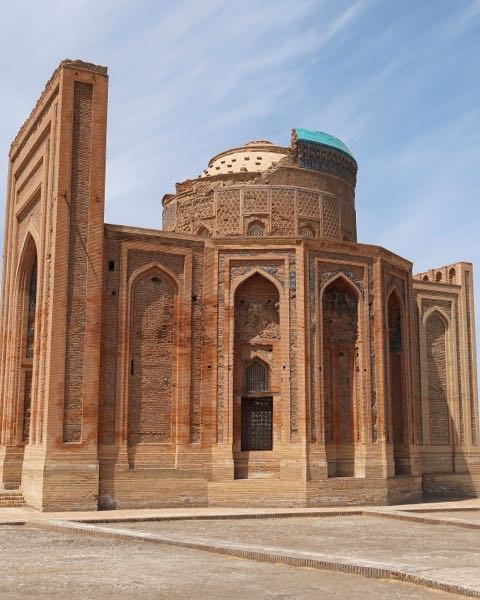
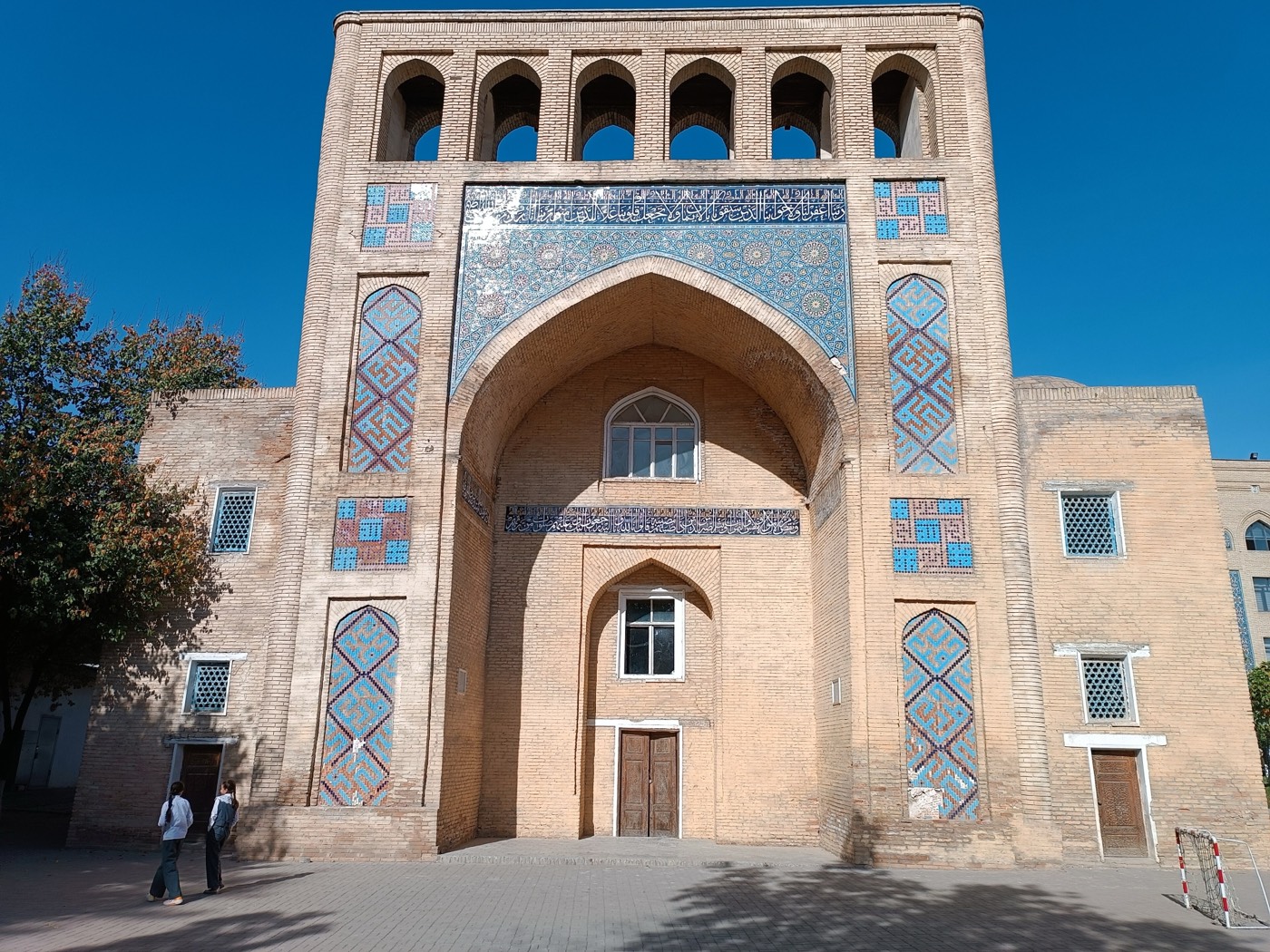
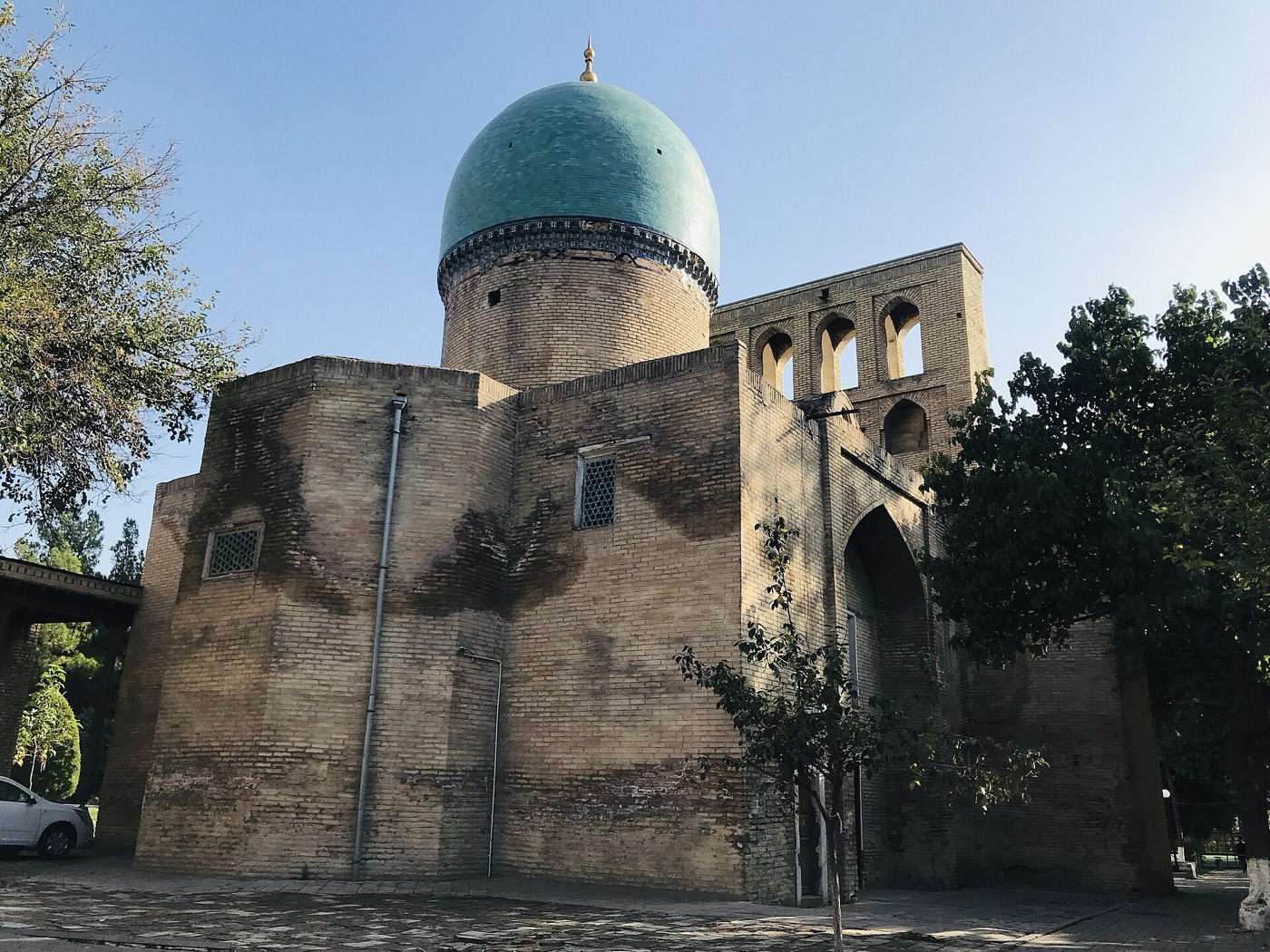
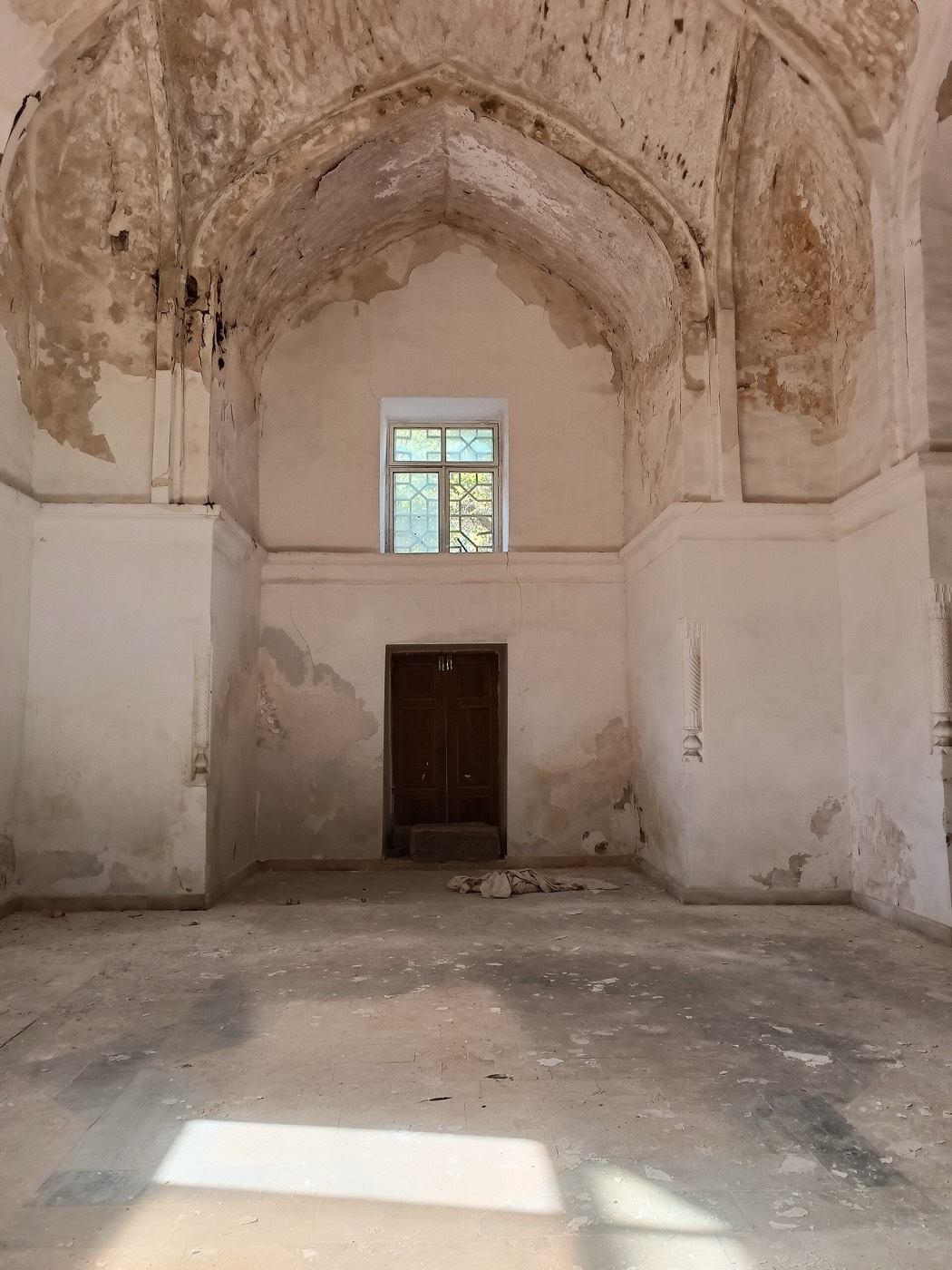
Uzbekistan’s official tourism portal describes the building as a rare type of T-shaped khanaqah (a lodge for Sufis) with a high arcaded gallery, or ravak, along the top of its façade1. It has a pointed portal and a double dome, and dervishes and pilgrims once lodged in its cells2. The entrance portal carries calligraphic inscriptions and a carved door, and a hadith in thuluth script runs across the panels of the door’s right and left leaves2,3. WOSCU counts it as one of only two monumental buildings of the 15th century that still stand in Tashkent3.
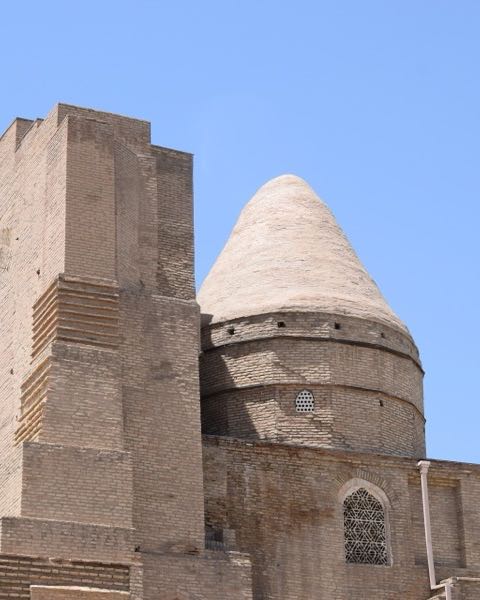
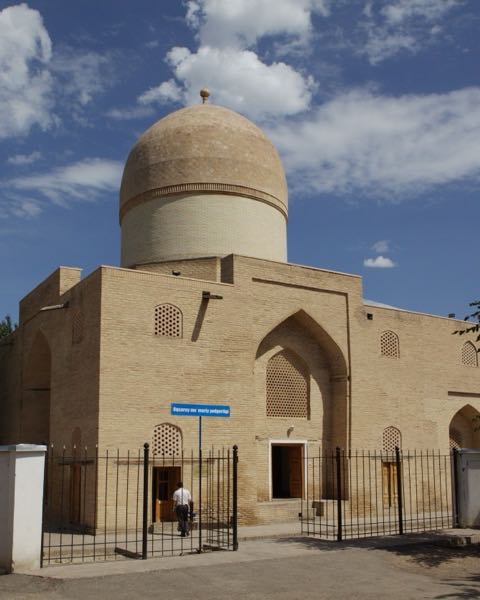
The same portal describes its neighbours in the ensemble: the two-domed tomb of Shaykh Khawand-i Tahur, said to have been built on Timur’s initiative and reshaped in the early 19th century, and the 15th-century tomb of Kaldyrgach-biy, whose pyramidal dome resembles the tombs of the Kazakh steppe1.
감상 포인트
관람 안내
- The mausoleum stands on the grounds of the Islamic University2.
- The Sheikhantaur ensemble, with the tombs of Shaykh Khawand-i Tahur and Kaldyrgach-biy, lies between Abdulla Qodiriy and Alisher Navoi streets1.
- Uzbekistan’s official tourism portal offers an online tour of the Sheikhantaur ensemble1.
공식 정보: Grounds of the Islamic University on Abdulla Qodiriy Street; the site is described by the Tashkent city administration and by Uzbekistan’s official tourism portal길찾기OpenStreetMap에서 열기타슈켄트 가이드 투어