이 부분은 아직 번역되지 않아 영어로 표시됩니다.
역사
Qalhat, about 20 km north of Sur, developed between the 11th and 15th centuries into a major port of the east Arabian coast under the princes of Hormuz1. Around 1300 the governor Ayaz divided his time between Hormuz and Qalhat, which his wife Maryam ruled in his absence; she went on ruling after his death, until at least 13192,5. A note in the Hakluyt Society edition of Ibn Battuta dates Ayaz's death to 1311/126. Ibn Battuta described Qalhat's mosque, its walls tiled with qashani, and wrote that it was built by 'the saintly woman Bibi Maryam'6. Excavations in 2008-2010 uncovered this Great Mosque and dated it to around 13005.
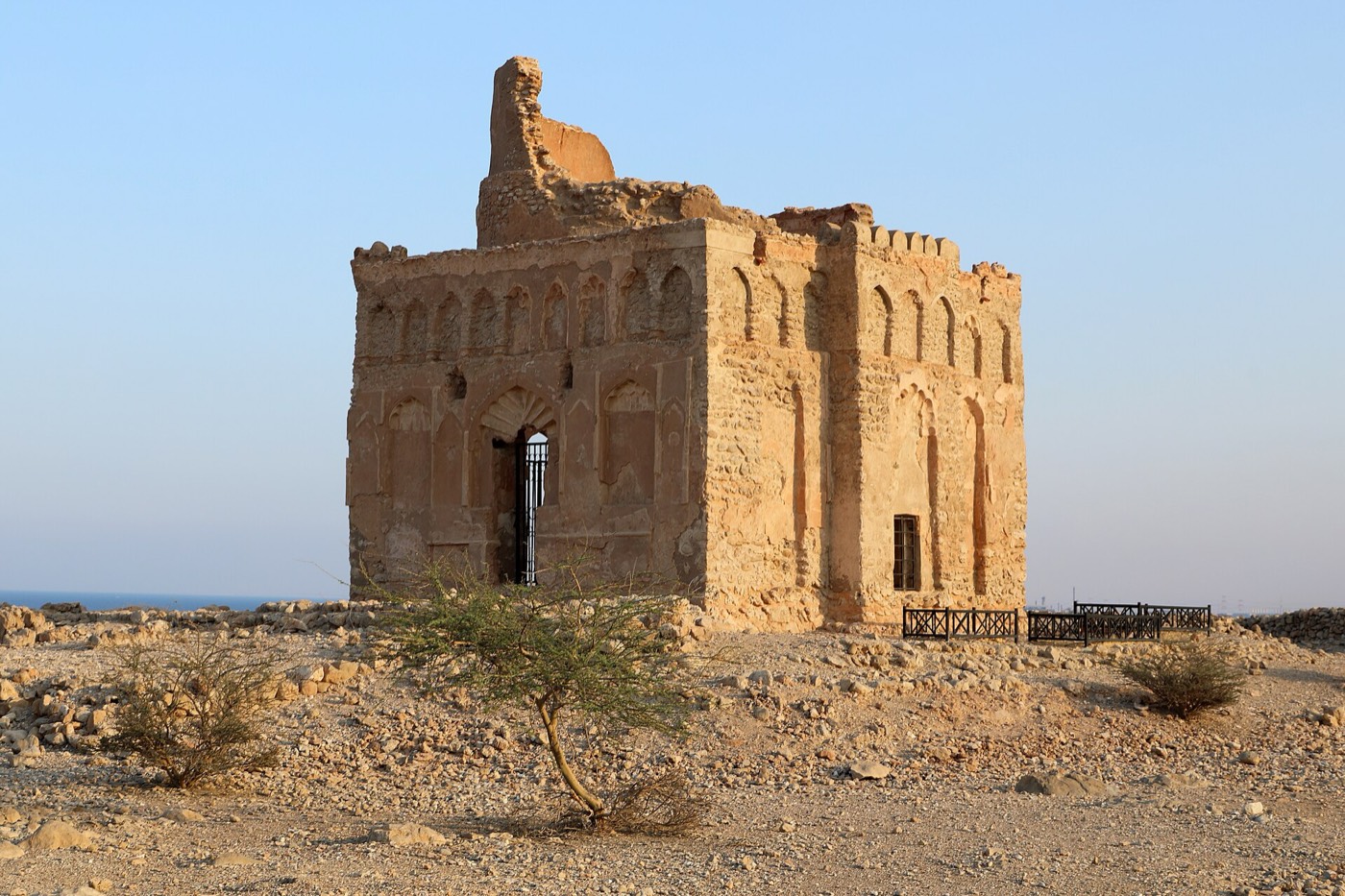
Rougeulle's study makes the mausoleum contemporary with the Great Mosque: Bibi Maryam commissioned it for her own remains and perhaps Ayaz's, a reading supported by a 14th-century incense burner shaped like the building and inscribed with her name3,4. Its date, about 1300-1320, is thus estimated from the mosque's date and her years of rule2,5,6. ICOMOS notes a report that she built it for her late husband2. The Portuguese sacked and burned Qalhat in 1508; the city was abandoned later that century1,2,5. In 1835 J. R. Wellsted found only this building, which he took for a small mosque, in tolerable preservation3,7. Oman's heritage ministry restored it in 2005-2006; UNESCO inscribed the city in 20181,3.
건축
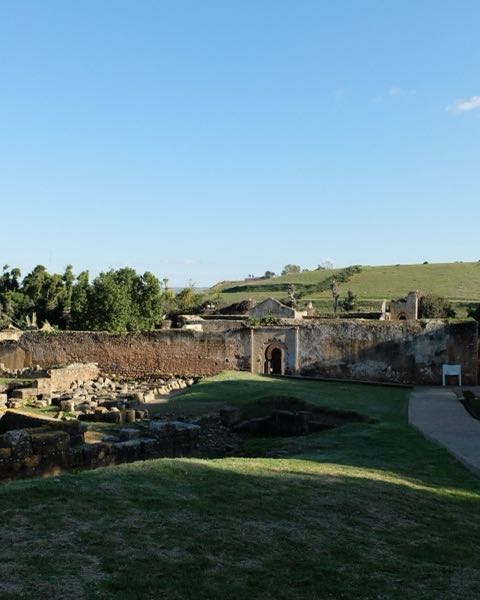
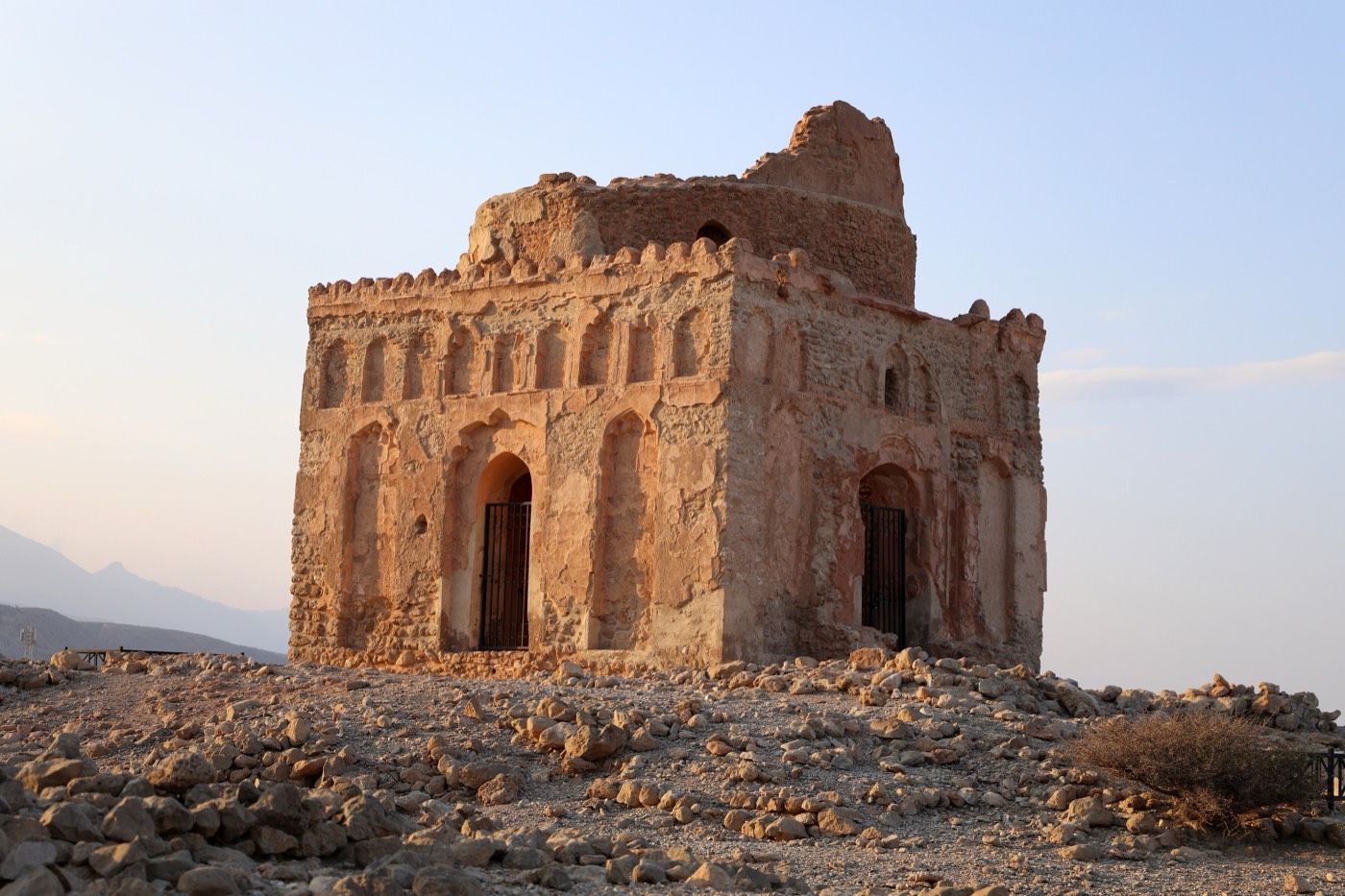
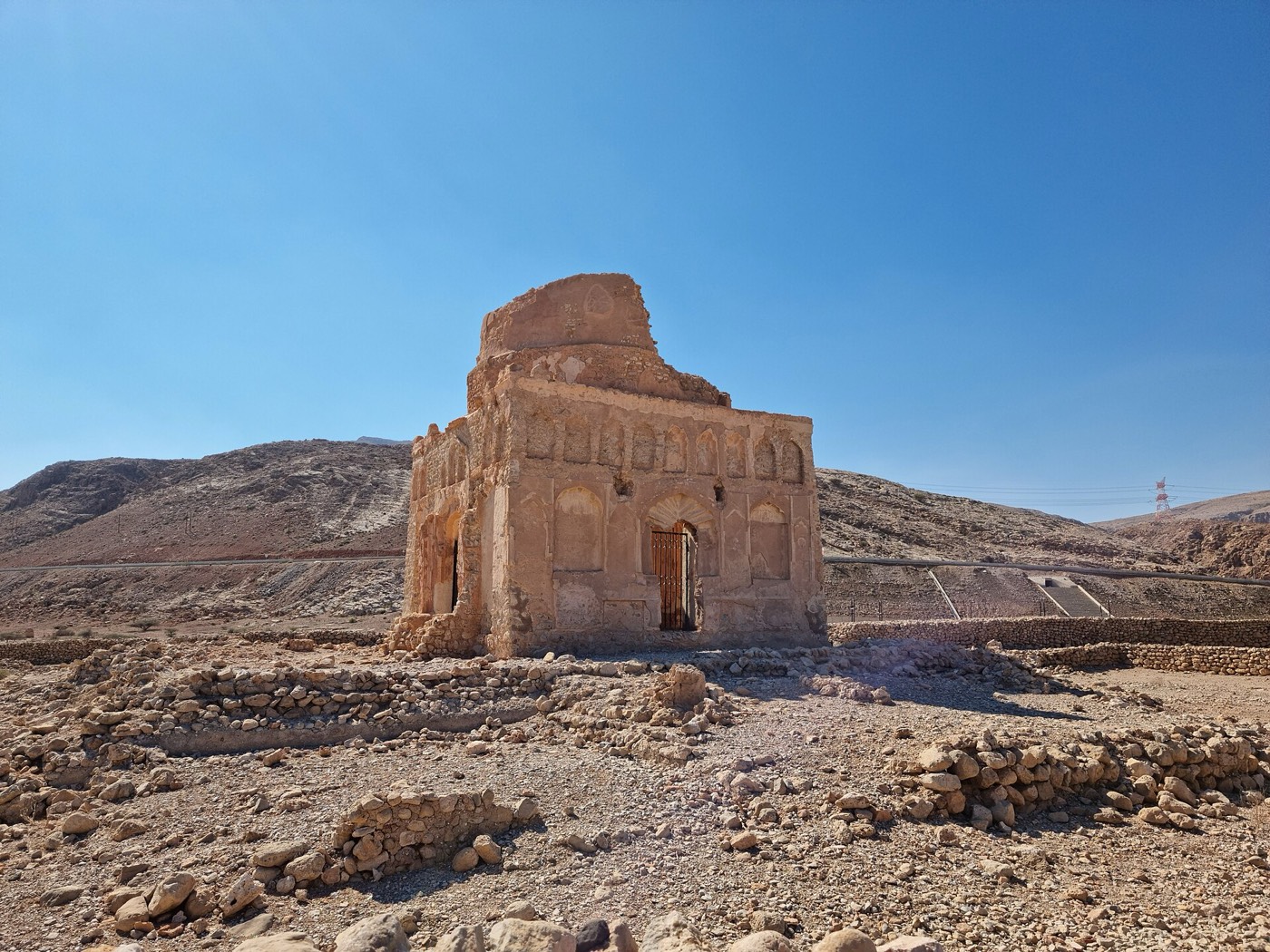
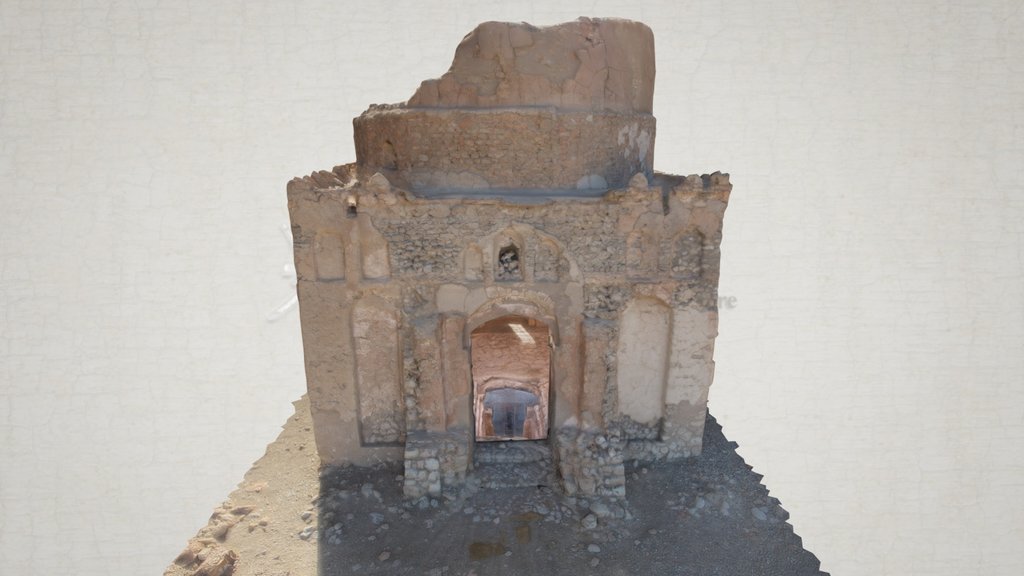
The mausoleum stands at the foot of the mountain beside the old coastal track from Sur to Qurayyat, a stop for travellers on that route; the ruins of the city stretch from it to the shore, and an inner wall separates it from the rest of the site3,4. It is built of coral blocks, with plaster and ornamented stucco decoration inside8. Rougeulle stresses its unique character: a stone building whose design draws on Iranian or Central Asian models of a relatively late date4. Photogrammetry by Iconem, published in her book, records the facades and a crypt beneath the chamber, and drawings by P. Anselm propose a tentative restitution of the facades and of the inner decoration3.
A 14th-century incense burner made in the shape of the mausoleum carries the name of Maryam on its dome3. A review of Rougeulle's book describes it as probably an Iranian piece in siliceous paste (stone-paste), made to commemorate a pilgrimage to the tomb or intended for distinguished visitors4. In 2018 ICOMOS judged the mausoleum's condition fairly good, while criticising the reconstruction of two smaller mausoleums elsewhere on the site2.
내부
In 1835 Wellsted found the interior covered with glazed tiles of several colours bearing Qur'anic phrases in relief, and noted writing that suggested visits by Indian Muslims3,7. Rougeulle records remains of this decoration on the south wall: a vertical frieze of star and cross tiles on the east jamb of the door and, west of the door, the imprints of a star-and-cross mosaic under a horizontal frieze of square tiles3. The photogrammetric east-west section in her book shows the inner north wall and the crypt below the chamber3.
감상 포인트
- One of the few buildings still standing in the 35-hectare ruined city of Qalhat1,4.
- Remains and imprints of star and cross glazed tiles around the south door3.
- The crypt beneath the main chamber, shown in the photogrammetric section published by Rougeulle3.
- Its setting at the foot of the mountain, with the ruined city stretching down to the sea3.
관람 안내
- The ancient city is protected as a national cultural heritage site under Royal Decree 6/80, with fencing and guards1.
- At inscription in 2018 UNESCO reported the site closed to visitors for excavation and conservation, with visitor facilities still to be planned; check current access with the ministry1.
- Before the closure, residents of the neighbouring village of Qalhat, for whom it is a shrine, looked after the area around the mausoleum; ICOMOS called for this guardianship to be revived1,2.
공식 정보: Ministry of Heritage and Tourism of the Sultanate of Oman (Ministry of Heritage and Culture until 2020), through its Directorate General of Archaeology (as described by UNESCO)길찾기OpenStreetMap에서 열기칼하트 가이드 투어