이 부분은 아직 번역되지 않아 영어로 표시됩니다.
역사
Makli is a plateau about 6.5 km long near the apex of the Indus delta, beside Thatta, a former capital1. UNESCO counts about half a million tombs and graves over some 10 km², built between the 14th and 18th centuries for kings, queens, governors, saints and scholars1. Pakistan's Department of Archaeology and Museums (DOAM) traces these centuries through the Samma (1340-1520), Arghun (1520-1555), Tarkhan (1555-1592) and Mughal (1591-1739) periods5. Jam Nizamuddin II, or Jam Nindo, ruled Sindh from Thatta between 1461 and 1508 or 1509; Sindh's antiquities directorate calls him the most famous Samma ruler1,6. The DOAM says work on his tomb began in 1509, a year after his death3.
Isa Khan Tarkhan II, a grandson of Isa Khan Tarkhan I, who had ruled lower Sindh independently, governed Thatta under the Mughal emperor Shah Jahan; the DOAM gives his term as 1627-16444. He is said to have built his own mausoleum, which UNESCO dates, with the tomb of his father Jan Baba, to before 16441,4. DOAM records give his death as either 1644 or 16514,7. UNESCO's statement of Outstanding Universal Value calls for stabilising Jam Nizamuddin II's tomb1. UNESCO's 2023 report notes that the August 2022 monsoon rains severely affected the site, that an action plan for that tomb had been prepared, and that no major conservation work had been done on Isa Khan Tarkhan II's mausoleum13.
건축
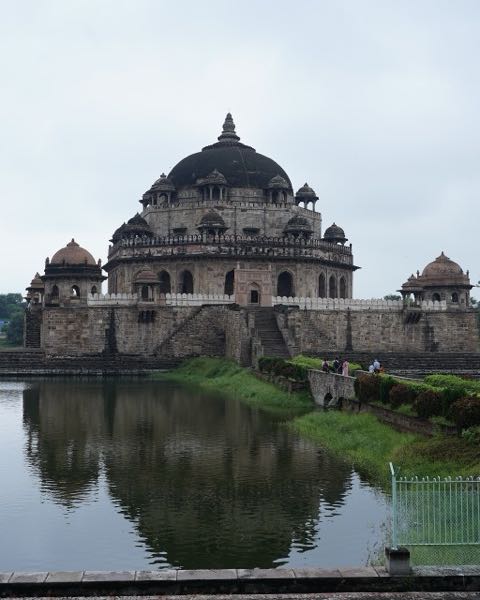
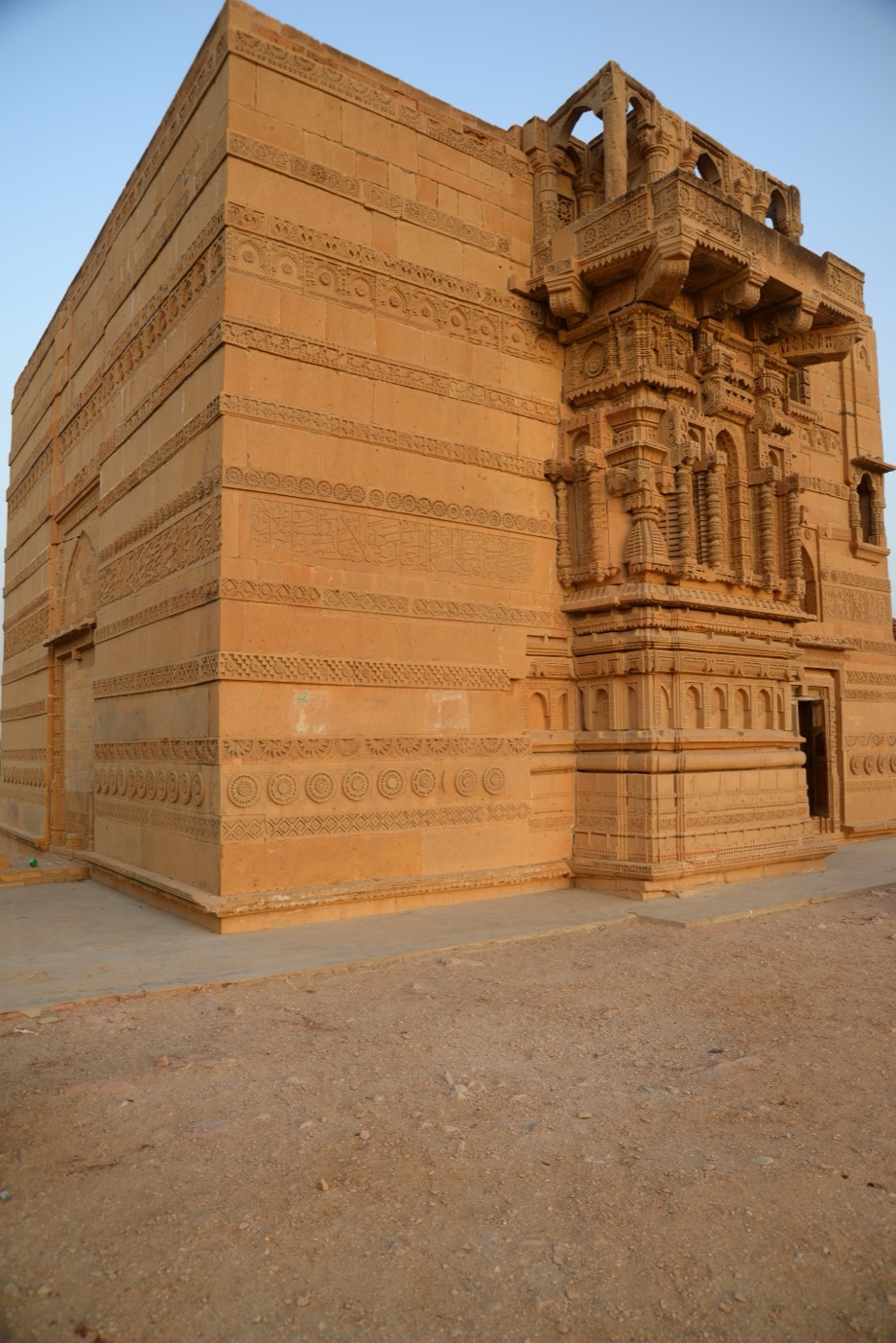
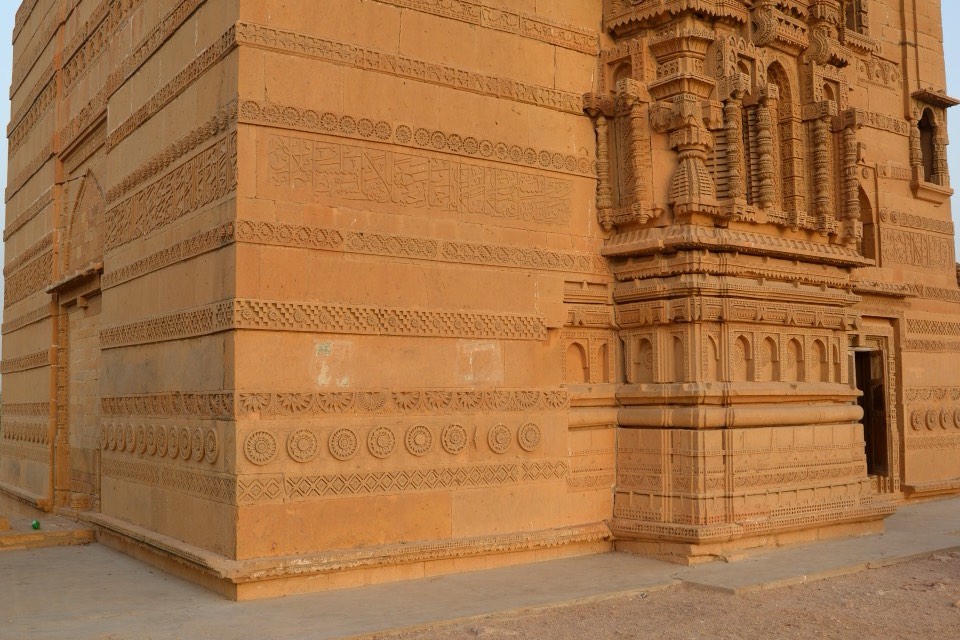
UNESCO describes Makli's monuments as a fusion of influences, among them Hindu architecture of the Gujarat style and Mughal imperial architecture, and credits Makli with an original kind of stone decoration, perhaps modelled on painted and glazed tiles1. Jam Nizamuddin II's tomb is a square building of stone masonry whose outer walls carry twelve carved bands of diamonds, lotuses, Quranic inscriptions and geometric patterns2,3. A joint UNESCO/ICOMOS mission in May 2012 credited it with 'the highest quality three dimensional carved sandstone surfaces'14. The DOAM likens the carving to 15th-century Gujarat and suggests that craftsmen from Gujarat built the tomb2. Sindh's antiquities directorate notes a thuluth inscription band beside a band of carved geese, and small temple-style spires (shikharas) at the corners6. A carved balcony projecting from the west side corresponds to the mihrab inside2.
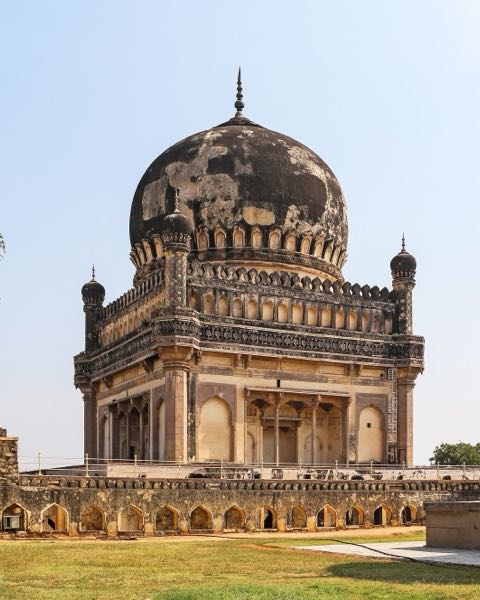
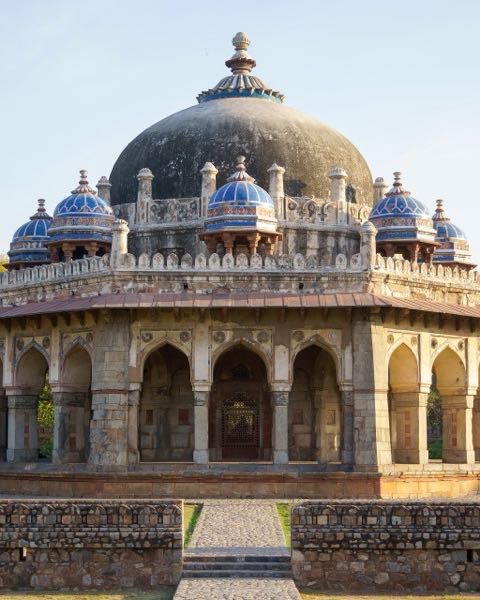
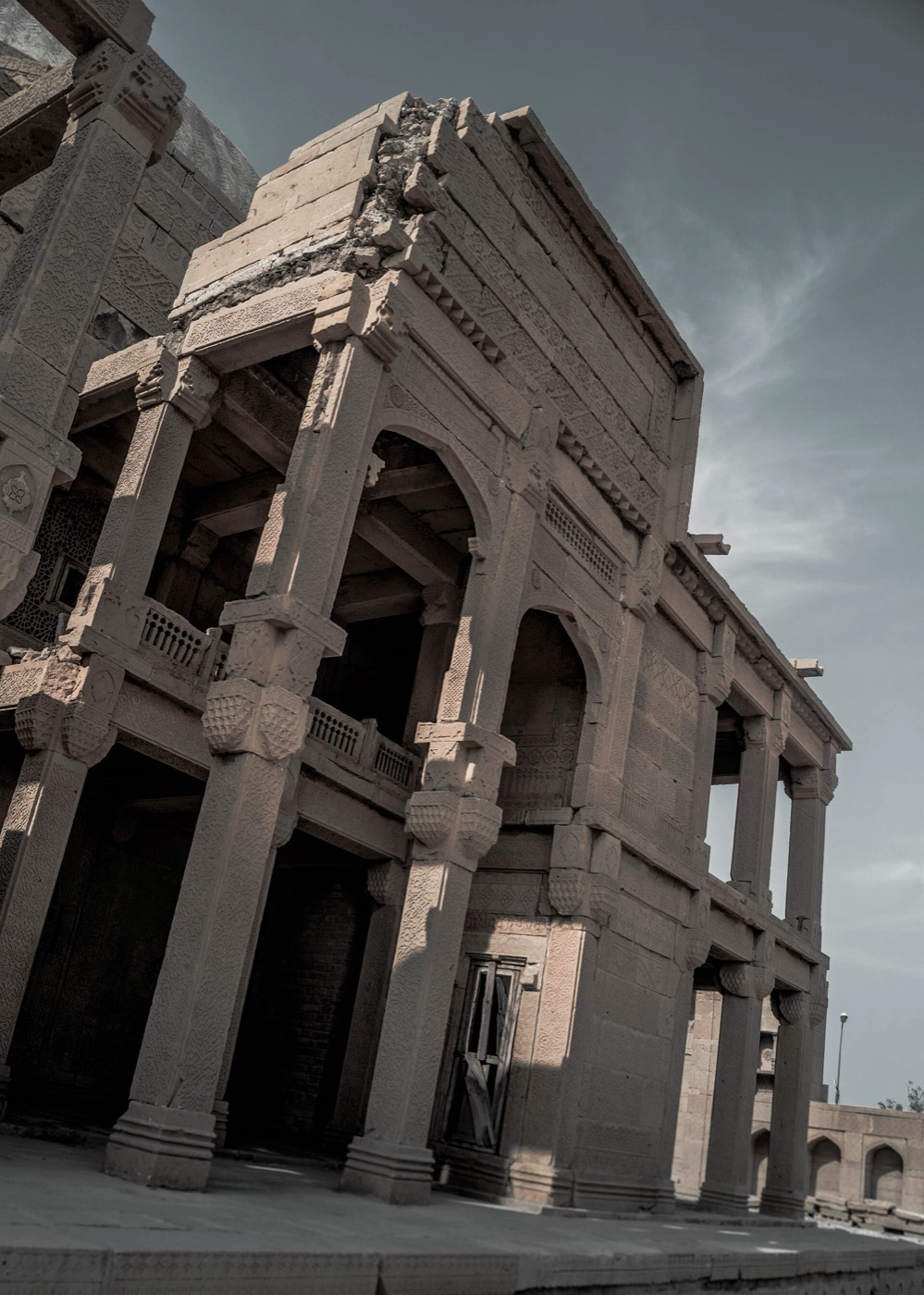
Isa Khan Tarkhan II's tomb stands in the middle of a square courtyard enclosed by high stone walls4. The two-storey building of yellow sandstone covers 455 m² on a high plinth, with open verandahs on all four sides at both levels, carried on square stone pillars with honeycomb capitals4. The square tomb chamber in the centre is roofed by a dome that the DOAM describes as a large true dome, possibly among the first built in stone4,7. Carved tracery covers the inner and outer surfaces, and the mihrab recess on the west side is faced with carved stone panels inside and out4. Across a road to the north, the tomb of Diwan Shurfa Khan (d. 1638) is built of brick and faced with glazed tiles; UNESCO calls it the most colourful at Makli1,10.
내부
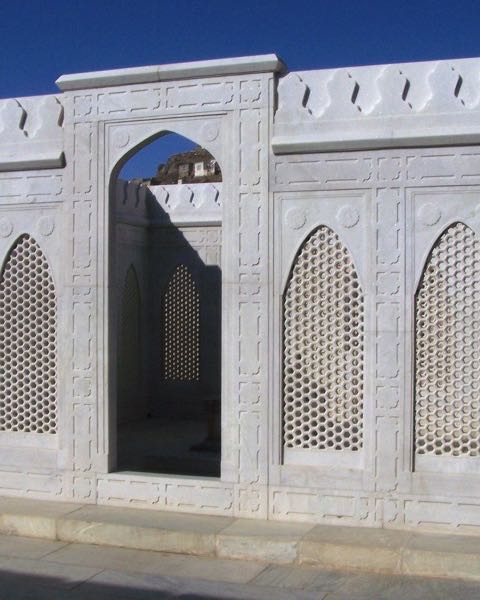
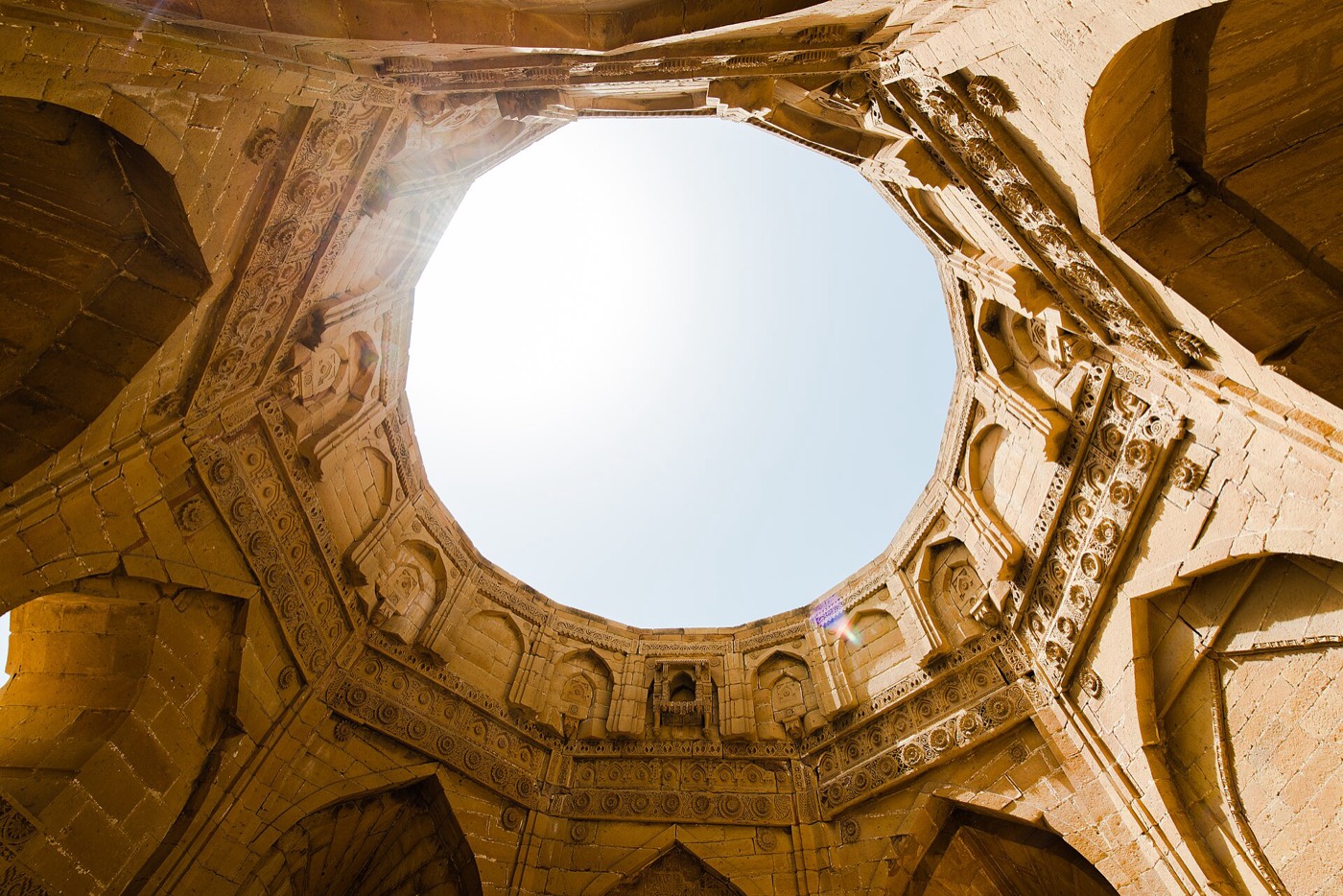
Because the dome was never built, the chamber of Jam Nizamuddin II's tomb is open to the sky2. Its mihrab is carved with finely cut bands of Arabic inscription6. In Isa Khan Tarkhan II's tomb, three doorways lead into the square chamber; the two side ones are screened with stone grilles (jalis)4. Ten graves lie inside, their stone cenotaphs set on a long central platform and carved with inscriptions and floral and geometric designs4. Staircases in the eastern gallery climb to the upper verandah, and an enclosure at the southern corner of the courtyard holds three graves of the zenana, the women of the household4.
감상 포인트
- The carved balcony projecting from the west side of Jam Nizamuddin II's tomb, matching the mihrab inside2.
- The twelve carved bands on the same walls: diamonds, lotuses, sunflowers and Quranic inscriptions2.
- A frieze of carved geese beside a thuluth inscription, and small temple-style spires at the corners6.
- Isa Khan Tarkhan II's two-storey verandahs on square stone pillars with honeycomb capitals4.
- Isa Khan Tarkhan II's stone dome, which the DOAM calls possibly among the first true domes in stone7.
관람 안내
- Jam Nizamuddin II's tomb is among the Samma monuments on the northern fringe of the necropolis; Isa Khan Tarkhan II's tomb is on the southern fringe, about 2.5 km away2,4,8,12.
- Some graves on the hill are active shrines, such as the dargah of Abdullah Ashabi beside the tomb of Isa Khan Tarkhan I; UNESCO notes that the management plan monitors religious rituals at popular shrines11,13.
- In 2021-2022 Sindh's antiquities directorate ran the 'We Connect Makli' project to train local first aiders for floods and other emergencies, within ICCROM's First Aid and Resilience programme and with the ALIPH Foundation and the Egyptian Heritage Rescue Foundation9,13.
공식 정보: Culture, Tourism, Antiquities and Archives Department, Government of Sindh (Directorate General of Antiquities and Archaeology); UNESCO names Sindh's Culture Department as responsible for the property길찾기OpenStreetMap에서 열기타타 가이드 투어