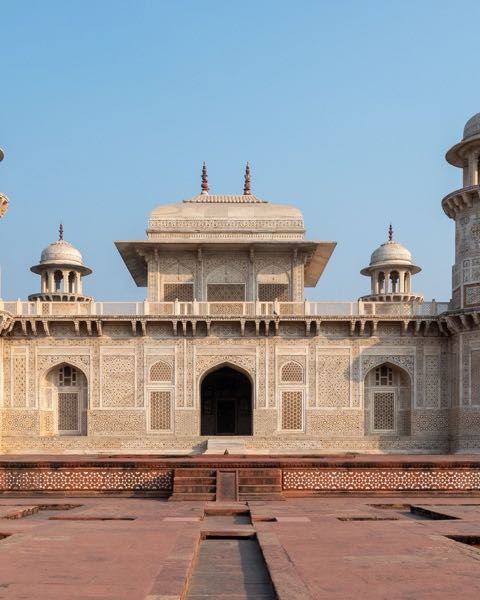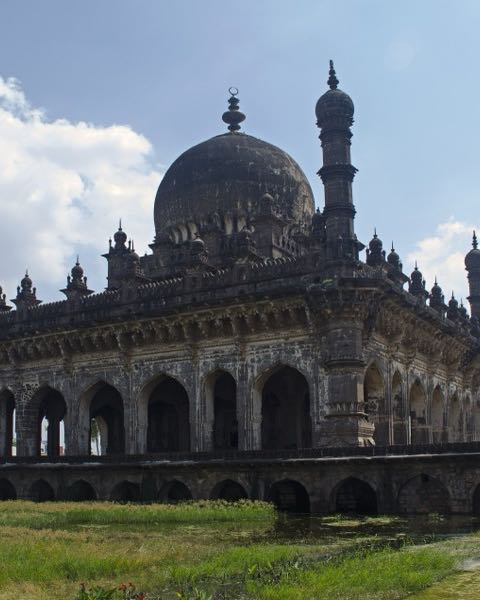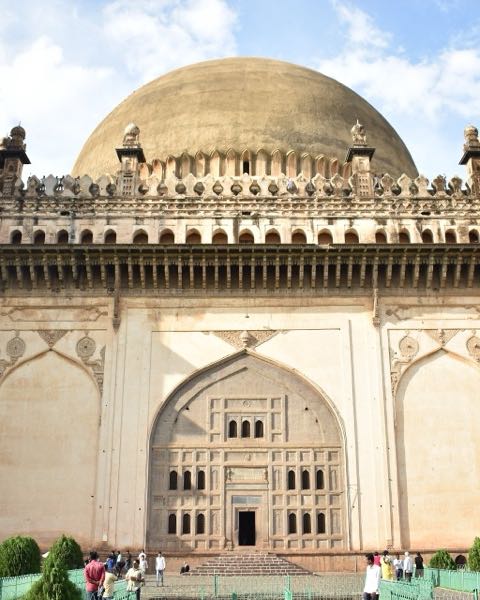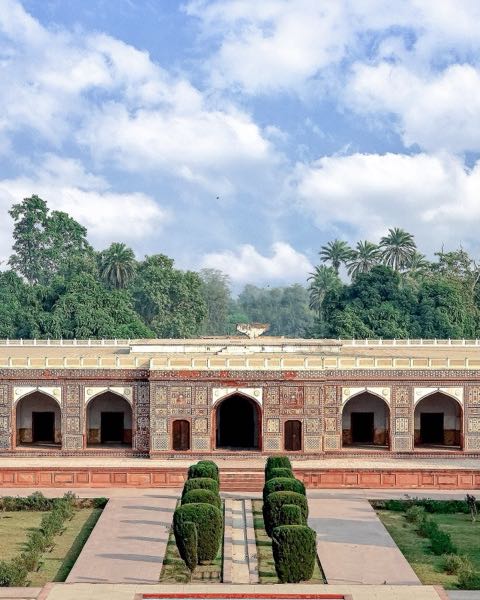
这部分尚未翻译,暂以英文显示。
历史
Mumtaz Mahal, born Arjumand Banu Begum in 1593, was Shah Jahan’s queen and a niece of Empress Nur Jahan2. She died in 1631 at Burhanpur while giving birth to her fourteenth child; her body was buried temporarily in the Zainabad garden and brought to Agra six months later2. Shah Jahan, who reigned from 1628 to 1658, built the tomb in her memory on the right bank of the Yamuna, on land acquired from the Kachhwaha family in exchange for four mansions, as the court historian Abdul Hamid Lahauri records2. According to UNESCO, construction began in 1632 and the mausoleum was completed in 16481.
The mosque, guest house and main gateway, with the outer courtyard and its cloisters, followed and were completed in 16531. Artisans of many crafts were brought from across the empire, Central Asia and Iran; UNESCO names Ustad Ahmad Lahori as the main architect, while the official Taj Mahal website notes that contemporary sources credit a team and rarely name its members1,2,4. Shah Jahan died in 1666 and was buried beside Mumtaz Mahal3. The off-centre placing of his cenotaph later fed a rumour that he had planned his own black-marble tomb across the Yamuna3. Inscribed by UNESCO in 1983, the Taj is protected from air pollution by a regulated zone of 10,400 km² around it1.
建筑
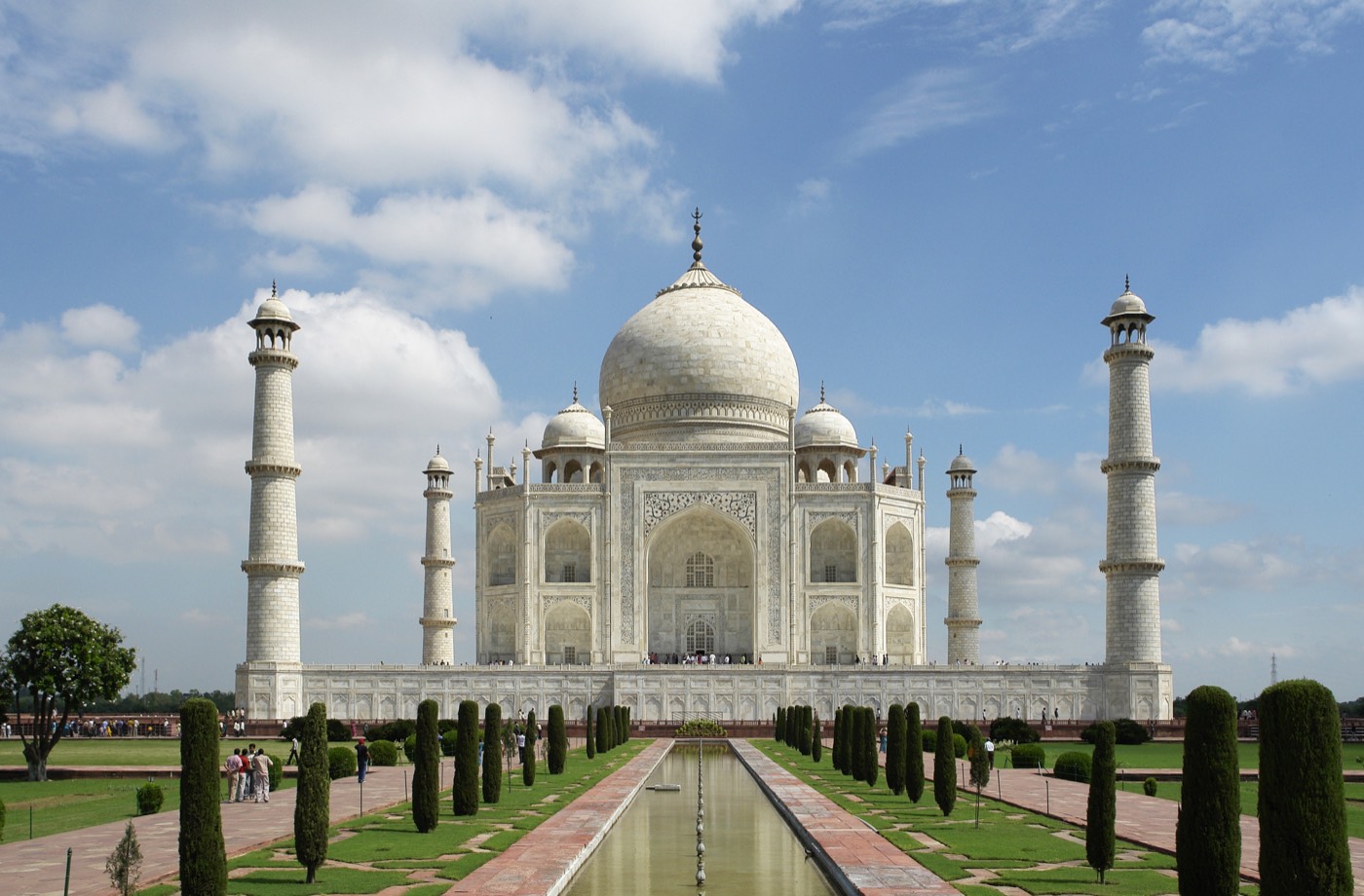
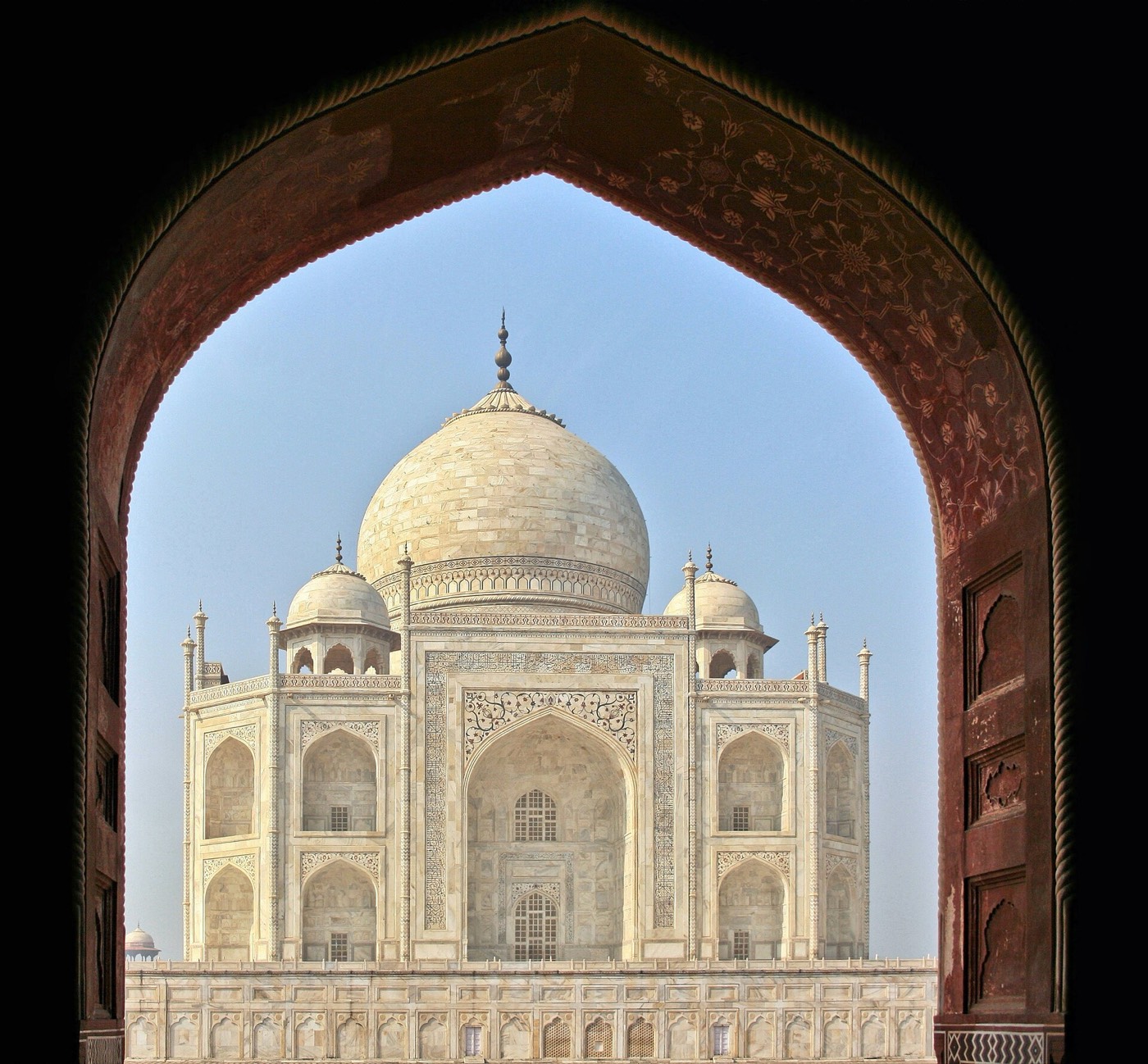
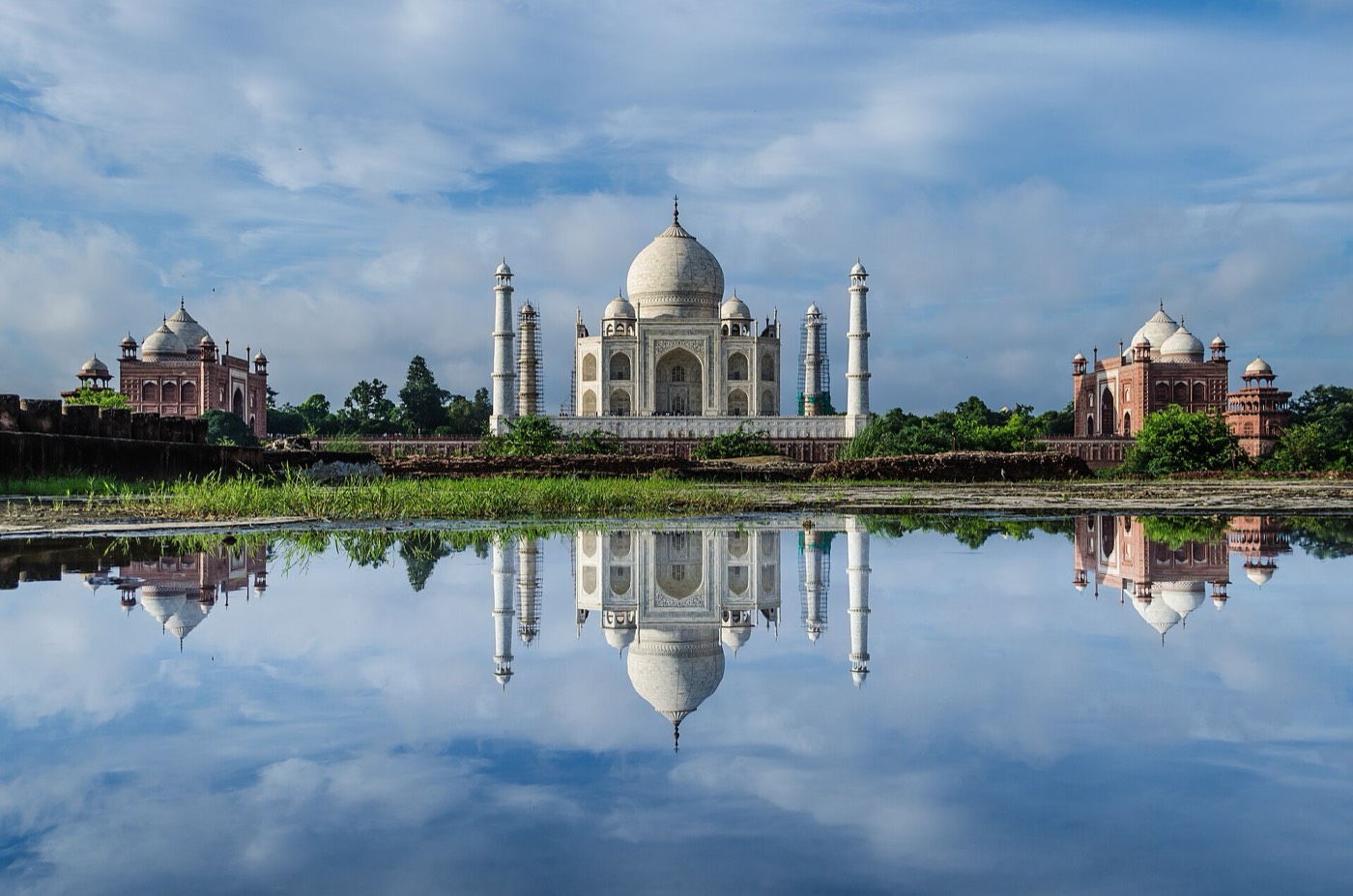
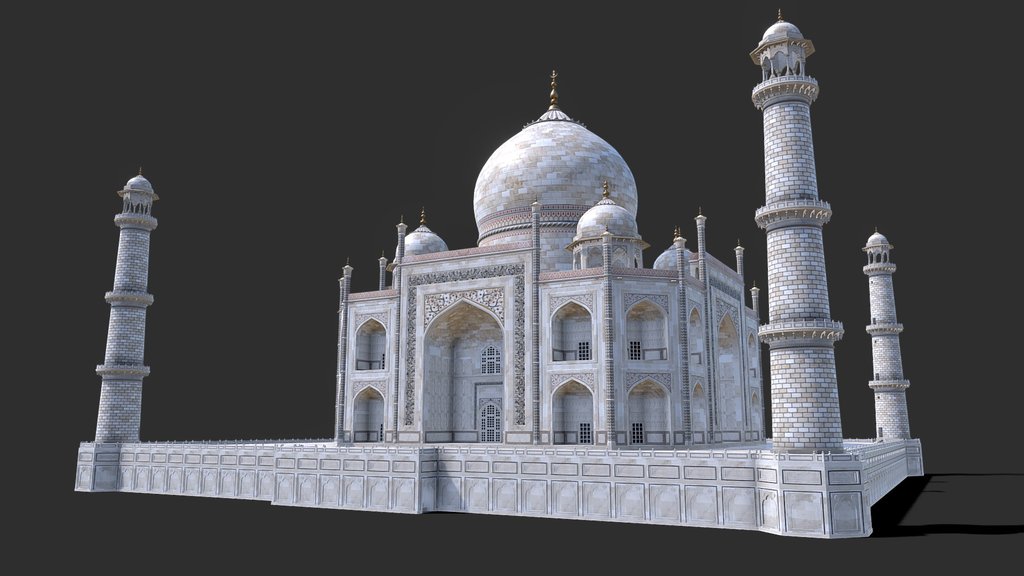
The complex descends in terraces towards the river: a forecourt with the main gate, then a square garden divided into four quarters by broad water channels and walkways and subdivided again, on the Timurid-Persian scheme of the walled garden1,2. Unusually, the tomb stands at the river end of the garden rather than at its centre, which adds depth to the view1. It rises from a square marble platform whose corners carry four free-standing minarets, then new to Mughal architecture1,5. The tomb is square with chamfered corners; at its centre is an octagonal chamber surrounded by portal halls and four corner rooms, a plan repeated on the upper floor1.
The tomb is built of brick in lime mortar faced with white marble from Makrana in Rajasthan, while the mosque to the west and its identical counterpart, the guest house to the east, are of red sandstone1,2. Its marble surfaces carry flowers carved in relief or inlaid in semi-precious stones, and Qur’anic inscriptions in black marble signed by the calligrapher Amanat Khan1,6. Inside, an octagonal marble screen, installed in 1643 to replace one of enamelled gold, encloses the cenotaphs of Mumtaz Mahal at the centre and Shah Jahan to her west; the actual graves lie in a crypt below1,3.
观赏要点
- The tomb set at the river end of the garden rather than its centre, deepening the view1.
- Four free-standing minarets at the platform’s corners, each more than 130 feet (about 40 m) tall1,5.
- Flowers carved in marble relief and inlaid in semi-precious stones on dados and arch spandrels1,6.
- Black-marble Qur’anic inscriptions framing the arches, signed by the calligrapher Amanat Khan6.
- The red sandstone mosque and its mirror-image guest house flanking the white tomb1.
参观信息
- The Taj Mahal is closed to general visitors on Fridays2,8.
- Photography is not allowed inside the main mausoleum7.
- A site museum is housed in the western Naubat Khana within the complex2.
官方信息: Official Taj Mahal website (Department of Tourism, Government of Uttar Pradesh); the monument is managed by the Archaeological Survey of India路线在 OpenStreetMap 中打开阿格拉导览游