这部分尚未翻译,暂以英文显示。
历史
Tirana grew from a village into a town in the 17th century, and TDV names Sulejman Bargjini, who had buildings erected there in 1614, as its founder4. Shortly before 1800 the Toptani family of Krujë settled in Tirana, which led to a long war between Kapllan Pasha of the Toptani family, the Bargjini family and İbrahim Pasha Bushati of Shkodër4. The Municipality of Tirana calls Kapllan Pasha one of the town’s rulers and dates his tomb to the early 19th century, probably 1820-18302. It places the tomb in the group of monumental graves of Tirana’s first mosque, a group that had six other tombs of the same type in different sizes2.
According to the municipality, Kapllan Pasha was buried here in the 19th century, but his remains were later moved to Istanbul2. An inscription naming him is now illegible except for a date read as 1326 AH2. The mosque beside the tomb was destroyed in the Second World War, and TDV records that Tirana’s Old Mosque, dated 1614, was destroyed in the fighting between German forces and communist partisans in October-November 19442,4. The tomb survived, and a decision of the Institute of Sciences published on 16 October 1948 declared it a cultural monument, followed by further listing acts in 1963 and 1973; it is a first-category monument with a protected zone of 5 m around it1.
建筑
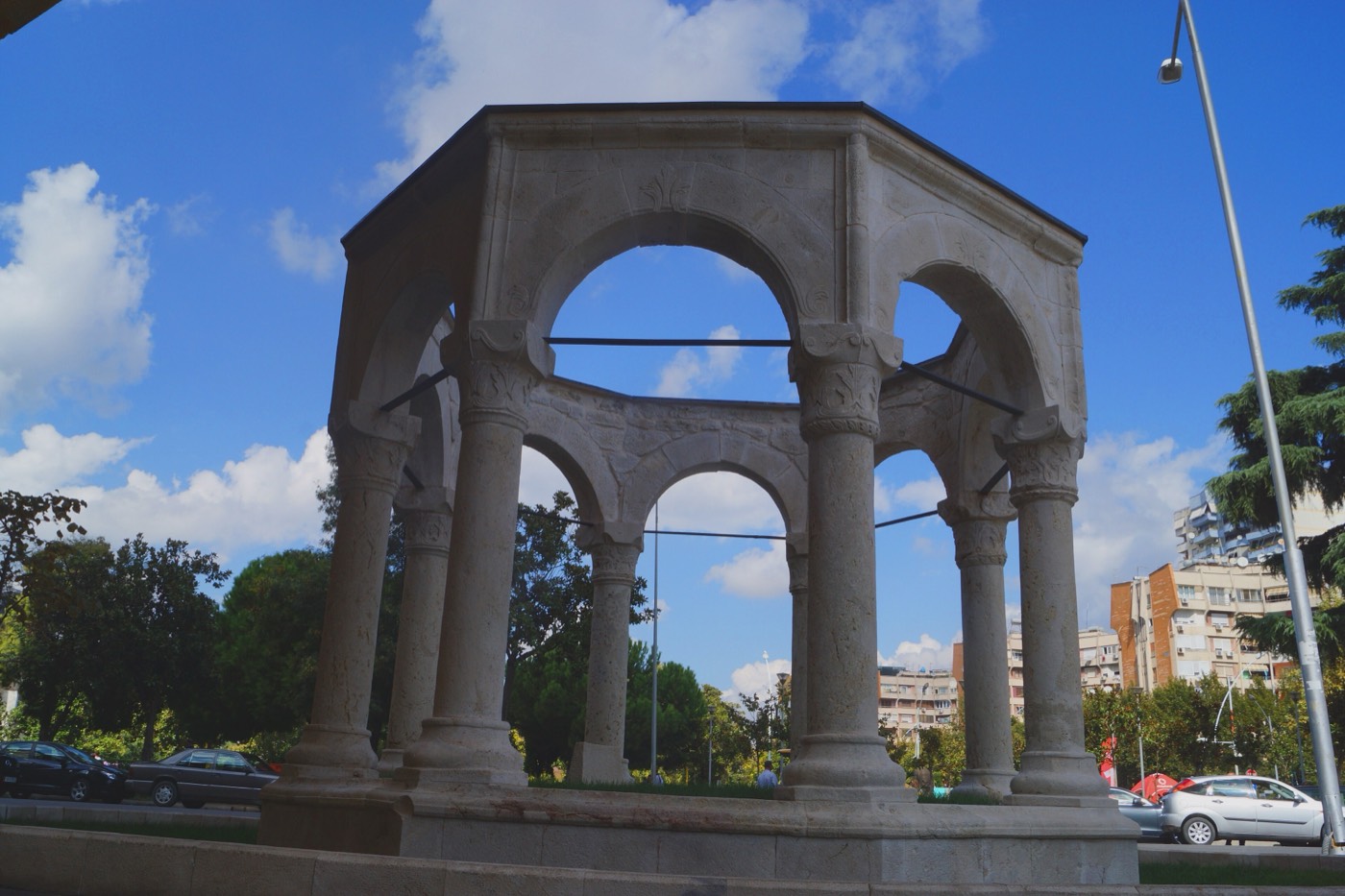
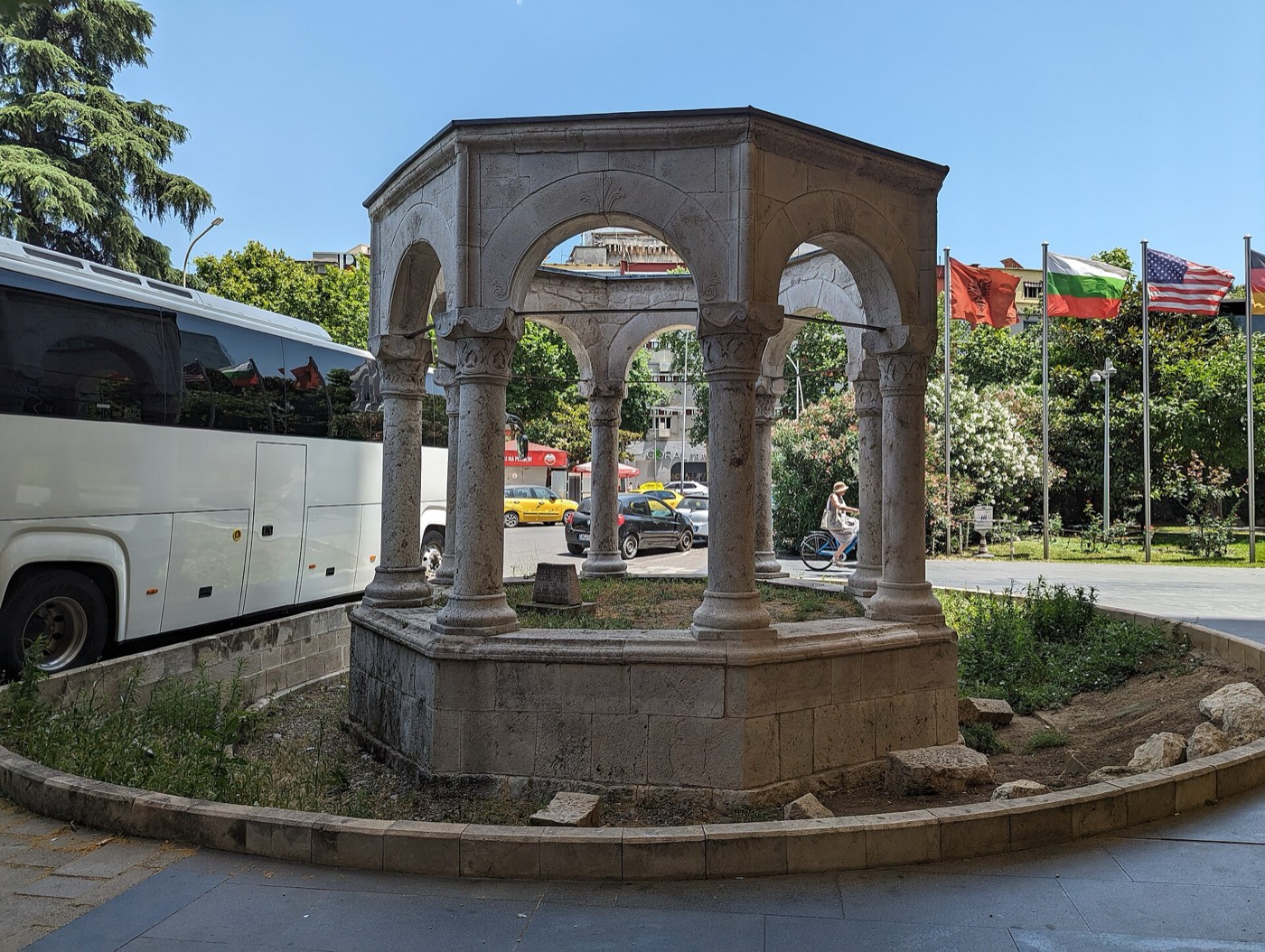
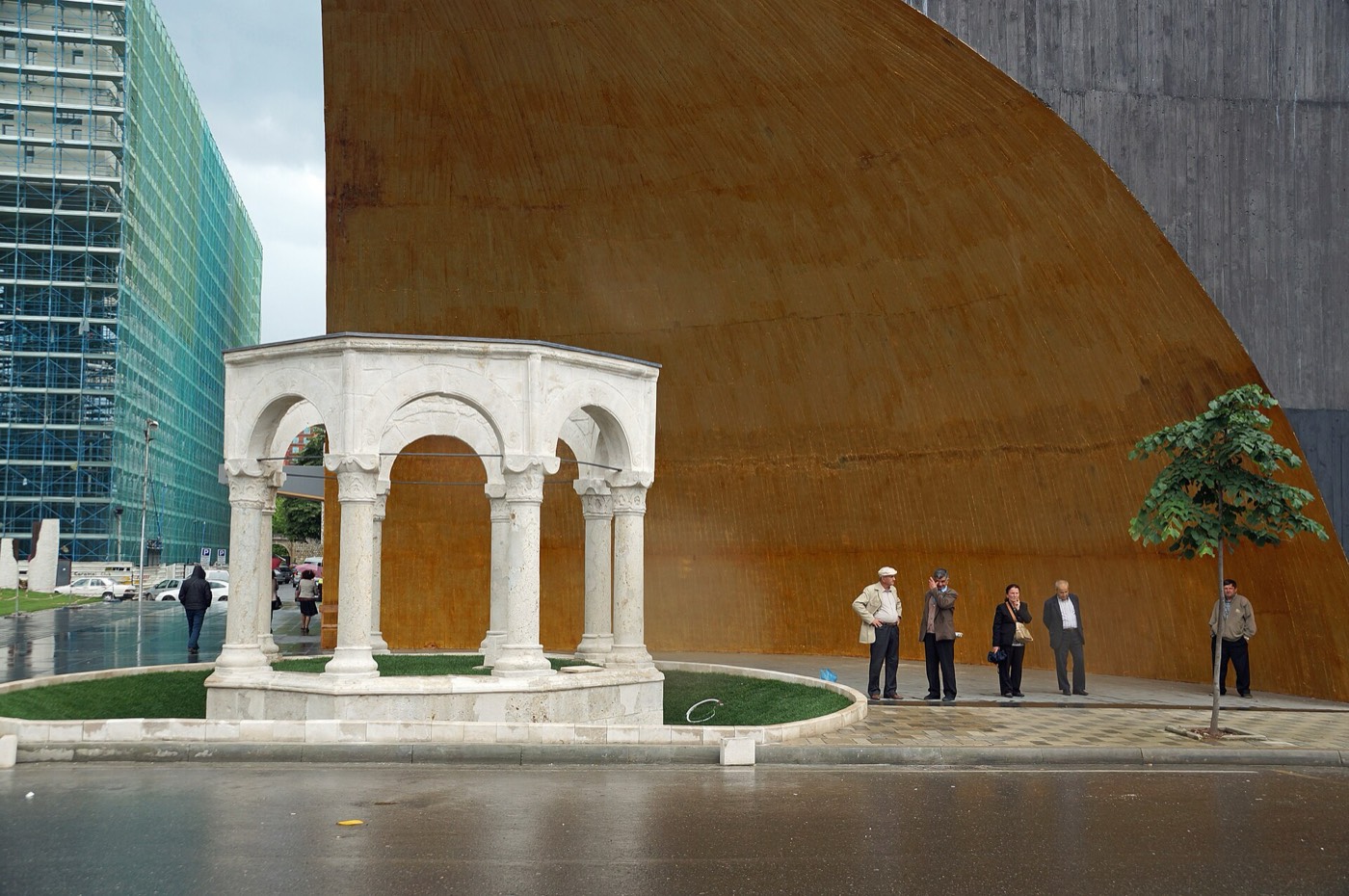
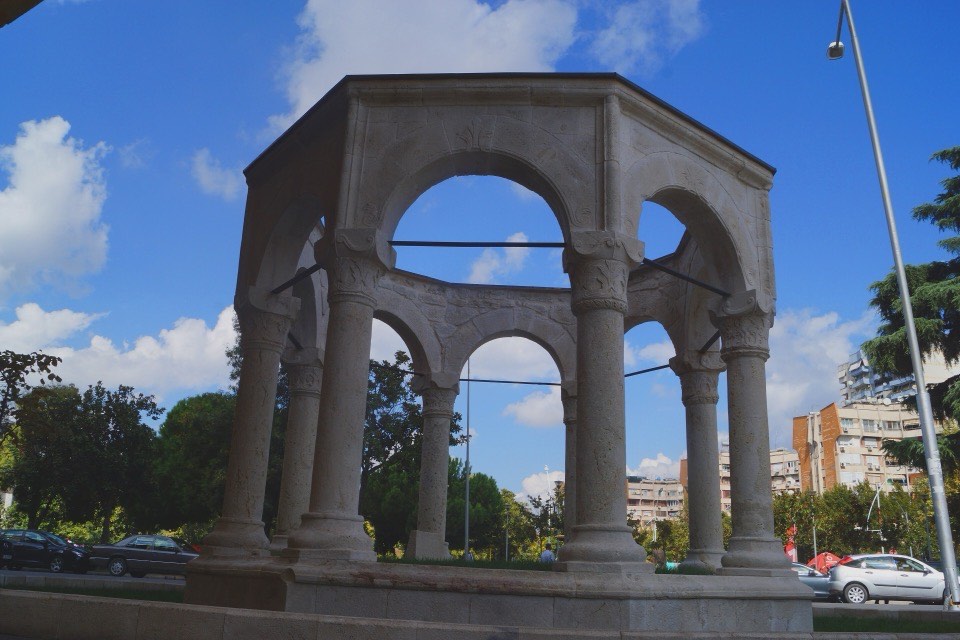
The history of Albanian architecture published by the Institute of Cultural Monuments divides the country’s türbes into open and closed types and calls this one quite interesting3. It is built of carved stone on an octagonal plan: an arcade on columns standing on a low base3. The municipality counts eight classical columns linked by arches and gives the height as 4 m2. Each column is a single stone on a stone base, with a capital carved with plant ornament, and above the arches the wall ends flat with a cornice3. There is no roof today, though the same study allows that there may once have been one3.
The study singles out the tomb, small as it is, for the elegance of its arcade and the working of its details3. Among the oldest türbes surviving in Albania it names one at Poloskë near Korçë, of the late 15th or early 16th century, and the Bride’s Tomb at Mullet near Tirana, of the 16th century, both with cloisonné walls3. The Bride’s Tomb at Mullet is also on the Tirana list of protected monuments1.
观赏要点
参观信息
- The tomb stands in central Tirana, on Rruga 28 Nëntori2.
- Its protected zone covers the monument and a strip of 5 m around it1.
官方信息: National Institute of Cultural Heritage of Albania (Instituti Kombëtar i Trashëgimisë Kulturore, IKTK), which lists the tomb as a first-category monument; the Municipality of Tirana presents it among the city’s attractions路线在 OpenStreetMap 中打开地拉那导览游