この部分はまだ翻訳されていないため、英語で表示しています。
歴史
Mahmud II, a son of Abdülhamid I born in 1785, became sultan on 28 July 1808 after Alemdar Mustafa Pasha deposed his brother Mustafa IV2. In 1826 he abolished the Janissary corps, which opened the way to the reforms of his last thirteen years2. He died on 28 June 1839; the death was kept secret until 30 June for fear of unrest, and on 1 July his body was taken to Topkapı Palace for a funeral that became a procession of large crowds of Muslims and non-Muslims2. On the same day he was buried, as his will asked, in the garden of Esma Sultan's palace on Divanyolu, under a tent1,2.
In the reign of his son Abdülmecid I, Abdülhalim Efendi, director of the imperial building office (Ebniye-i Hâssa), was put in charge of the tomb and relieved of his post so that he could finish it quickly1,2. The work began after 5 July 1839 and ended on 12 October 1840; Abdülhalim Efendi was then reappointed, and the master builders Ohannes and Bogos, the minister of pious foundations Mâhir Efendi and the calligrapher Mehmed Hâşim Efendi, who wrote the tomb's inscriptions, were rewarded1. Abdülaziz was buried here after his death on 4 June 18763. Abdülhamid II died on 10 February 1918 and was buried here the next day with a ceremony befitting a sultan4.
建築
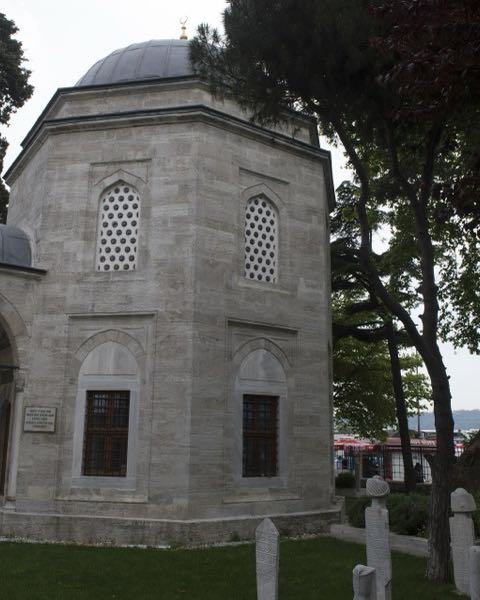
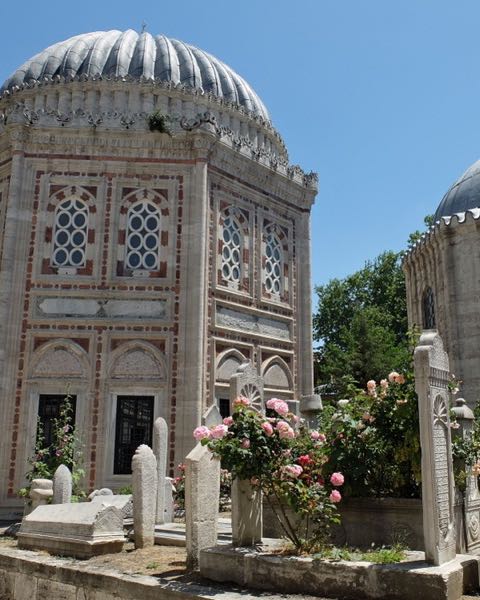
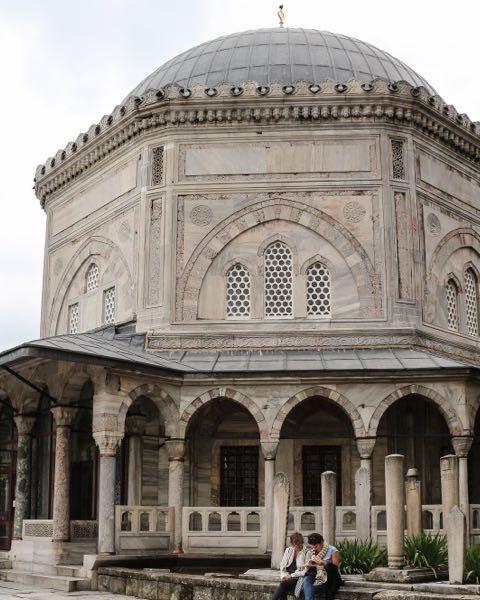
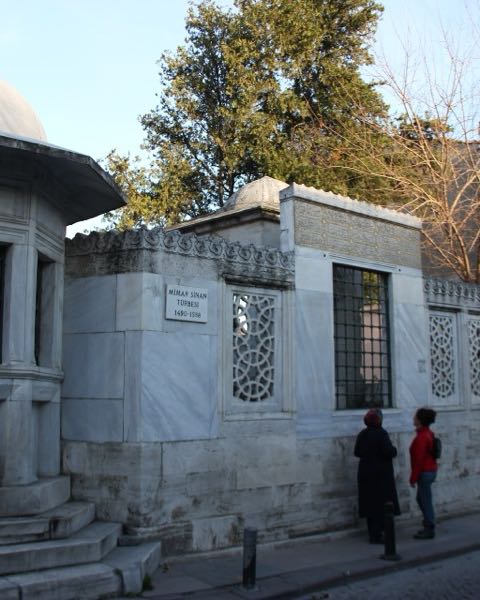
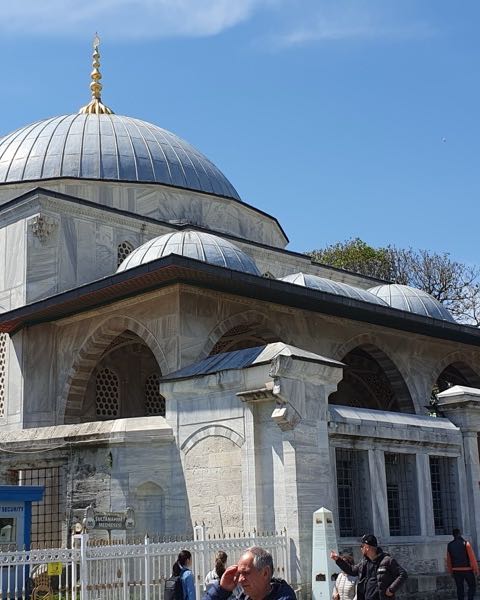
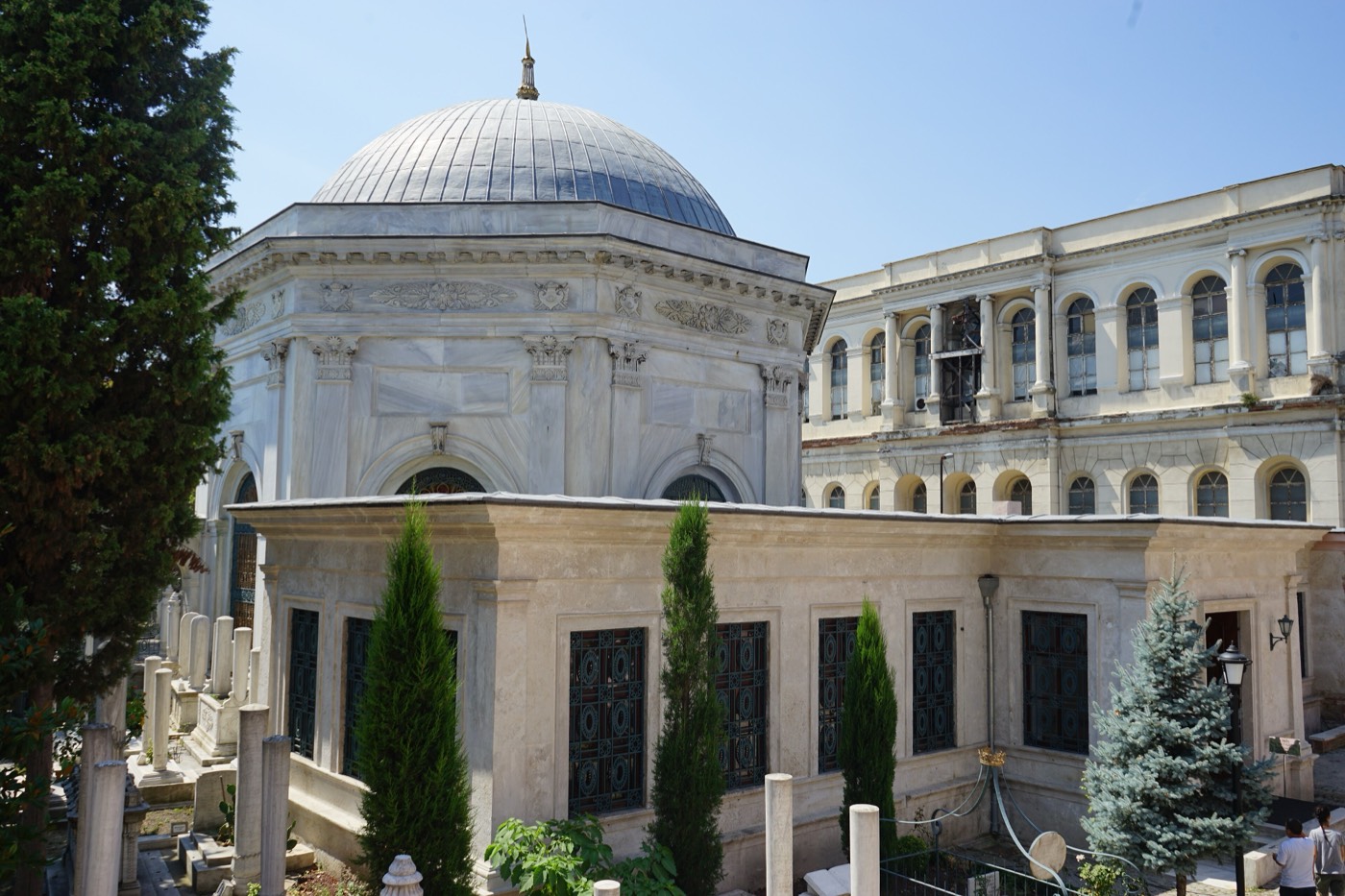
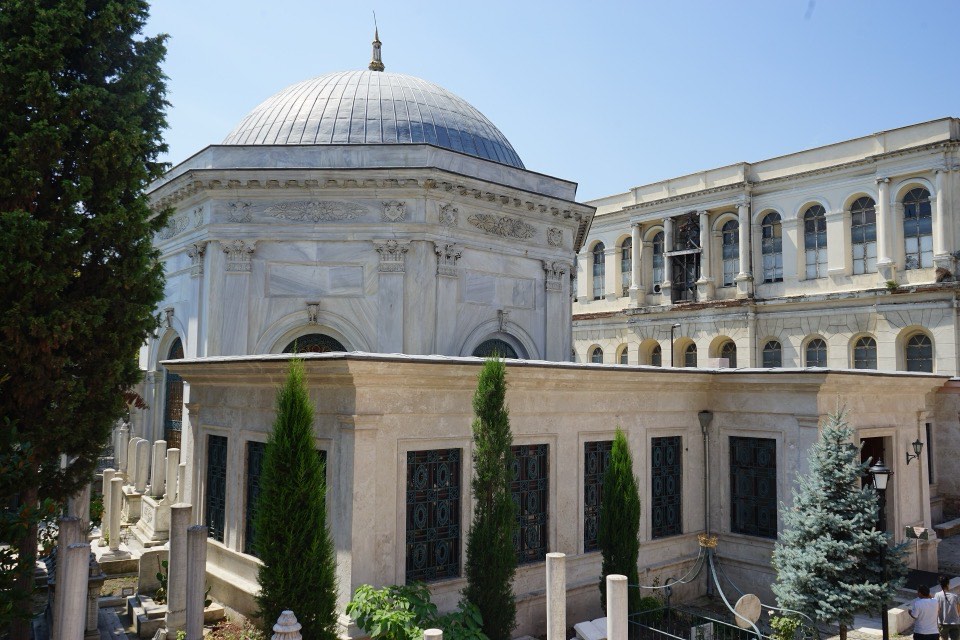
The tomb occupies the western corner of a funerary ensemble that also has a sebil (water dispenser), rooms, a fountain and a cemetery, behind a street wall on Divanyolu with grilled windows and two gates1. TDV places it in the 19th-century tradition of dynastic tombs: an octagon in the Empire style, faced with marble and covered by a large dome on an octagonal drum1. The door is on the north side, and the other faces have tall round-arched windows framed by pilasters with stylized Corinthian capitals, with a band of antique palmettes at the level of the arches1. Shields bearing two swords, swelling plant ornament and a bracketed cornice crown the walls, and the finial of the dome is shaped to recall a radiating sun1.
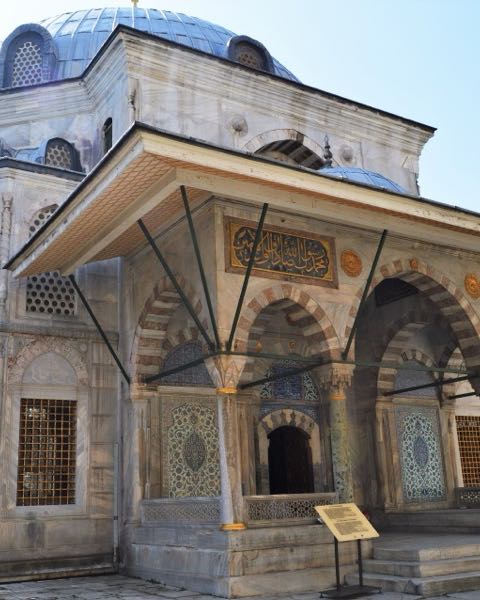
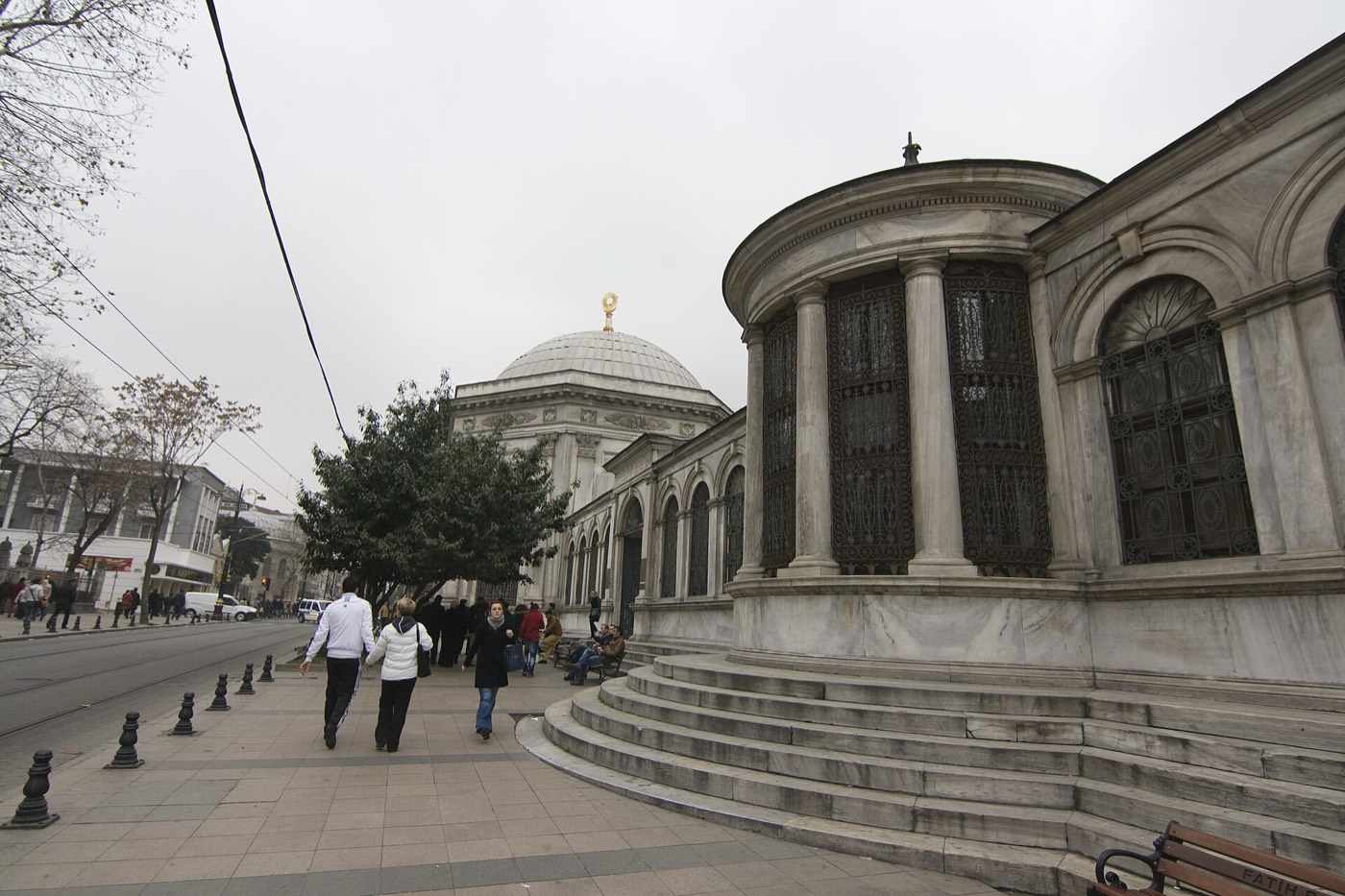
A single-storey annex on the north side leads to the tomb through a corridor between two rooms; burials were later made in the right-hand room1. The sebil is round and projects from the wall, with four Tuscan columns between five rectangular windows under a plain architrave; TDV notes that the type is common in Europe and calls it the first and only one of its kind in Istanbul1. At the corner of the street front stands a fountain about 2.5 m high, a square shaft on a square base that was topped by a globe1. In TDV's survey of Islamic tombs, Mahmud II's tomb is where the Baroque and Rococo details seen in the tombs of Şah Sultan and Mihrişah Valide Sultan give way to an Empire style applied to the traditional scheme5.
内部
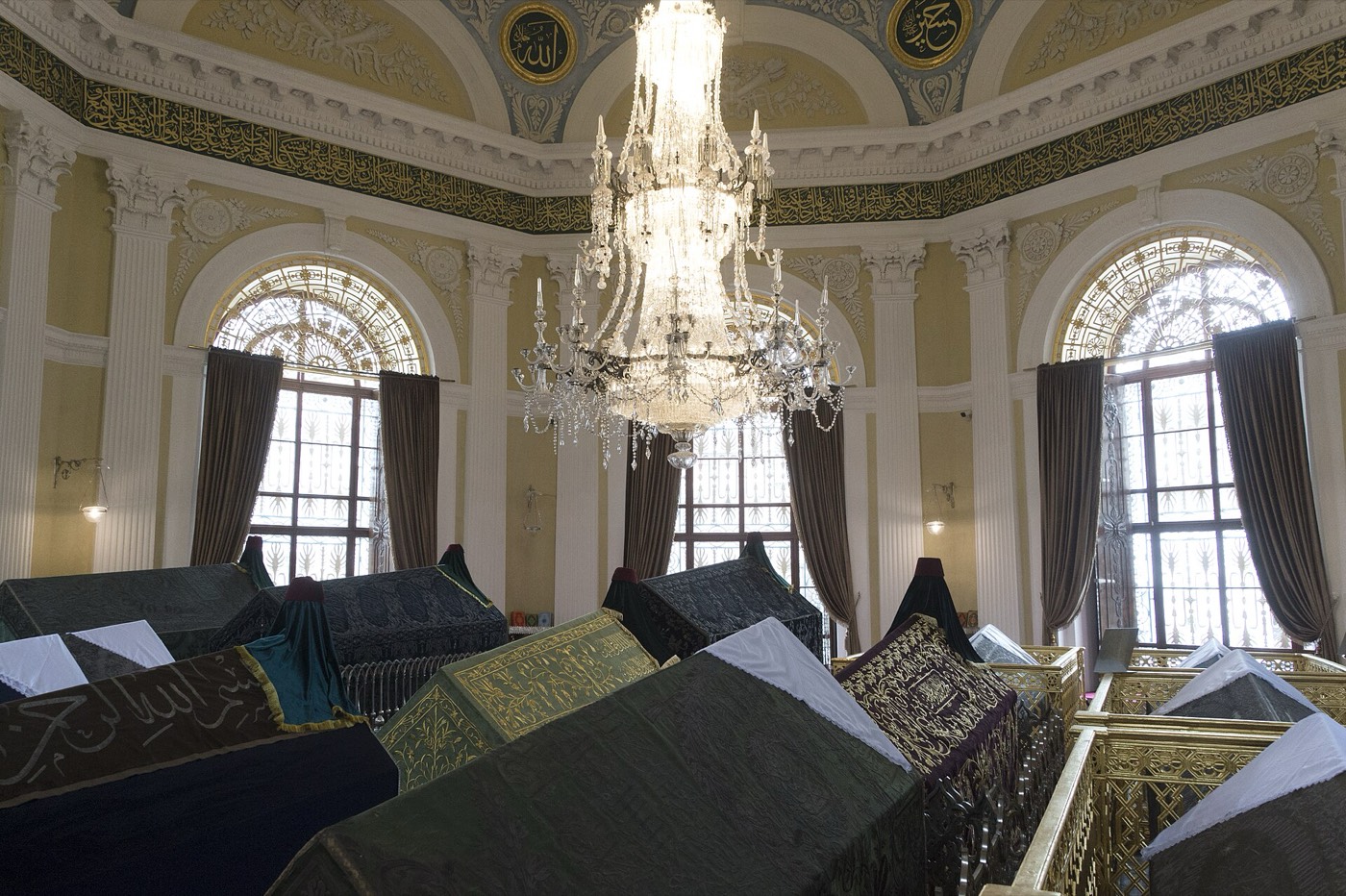
Inside, the walls and dome carry plaster reliefs: floral compositions around medallions, pilasters with capitals, a band of inscriptions and a bracketed cornice1. In the drum, the names of God, the Prophet Muhammad, the four caliphs, Hasan and Husayn are written between semicircular pediments, and the dome is divided into coffers with reliefs of coats of arms, wreaths and flower baskets1. TDV sees a blend of Empire decoration and traditional ornament in the large crystal chandelier hanging from the centre of the dome and in the gold-embroidered covers on the cenotaphs1. Among the 18 cenotaphs are those of Mahmud II, Abdülaziz and Abdülhamid II, and of Bezmiâlem Valide Sultan, Mahmud II's wife and Abdülmecid's mother1.
見どころ
- The Empire-style octagon: Corinthian pilasters, a band of palmettes and a sun-shaped finial on the dome1.
- The round sebil on four Tuscan columns, which TDV calls the only one of its type in Istanbul1.
- The coffered dome with reliefs of coats of arms, wreaths and flower baskets1.
- The cenotaphs of three sultans: Mahmud II, Abdülaziz and Abdülhamid II1,3,4.
- The cemetery of about 140 graves, among them Ziya Gökalp's, designed by Arif Hikmet Koyunoğlu1.
見学案内
- The ensemble lies on Divanyolu, behind a street wall with grilled windows and two gates; the tomb stands at its western corner1.
- It is one of the 122 tombs in Istanbul assigned to the culture ministry's Istanbul Tombs Museum Directorate6.
- The adjoining cemetery holds about 140 graves, including those of the historian Atâ Bey and of İshak Sükûti, a founder of the Committee of Union and Progress1.
公式情報: Istanbul Tombs Museum Directorate (İstanbul Türbeler Müzesi Müdürlüğü), Republic of Türkiye Ministry of Culture and Tourism経路案内OpenStreetMapで開くイスタンブールのガイドツアー