Bu bölüm henüz çevrilmediği için İngilizce gösteriliyor.
Tarihçe
The Aksaray stands a short way south-east of the Gur-e-Amir, Timur’s dynastic mausoleum, and Uzbekistan’s nomination file to UNESCO describes it as another family mausoleum of the Timurids, from the end of the 15th century2. Archnet dates it to about 1470, and the Registan Ensemble Directorate to 1460-1470, calling it the burial vault of male members of the last Timurids3,4. Its name means ‘white palace’4,5. A 2022 article published by UzA, the national news agency, counts it among the old buildings of Samarkand renamed by newcomers who did not know their history: people brought in from other regions when Amir Shahmurad of Bukhara revived the city after it had emptied in the 18th century6.
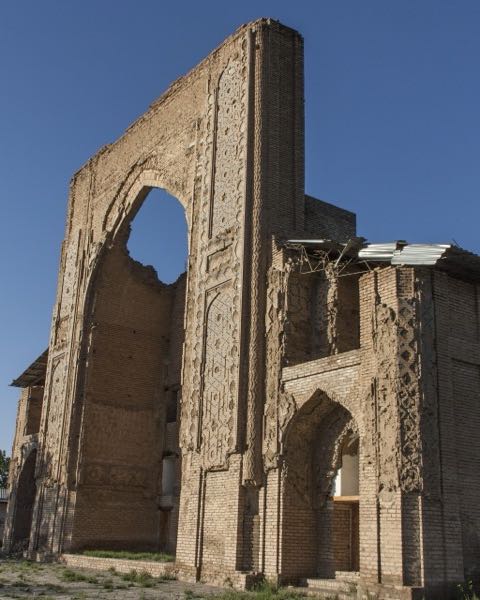
By the 20th century the building was almost completely ruined, and the Arts and Culture Development Foundation reports a large conservation campaign in 1924-19255. Archnet holds a photograph of it in ruins taken by Ernst Cohn-Wiener in 1924-19253. The nomination file records further conservation from 1976 to 1996, when some later additions were removed2. In 2007 the mausoleum was completely restored, according to the Foundation5. It is one of the monuments described in Uzbekistan’s nomination of Samarkand, which was inscribed on the World Heritage List in 20011,2.
Mimari
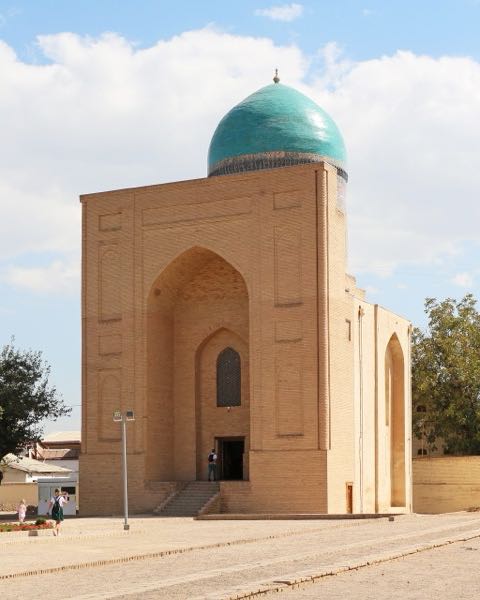
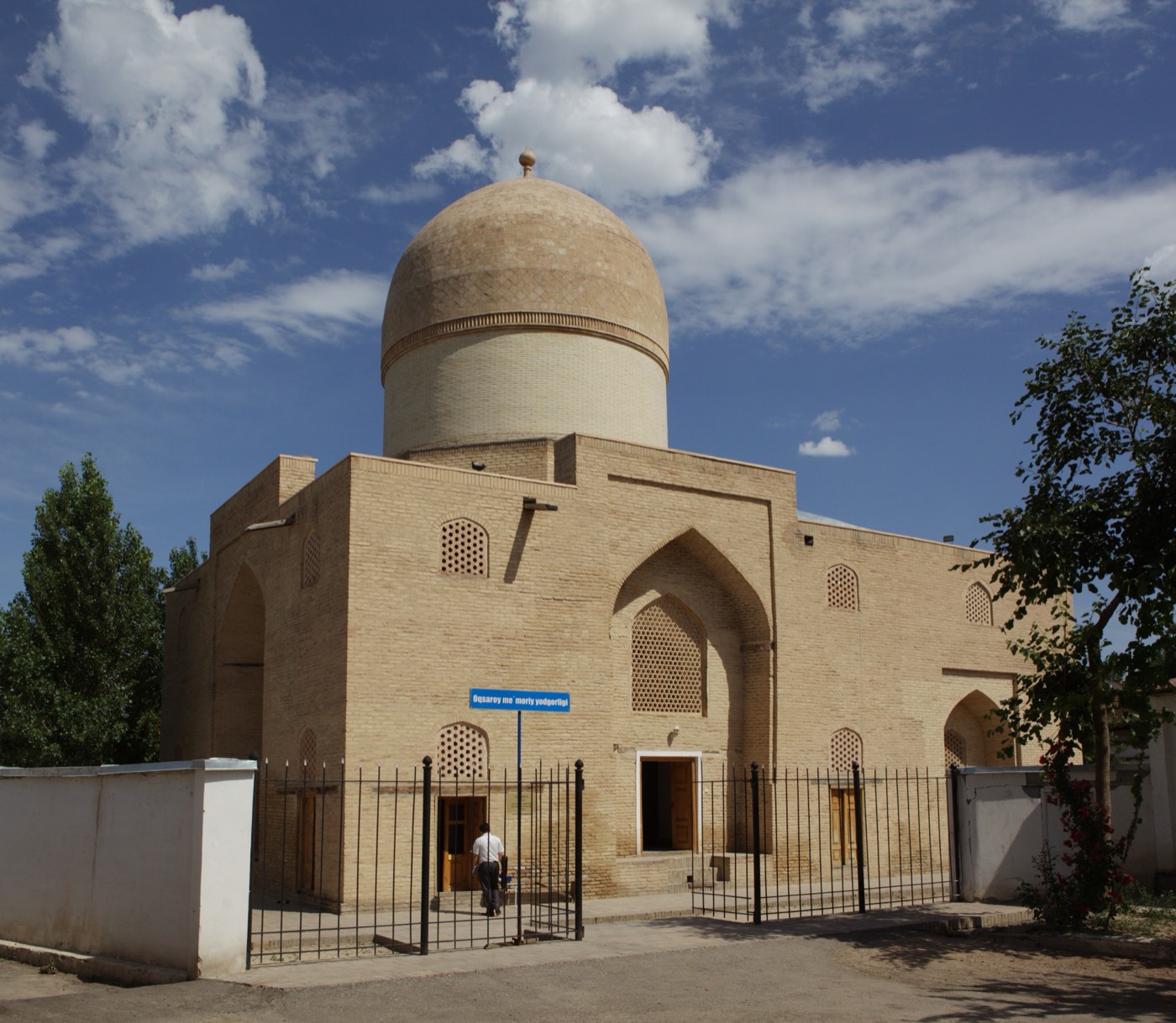
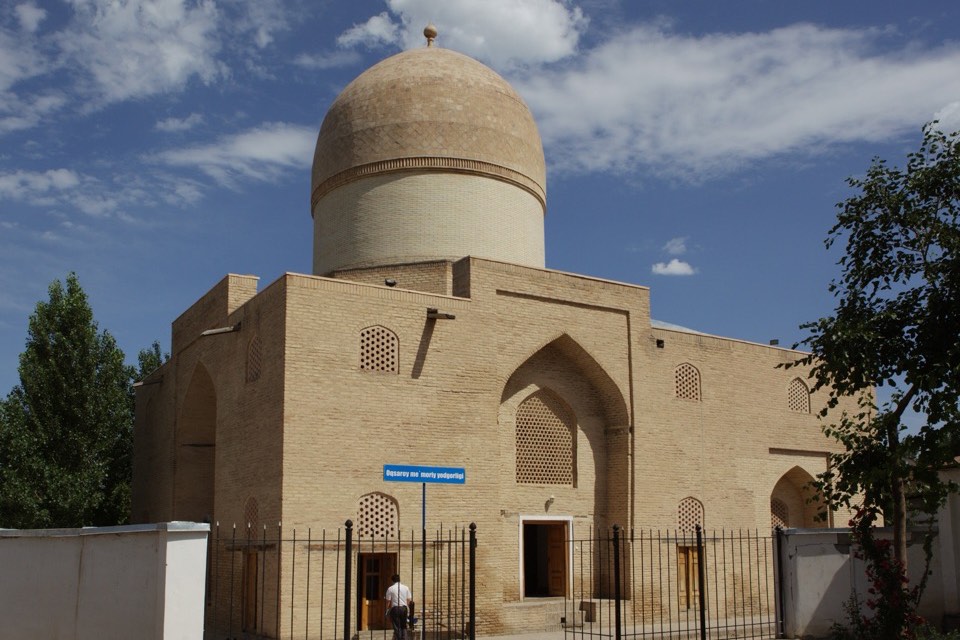
The nomination file describes a small building of several rooms: a square memorial hall (ziyaratkhana), corner cells and three rooms from which a passage leads down to an octagonal vault with many graves2. The Registan Ensemble Directorate describes the core as a cruciform hall used as a memorial room, with corner cells and a three-part hall, above an octagonal crypt lined with marble4. The nomination file singles out the unusual construction of the whole building, and especially of the hall’s dome2. None of the outer decoration survives, and the Arts and Culture Development Foundation describes the single-domed building as nondescript from the outside2,5.
İç mekân
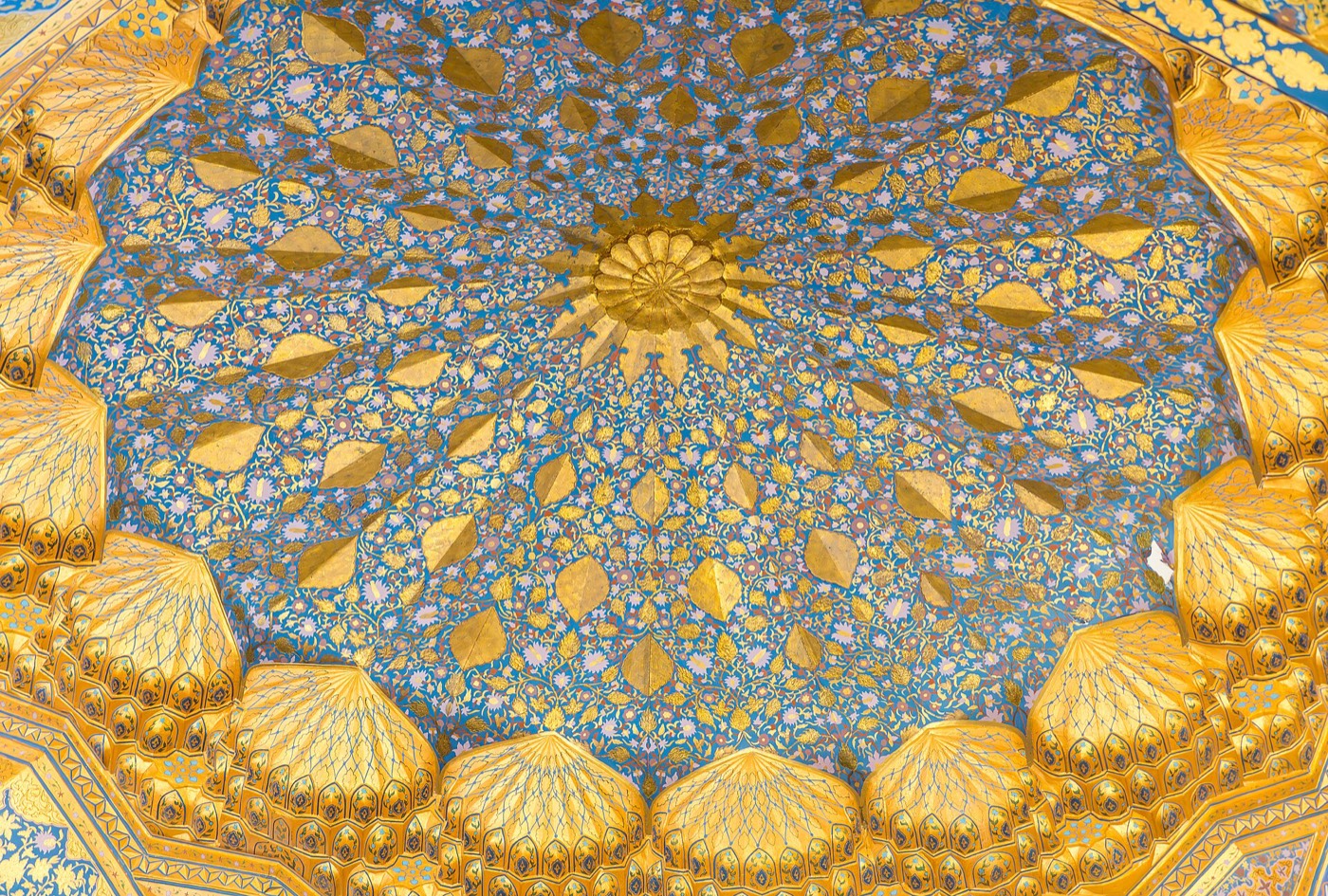
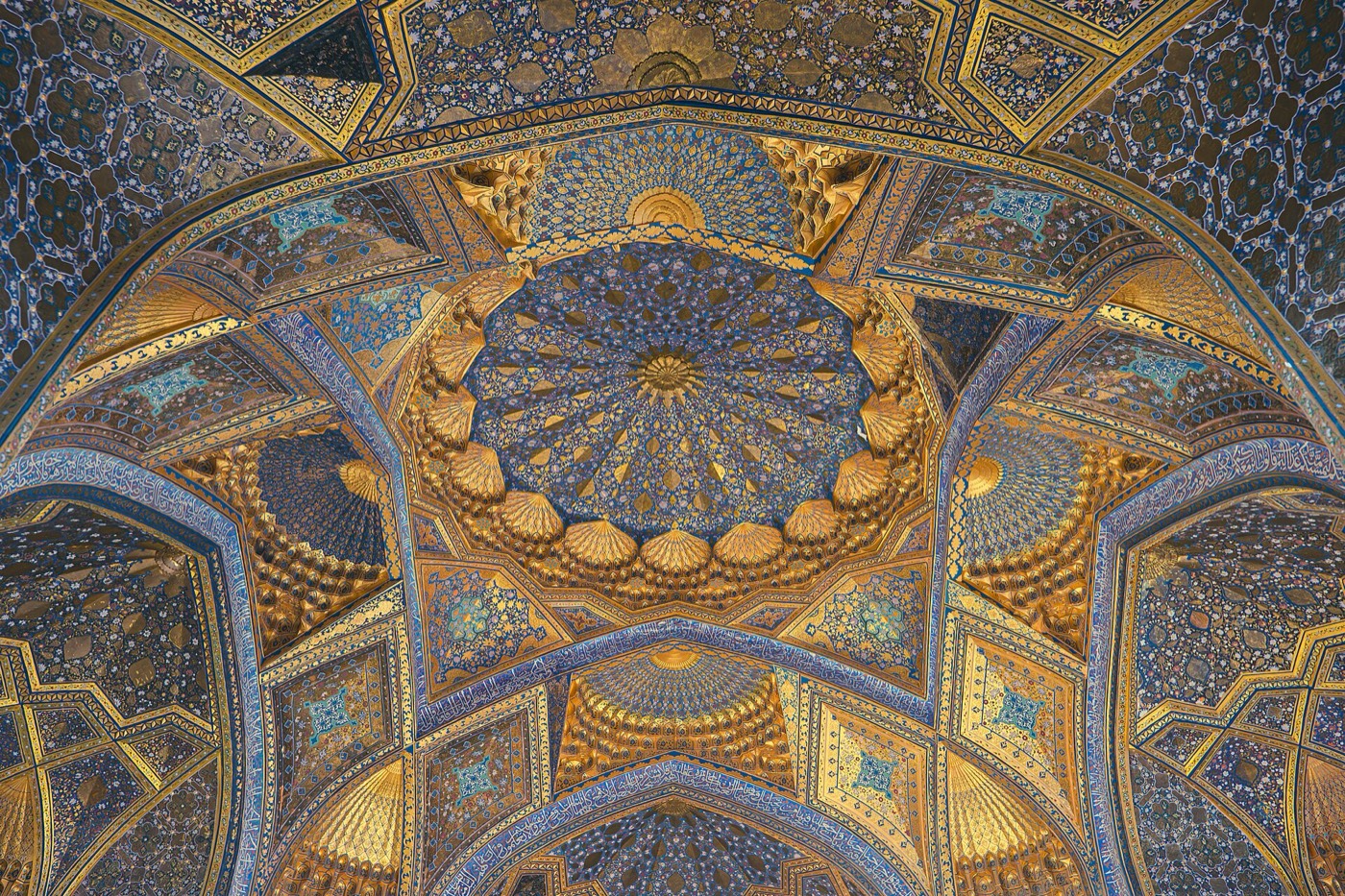
Inside, panels of fine glazed mosaic and carving line the lower walls, and the walls, pendentives and dome above carry ornamental painting in blue and gold in the kundal technique2,4. In 2020 the Registan Ensemble Directorate described the original painting as surviving in fragments4. The Arts and Culture Development Foundation, reporting the complete restoration of 2007, calls the gilded decor a ‘reincarnation’ of the mausoleum, and notes the long corridor built as a staircase that leads from the domed hall down to the marble crypt5.
Dikkat çeken ayrıntılar
Ziyaret
- The Aksaray lies a short walk south-east of the Gur-e-Amir2,4.
- The mausoleum was completely restored in 2007, and the Registan Ensemble Directorate describes the original painting as surviving in fragments4,5.
- The mausoleum is one of the monuments in Uzbekistan’s nomination of Samarkand, inscribed as a World Heritage property in 20011,2.
Resmî bilgi: State Samarkand Historical-Architectural Reserve, under Uzbekistan’s culture ministry and the Samarkand regional government (as described by UNESCO)Yol tarifiOpenStreetMap haritasında açınSemerkant için rehberli turlar