Esta parte aún no se ha traducido, por lo que se muestra en inglés.
Historia
Bolgar lies on the Volga about 40 km south of the Kama confluence2. In May 922 envoys of the Abbasid caliph al-Muqtadir reached the Volga Bolgars; one of them, Ibn Fadlan, described the journey3. UNESCO dates the Bolgars’ official adoption of Islam to that year1. The Mongols sacked the city in 1236, yet Batu Khan made it the first capital of the Golden Horde in 12422. After the capital moved to Sarai in the 14th century, Bolgar remained an important northern centre, and many of its mausoleums and bathhouses were built then2. The nomination dates the Northern and Eastern Mausoleums to the 1330s and links them to the Cathedral Mosque’s second rebuilding3.
ICOMOS links the city’s ruin to a Muscovite campaign of 1431, after which Bolgar remained a small settlement2. In 1712, as an Orthodox monastery was being founded there, the official Andrey Mikhaylov recorded more than 70 medieval buildings3. The monks made the Eastern Mausoleum a small church of St Nicholas and used the Northern one as a cellar3. Peter I visited in 1722 and ordered the stone buildings preserved3. Villagers kept taking stone from the ruins; by the 1760s only 44 buildings remained3. UNESCO inscribed the complex in 2014, linking it with the Volga Bolgars’ acceptance of Islam in 922, and notes that Tatar Muslims still make an annual pilgrimage there1.
Arquitectura
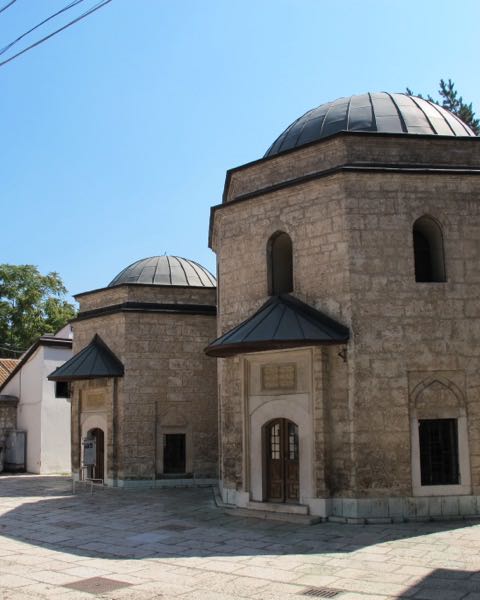
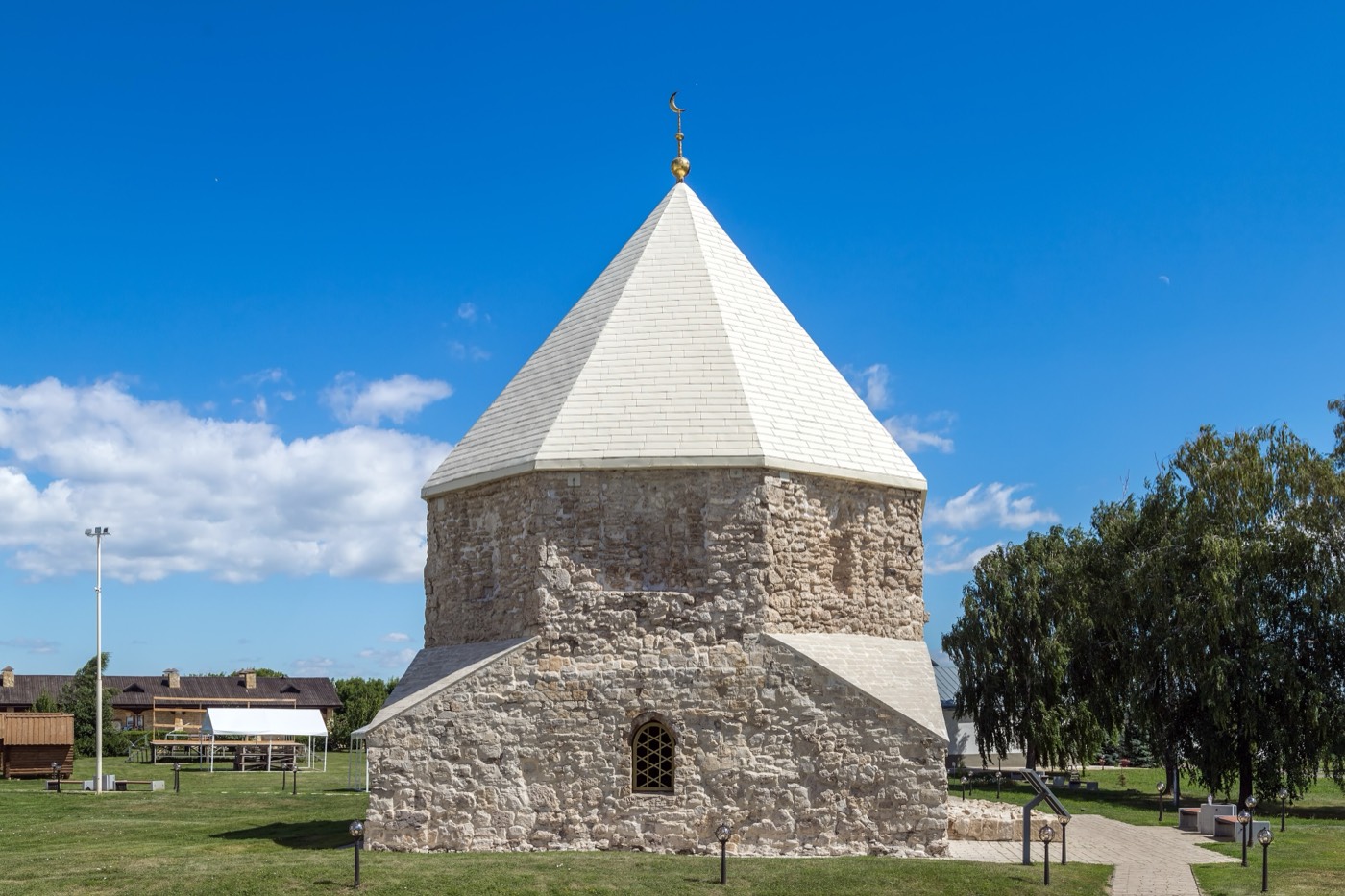
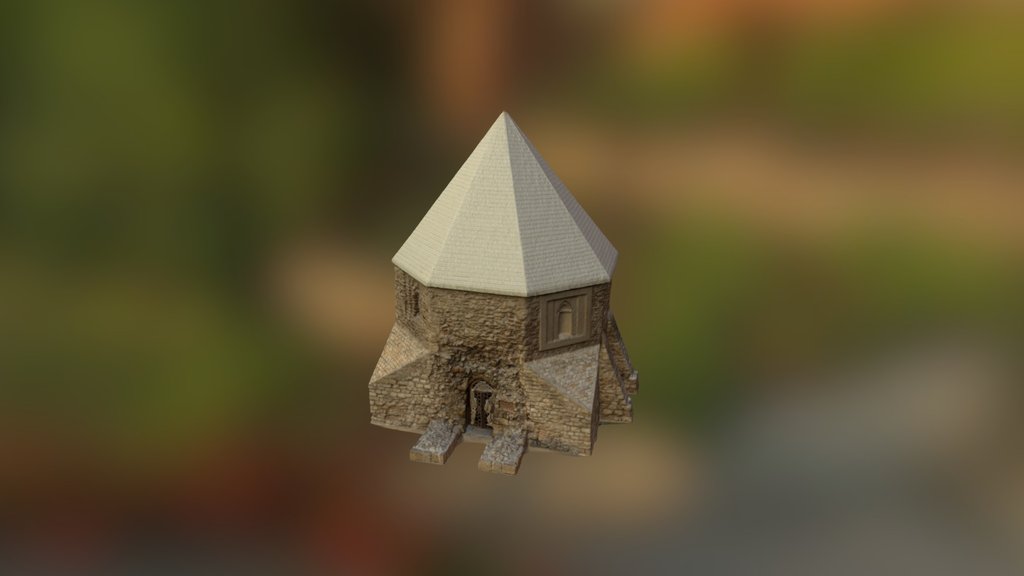
The Northern and Eastern Mausoleums stand in front of the northern and eastern façades of the ruined Cathedral Mosque, and both are built of white limestone and tuff3. They share one scheme: a square room that turns into an octagon, outside through triangular bevels at the upper corners and inside through squinches, with a hemispherical dome on top3,7. Valeeva-Suleimanova likens these bevels to the “Mamluk cut” of Cairo’s buildings and notes that, on the evidence of field surveys, an outer eight-sided pyramidal roof covered the inner dome of the Eastern Mausoleum and of the Khan’s Shrine7. The Eastern Mausoleum is 10.8 m square, with its portal on the south, traces of decorative niches on the octagon and pottery resonators built into the walls in places3. The nomination notes that tombs with projecting portals were being built at the same time in Khorezm, among them Najm al-Din Kubra and Turabek Khanum in Kunya-Urgench3.
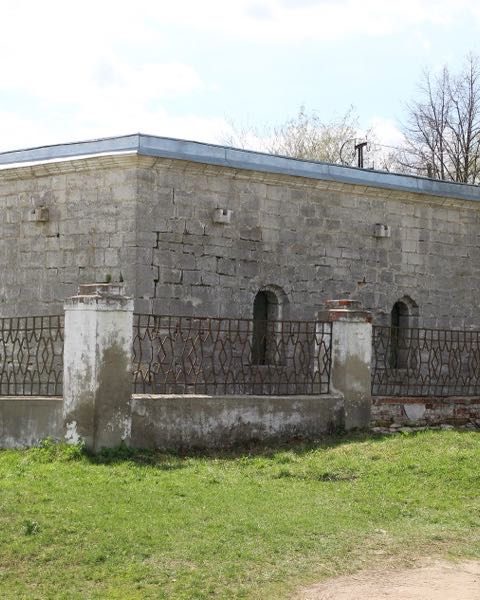
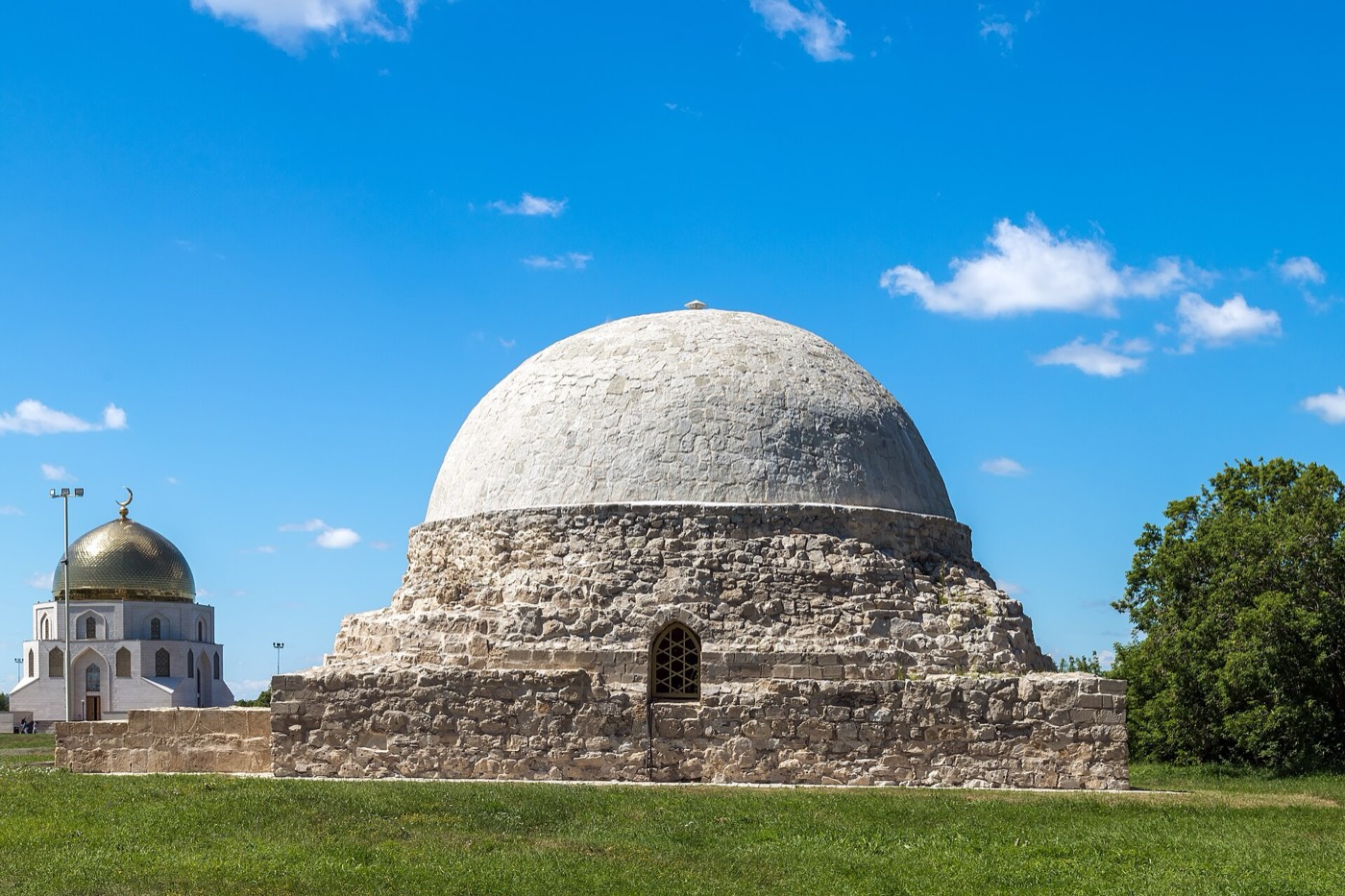
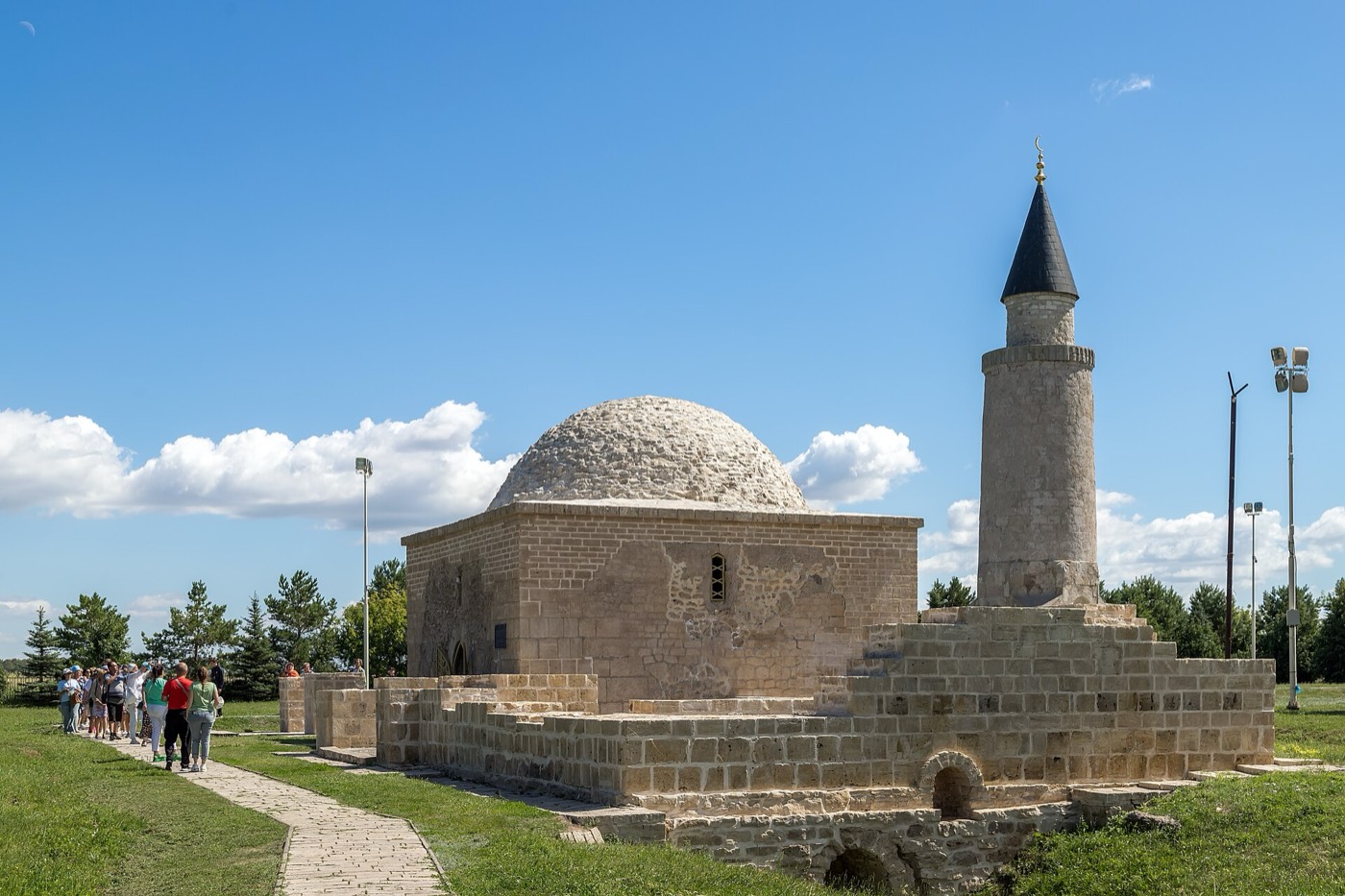
The Northern Mausoleum is the largest of the three, about 13 m a side; the nomination describes its foundations and wall core, with some original facing, rising to the base of the lost dome, and its pointed-arch door and window openings3,7. The Khan’s Shrine, 15 m north of the Small Minaret, is a domed cube of white limestone without a portal, 8.5 m square, and its octagonal tier exists only inside3,7. ICOMOS places it in the cubic, centrally domed type that it describes as popular all over the Islamic world2. The nomination cites historical sources saying it was enlarged in the mid-14th century into a row of four tombs; the museum-reserve says only this one survives and that it held members of the khan’s family3,6. All three tombs were excavated and partly restored between 1964 and 19713. In 2014 ICOMOS noted that the Eastern Mausoleum had been restored since 2001 and given a new roof, called the restoration measures at Bolgar “extensive, sometimes without clear justification” and judged the state of conservation generally acceptable but “often rather too perfect following extensive restorations”2.
Interior
In the Eastern Mausoleum a circular gallery runs round the opened burial area, where excavators found seven wooden and stone crypts of the Golden Horde period; the room holds a display of the excavation and of Bolgar’s history from the 10th to the 18th century3,4. Squinches in its corners lead up to the octagon and the dome3. The Northern Mausoleum houses an exhibition of Bolgar gravestones, whose inscriptions give a Qur’anic phrase, the name, the lineage and the date of death of the deceased5. In the Khan’s Shrine, pyramidal squinches lead from the square room to the dome, and excavators found eight graves there in box coffins (tabut), some under brick gravestones3,7. According to Valeeva-Suleimanova, the interiors of these tombs were plastered white, with an ornamental band below the dome7.
Qué observar
- The Eastern Mausoleum’s eight-sided pyramidal roof over its octagon; ICOMOS noted in 2014 that the roof is new2,7.
- Triangular bevels where the square walls turn into the octagon, which Valeeva-Suleimanova compares to Cairo’s “Mamluk cut”7.
- The opened Golden Horde burial area inside the Eastern Mausoleum, seen from a circular gallery3,4.
- Gravestones in the Northern Mausoleum, inscribed with a Qur’anic phrase, the name, lineage and date of death5.
- The Khan’s Shrine beside the Small Minaret; ICOMOS calls the minaret Bolgar’s only fully intact medieval monument2.
Visita
- The Northern and Eastern Mausoleums stand by the Cathedral Mosque; the Khan’s Shrine lies about 500 m to the south, next to the Small Minaret3.
- The museum-reserve, founded in 1969, displays an excavation in the Eastern Mausoleum and gravestones in the Northern Mausoleum4,5,8.
- Private cars may not enter the museum-reserve; visitors go on foot or by electric cart, bicycle or scooter4.
Información oficial: Bolgar State Historical and Architectural Museum-Reserve, a state institution under the Ministry of Culture of the Republic of TatarstanCómo llegarAbrir en OpenStreetMapVisitas guiadas en Bolgar