Bagian ini belum diterjemahkan, jadi ditampilkan dalam bahasa Inggris.
Sejarah
Al-Salih Najm al-Din Ayyub, a son of the Ayyubid sultan al-Kamil, ruled Egypt from 1240 to 12494,9. He built up a large mamluk corps, the Bahri or Salihi mamluks, with their own citadel on Rawda Island8,15. In May 1242 clearing began on part of the Fatimid eastern palace at Bayn al-Qasrayn for his madrasa9. The antiquities ministry and Discover Islamic Art call it the first school in Egypt to teach all four Sunni schools of law2,3,4. Gravely ill, al-Salih died in his camp at al-Mansura in November 1249, during the crusade of Louis IX8,16,17. The ministry’s English page says he died in battle; his tomb’s door inscription and the TDV encyclopedia say he died in camp2,16,17.
Shajar al-Durr kept the death secret until his successor Turanshah arrived, and had the tomb built against the madrasa; al-Maqrizi says the Maliki shaykh’s hall was pulled down to make room for it2,6,9. The body waited over ten months in the Rawda citadel until the tomb was finished in 648 AH (1250)9,2. Aybak, a former mamluk of al-Salih now ruling with the young al-Ashraf Musa, led the procession; the mamluks wore white and the rites lasted three days9. The Qalawun VR Project calls it the first founder’s tomb attached to a religious foundation in Cairo, a pairing that later Mamluk complexes along al-Mu'izz Street repeated8,4,5. Newly invested amirs paraded here from the Citadel until the ceremony moved to Qalawun’s mausoleum opposite7.
Arsitektur
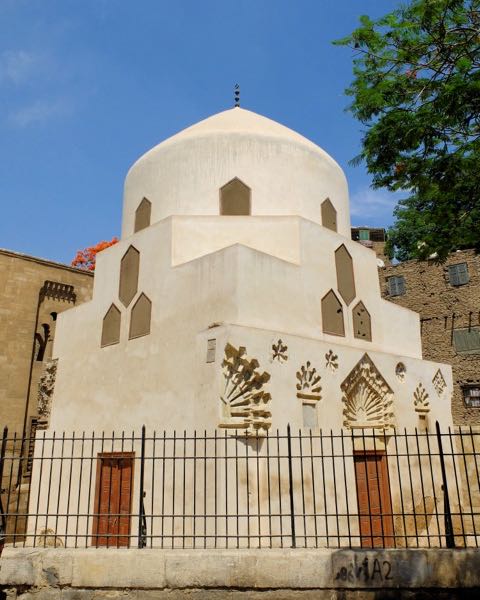
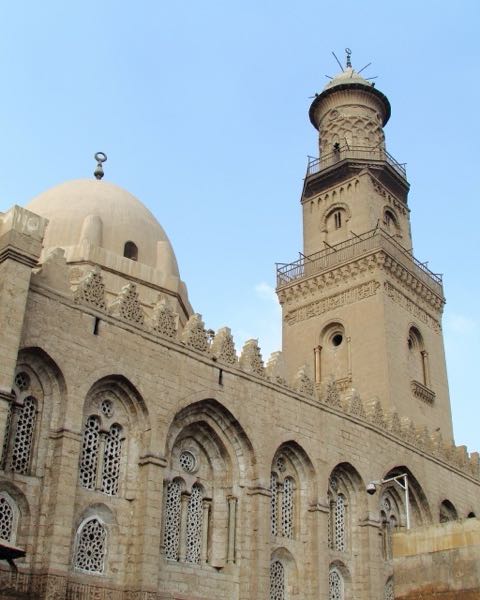
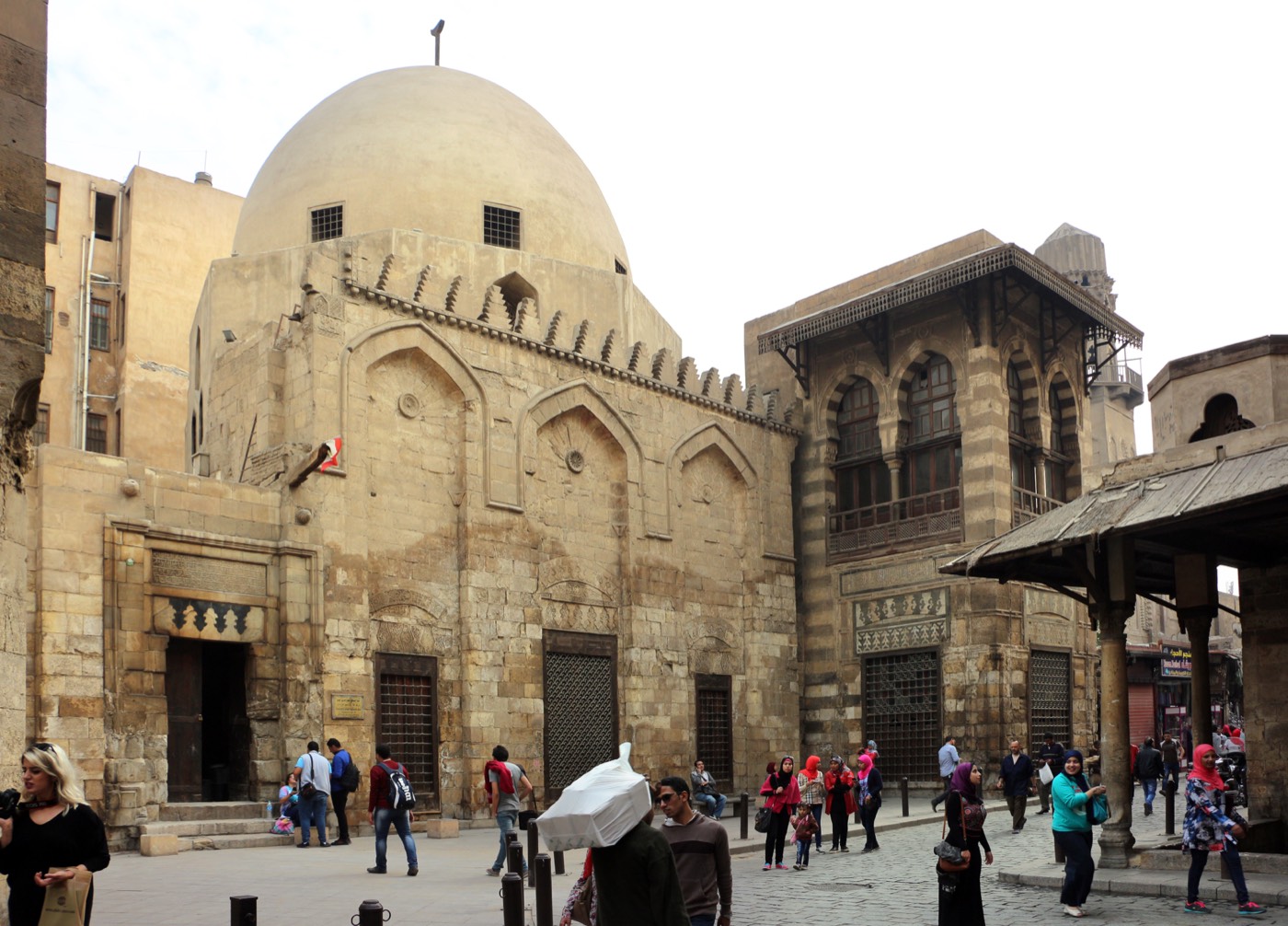
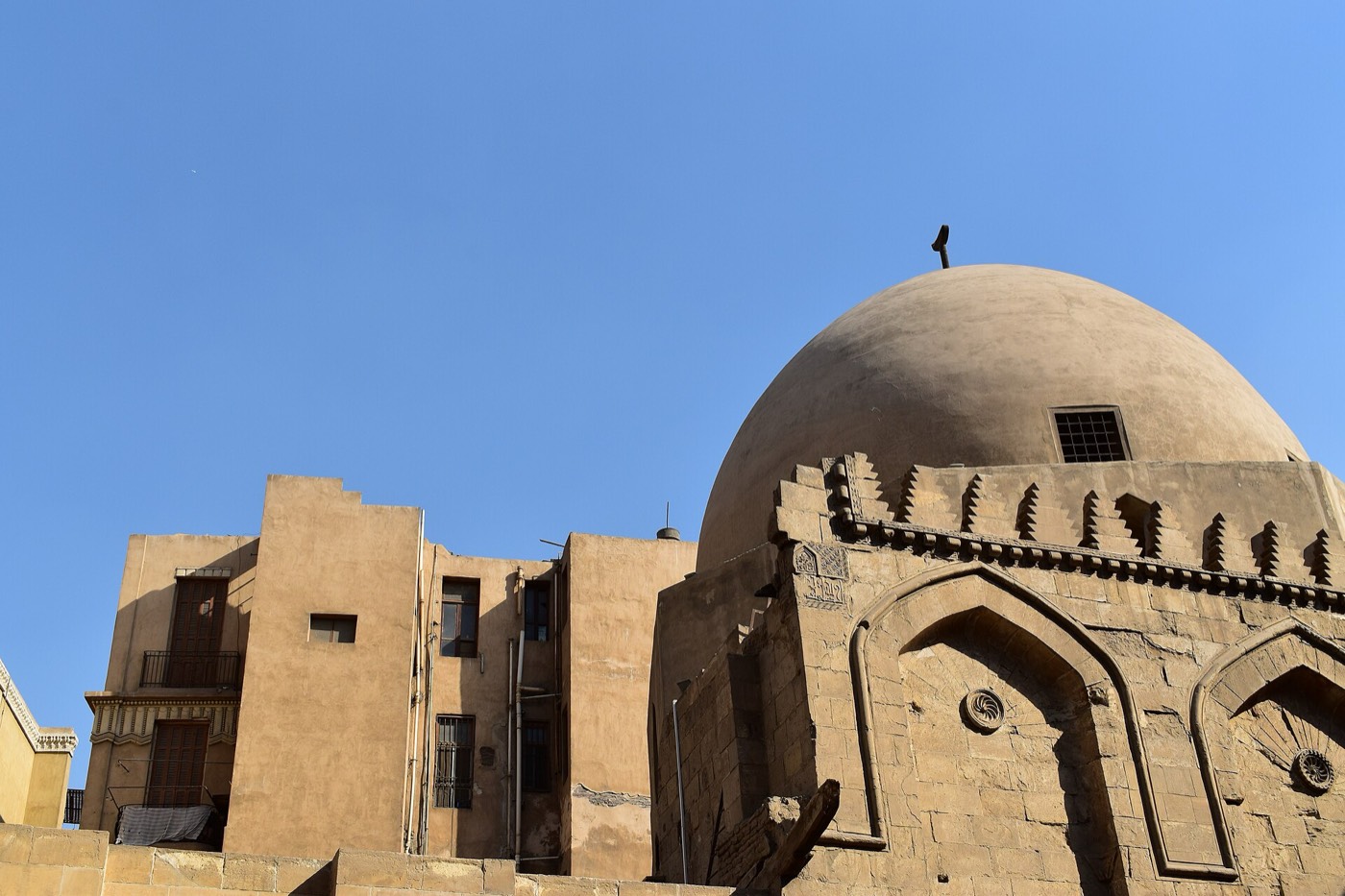
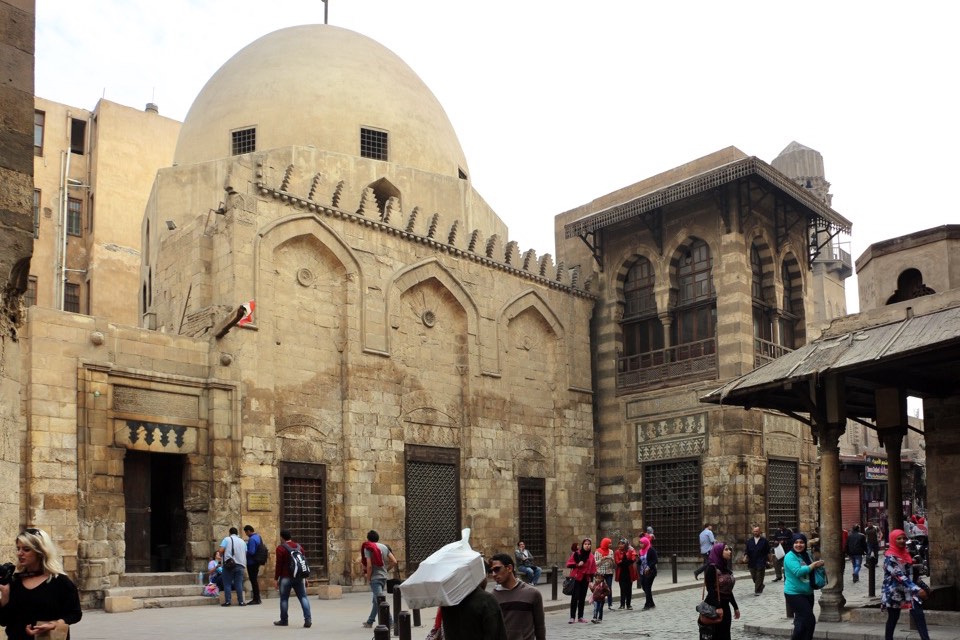
The tomb is a domed chamber at the north-west corner of the madrasa, with its main façade and entrance on al-Mu'izz Street8,2,9. The Sabil-kuttab of Khusraw Pasha, built in 1535, fills the angle between the tomb and the madrasa front9. In a study published by the Comité de Conservation des Monuments de l’Art Arabe in 1902, Max Herz compared this front with the Fatimid al-Aqmar mosque, more than a century older: on the tomb the niches hold windows and rise the full height of the wall, an innovation in his view9. In the Salihiyya’s façades he also noted the “Persian” form of the niche arches and the heavy moulding along their outline, details shared with al-Aqmar9. Under the muqarnas of the chamfered corner facing the sabil are two short inscriptions: “I trust in God” in naskh and “God is sufficient for me, and He is the best guardian” in Kufic9.
The marble doorway lost the tall niche that framed it when the minaret of the neighbouring madrasa of Baybars fell; one jamb of that portal survives, with a fragment of Kufic Quranic text9. The lintel carries a long inscription that names the sultan, describes his death at al-Mansura “facing the Franks” and dates it to the night of mid-Sha'ban 64711,9,17. The Comité, whose reports give the madrasa and tomb the number 38 of the Grand Bey plan of Cairo, had the doorway repaired in 18939,11,12. In 1901 it cleared away ruins piled against the dome, which hid it and let rainwater into the building13,14.
Interior
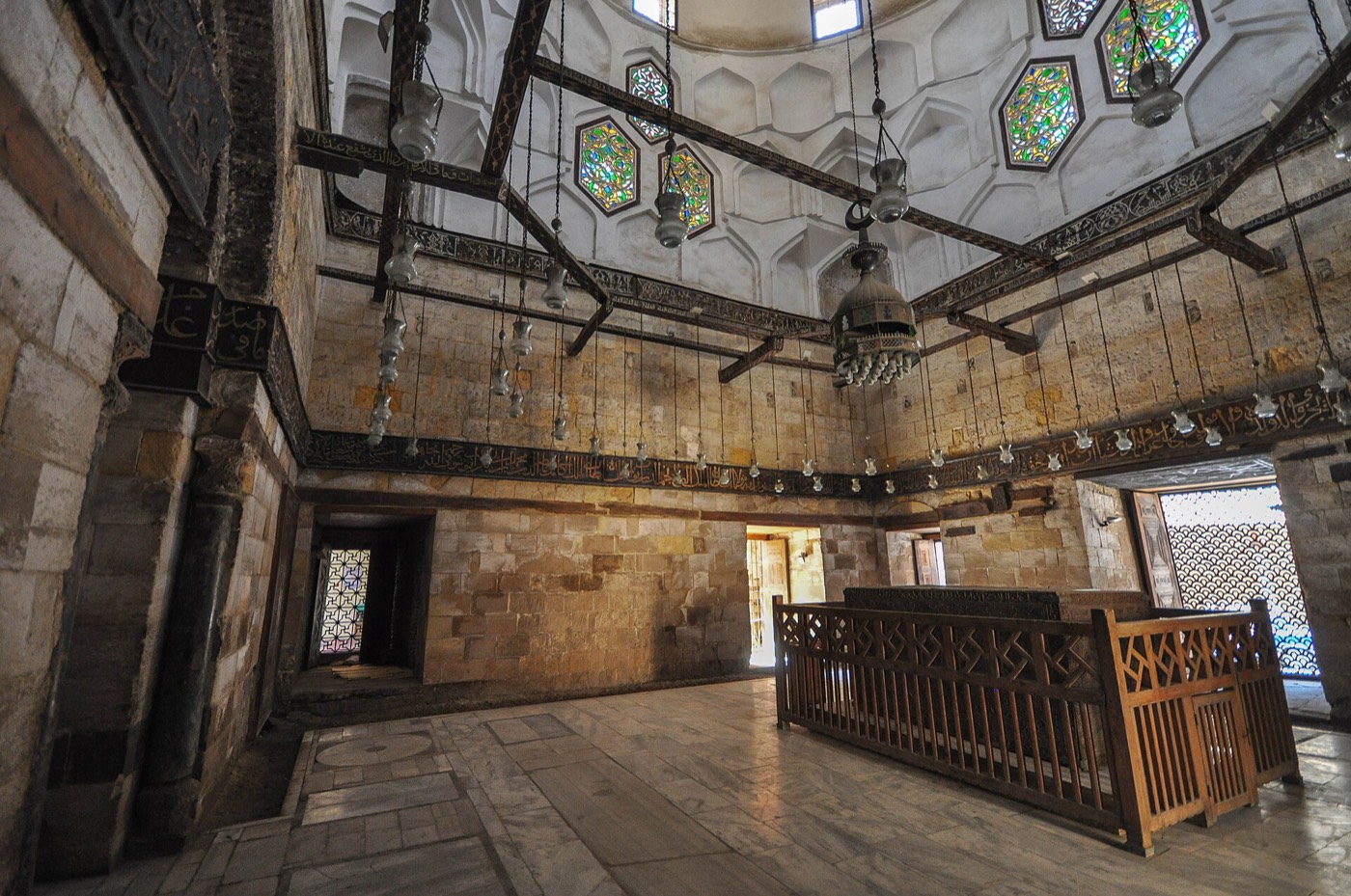
The carved wooden cenotaph names the sultan as al-Salih Najm al-Din Ayyub, son of Muhammad, son of Abu Bakr, son of Ayyub, and dates his death to the middle of Sha'ban 647; Bernard O’Kane’s survey of 1997-2004 found its inscription in very good condition9,18. The Comité drew attention to it in 1891 for the quality of its carving and asked the Awqaf administration to protect it10. The antiquities ministry singles out the wooden enclosure inside the dome, with the inscriptions around it, as an example of Ayyubid woodwork2,3. In 1902 Herz described a broad wooden band at the height of the capitals of the mihrab’s two columns, its inscription applied in stucco rather than carved, and short texts on the window shutters9. Max van Berchem published the building’s inscriptions in his Corpus Inscriptionum Arabicarum9.
Yang perlu diperhatikan
- The marble lintel over the door, dating al-Salih’s death to the night of mid-Sha'ban 64711,9,17.
- Niches rising the full height of the street façade, which Herz counted as an innovation9.
- The carved wooden cenotaph, which the Comité asked the Awqaf to protect as early as 189110.
- The chamfered corner facing the sabil, with its muqarnas and two short Kufic and naskh inscriptions9.
- Qalawun’s mausoleum directly across the street, sited to face the tomb of his former lord7.
Kunjungan
- The entrance is on al-Mu'izz Street at Bayn al-Qasrayn, across the street from the Qalawun complex2,7.
- The ministry’s combined ticket, which also covers the Qalawun complex and the mosque of Sultan Barquq, names the dome of al-Salih Najm al-Din Ayyub among its sites3.
- The building stands in the heart of the Fatimid city, which UNESCO includes in component 89-002 of the Historic Cairo World Heritage property as ‘The Fatimid Nucleus of Cairo’1,6.
Informasi resmi: Egypt’s Ministry of Tourism and Antiquities (Supreme Council of Antiquities)Petunjuk arahBuka di OpenStreetMapTur berpemandu di Kairo