Bagian ini belum diterjemahkan, jadi ditampilkan dalam bahasa Inggris.
Sejarah
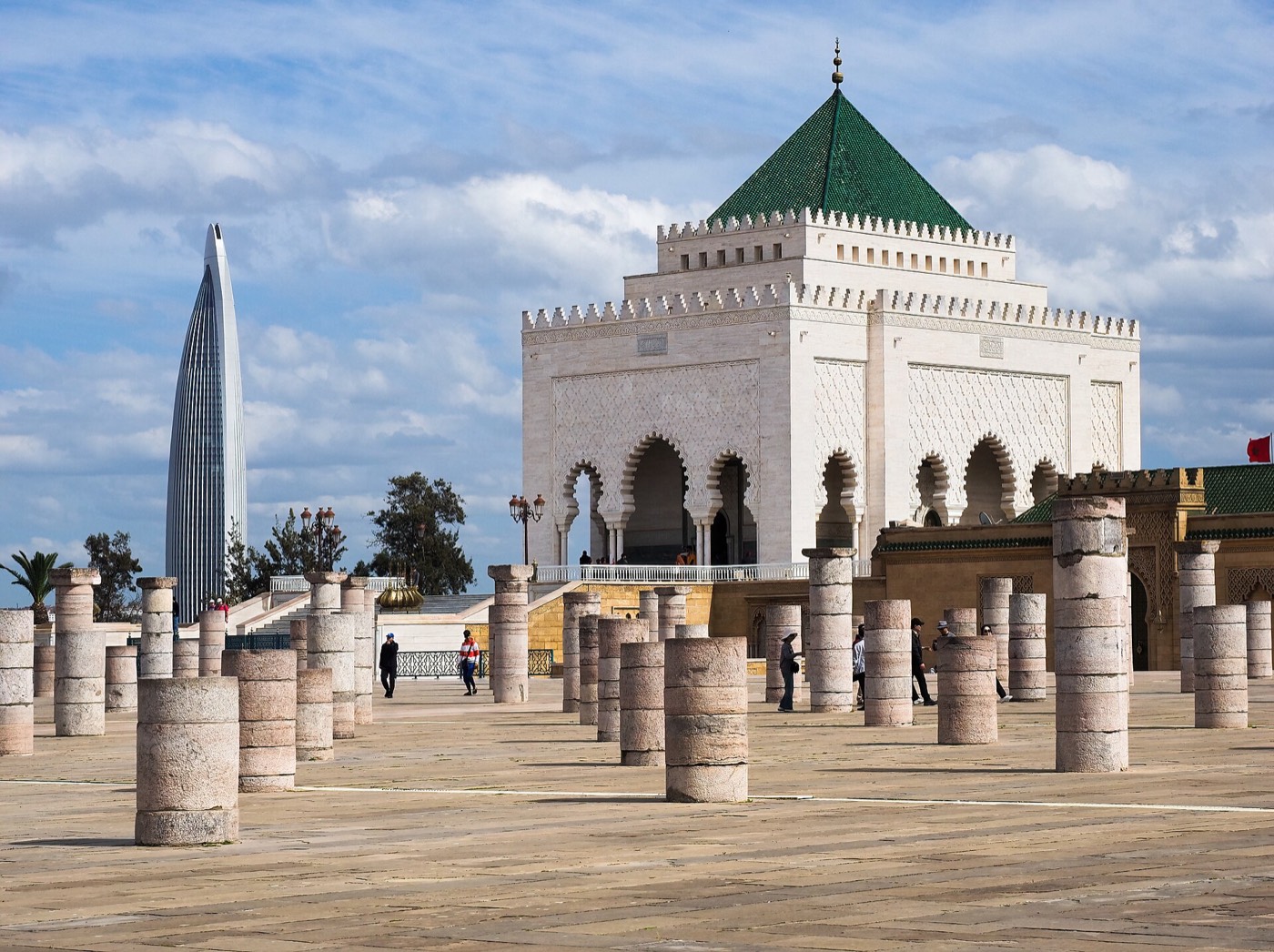
Mohammed V was sultan of Morocco from 1927 and king from 1957; he secured the country’s independence from French colonial rule and died on 26 February 19619. His mausoleum was built between 1961 and 1969, in the reign of his son and successor Hassan II, inside the walls of the great mosque that the Almohad caliph Ya'qub al-Mansur began in 11843,5,10. The mosque was meant to be the largest in the Muslim West, in the words of Museum With No Frontiers, but work stopped shortly before al-Mansur’s death in 1199, leaving its unfinished minaret, the Hassan Tower, and rows of stone columns3,5. Traces of fire in the old mosque were found during the mausoleum’s construction5.
The complex was designed by the Vietnamese architect Eric Vo Toan and comprises three separate buildings on one axis: the mausoleum, a museum and a mosque7,8. The tombs of Mohammed V’s sons, Prince Moulay Abdallah and King Hassan II, who died in 1999, were later placed in the same funerary chamber3,10. In 2012 the Hassan Mosque and the Mausoleum of Mohammed V became one of the three components of the UNESCO World Heritage property ‘Rabat, Modern Capital and Historic City: a Shared Heritage’1,2,4. On an official visit in July 2026 the French prime minister laid a wreath on the tombs of Mohammed V and Hassan II and signed the mausoleum’s guestbook, according to Morocco’s national portal11.
Arsitektur
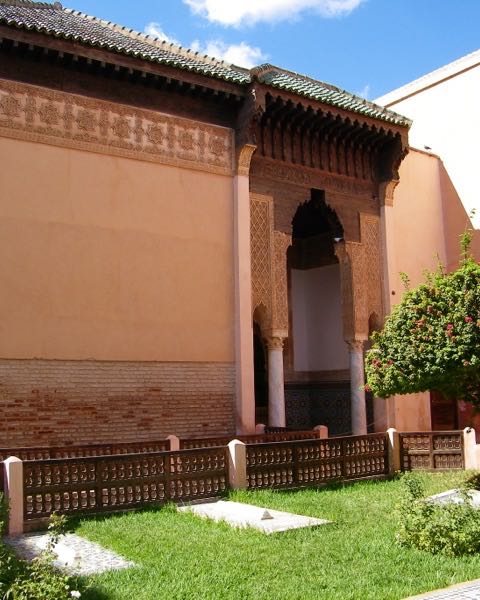
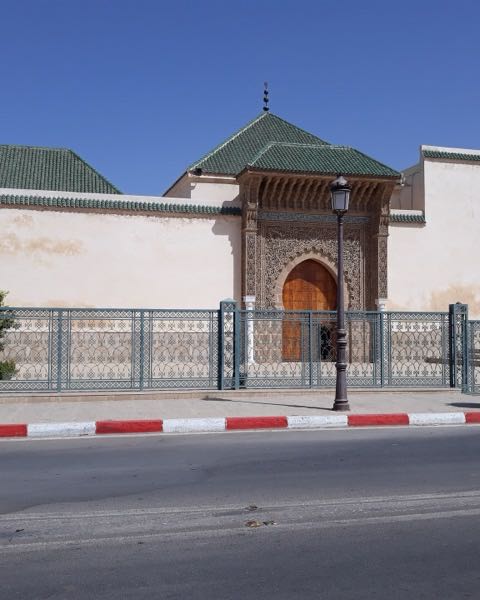
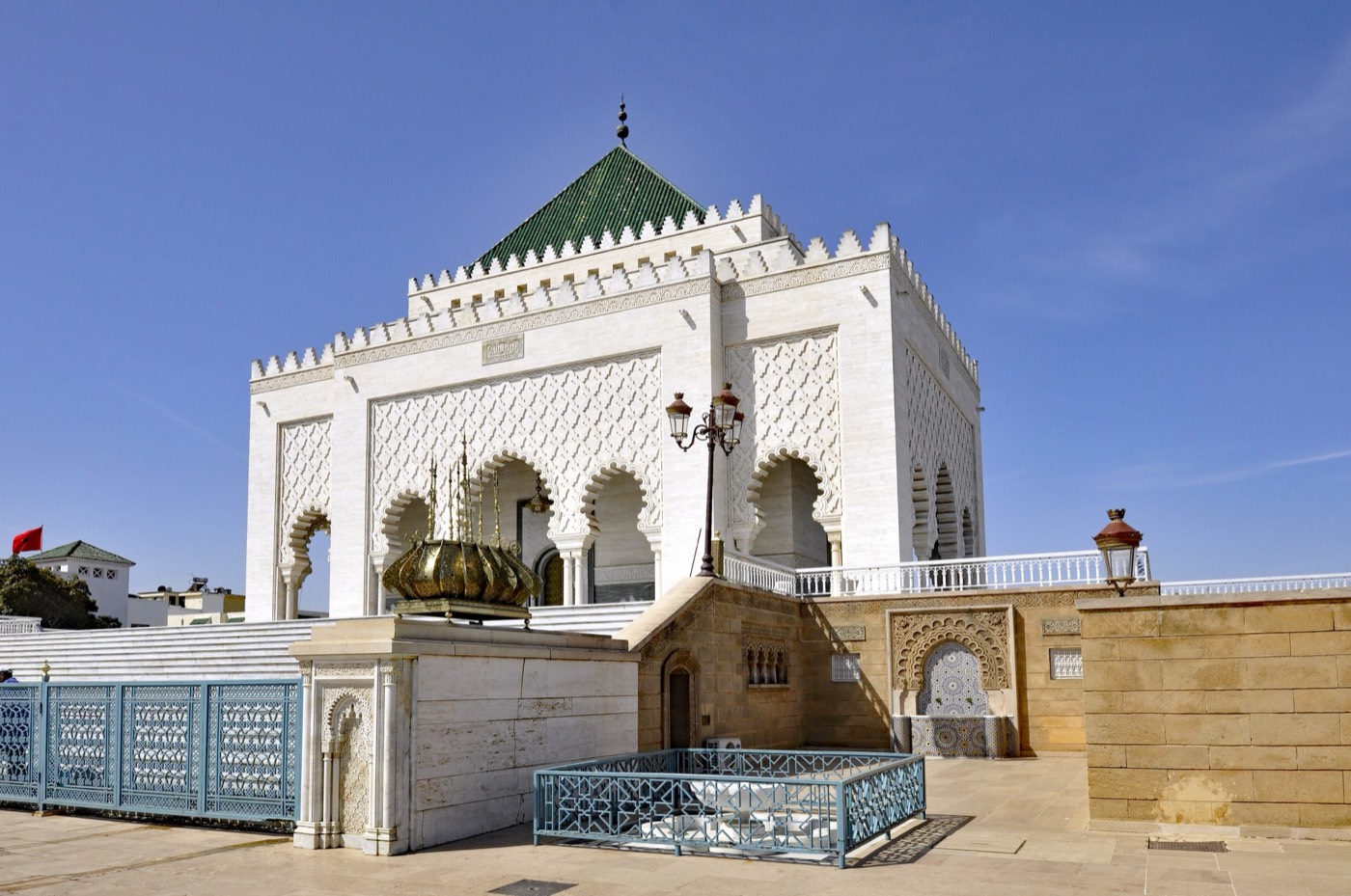
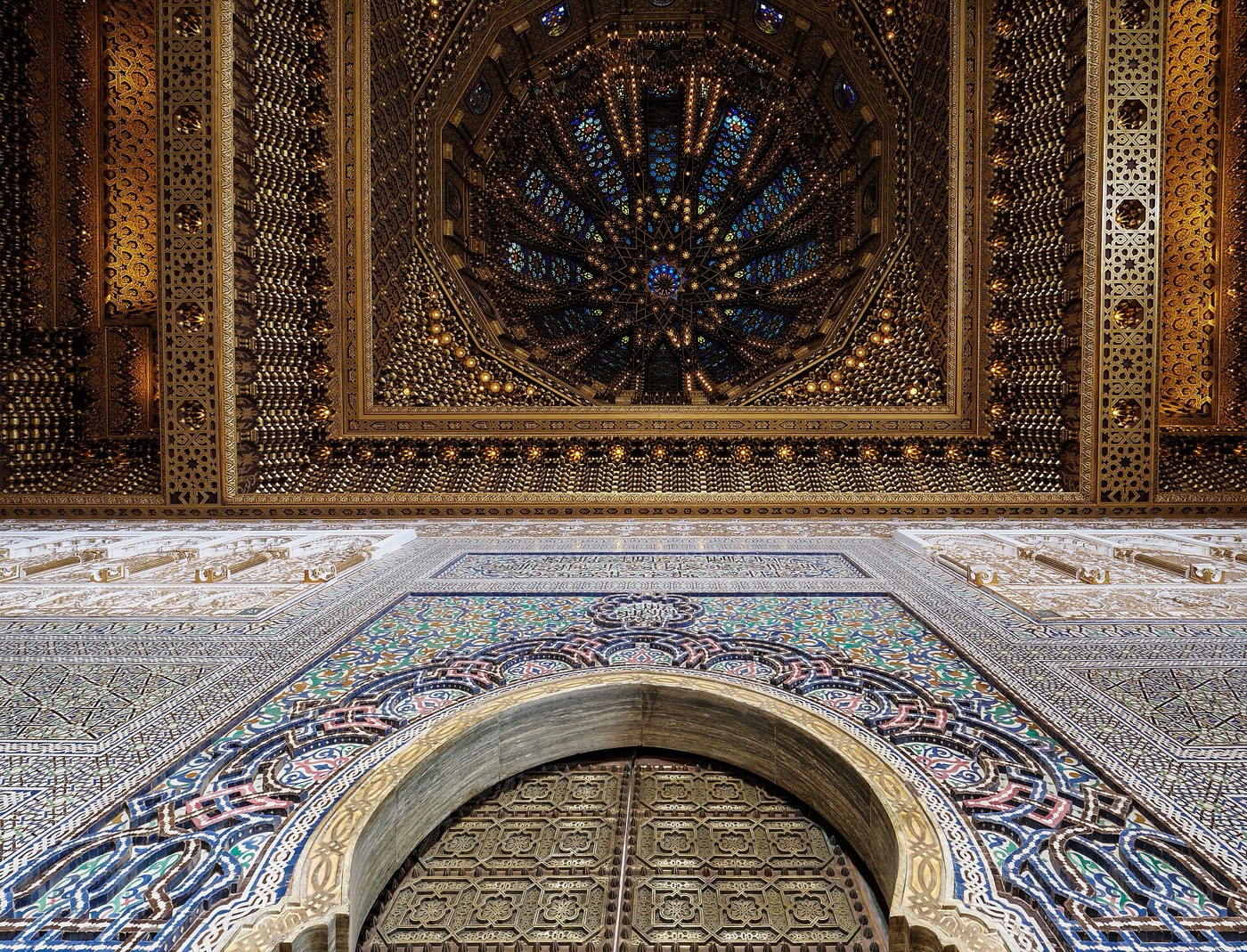
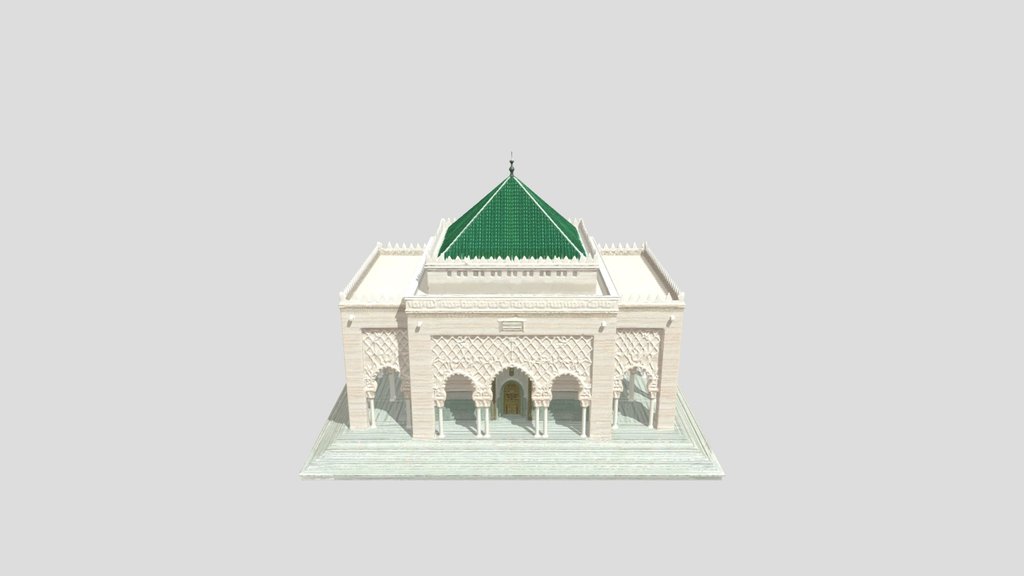
The Rabat heritage foundation describes the mausoleum as a funerary dome directly inspired by the dynastic necropolises of the Marinids and Saadians, crowned by a richly decorated vault and covered outside by a pyramidal roof of green tiles3. Archnet notes that its architectural vocabulary refers to Morocco’s architectural heritage, and the foundation calls the building a synthesis of Moroccan decorative arts rooted in know-how passed down over centuries7,3. Photographs in MIT’s Aga Khan Visual Archive record carved plaster ornament at the door arches, paving, and a wall fountain with tilework8.
Interior
Visitors reach the funerary chamber through a gallery-balcony, from which they look down on the tombs of King Mohammed V and of his sons Prince Moulay Abdallah and King Hassan II3. Above the tombs rises a richly decorated vault, and outside the funerary dome is capped by a pyramidal roof of green tiles3.
Yang perlu diperhatikan
- The pyramidal roof of green tiles over the funerary dome3.
- The gallery-balcony overlooking the three royal tombs3.
- The richly decorated vault over the funerary chamber3.
- Carved plaster and tilework in traditional Moroccan styles8.
- Across the esplanade: the unfinished Almohad minaret and rows of stone columns3,5.
Kunjungan
- Visitors view the royal tombs from a gallery-balcony overlooking the funerary chamber3.
- It is part of the ‘Hassan Mosque and Mausoleum of Mohammed V’ component of the Rabat World Heritage property2.
Informasi resmi: Foundation for the Safeguarding of the Cultural Heritage of Rabat (FSPCR), which coordinates management of the World Heritage propertyPetunjuk arahBuka di OpenStreetMapTur berpemandu di Rabat