Bagian ini belum diterjemahkan, jadi ditampilkan dalam bahasa Inggris.
Sejarah
Timur was a native of the Kesh region, today’s Shahrisabz, and made Kesh his summer residence, where he began the Aq Saray palace in 13801,5. His son Jahangir died in 13762; the Castilian envoy Ruy González de Clavijo, who saw Jahangir’s tomb in 1404, called him Timur’s eldest son, as does a modern study3,4. Jahangir’s son Muhammad Sultan later became Timur’s heir presumptive6,7,15. The Dorus Saodat (Dar al-Siyada) complex was founded after Jahangir’s death, and the same study suggests it was the first Timurid dynastic mausoleum4.
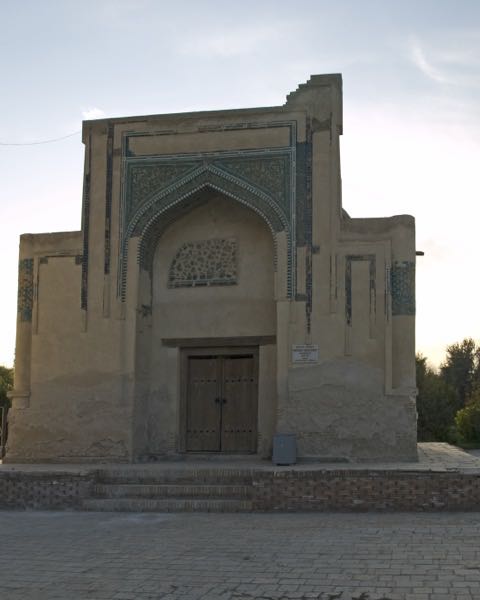
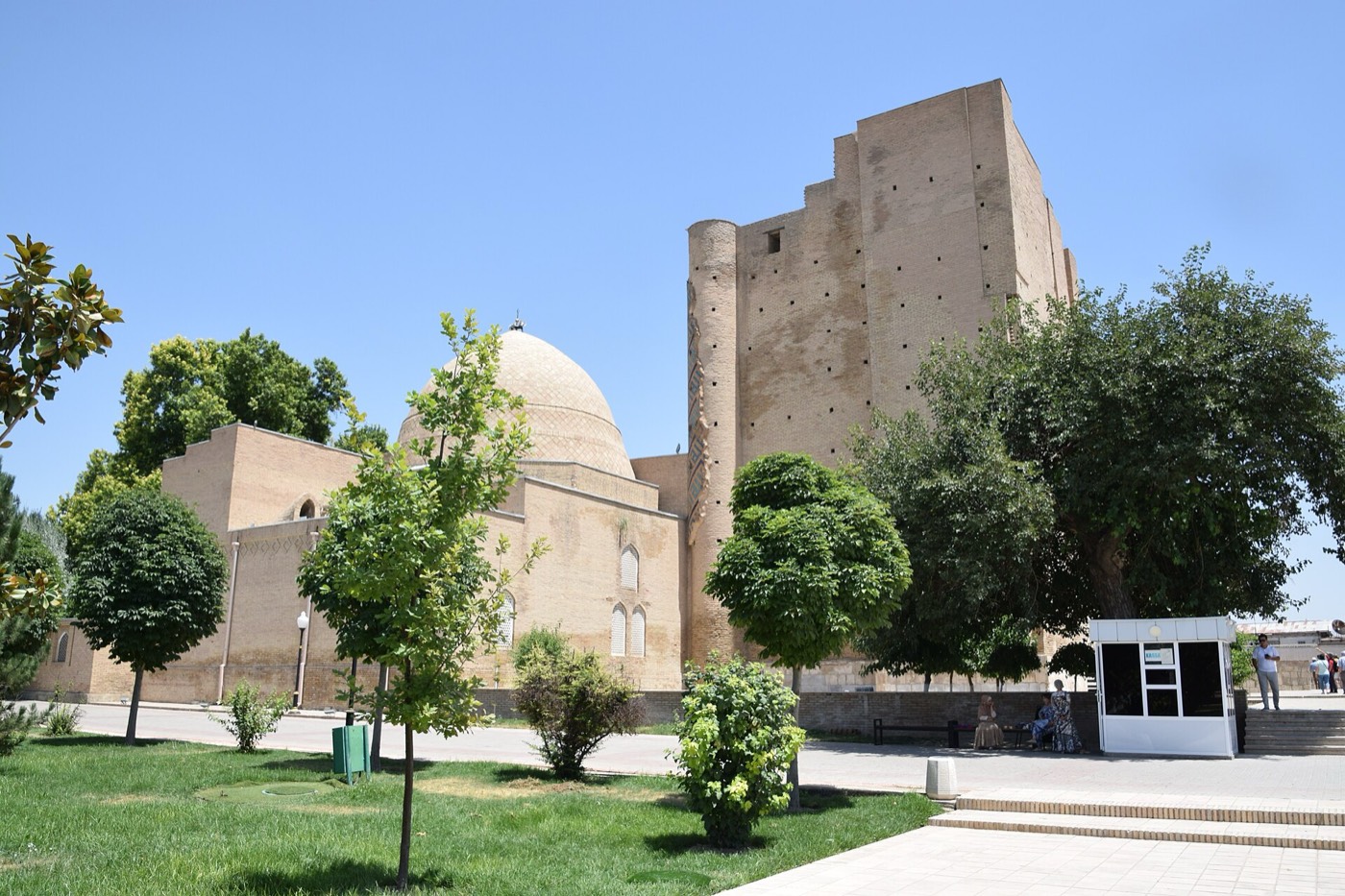
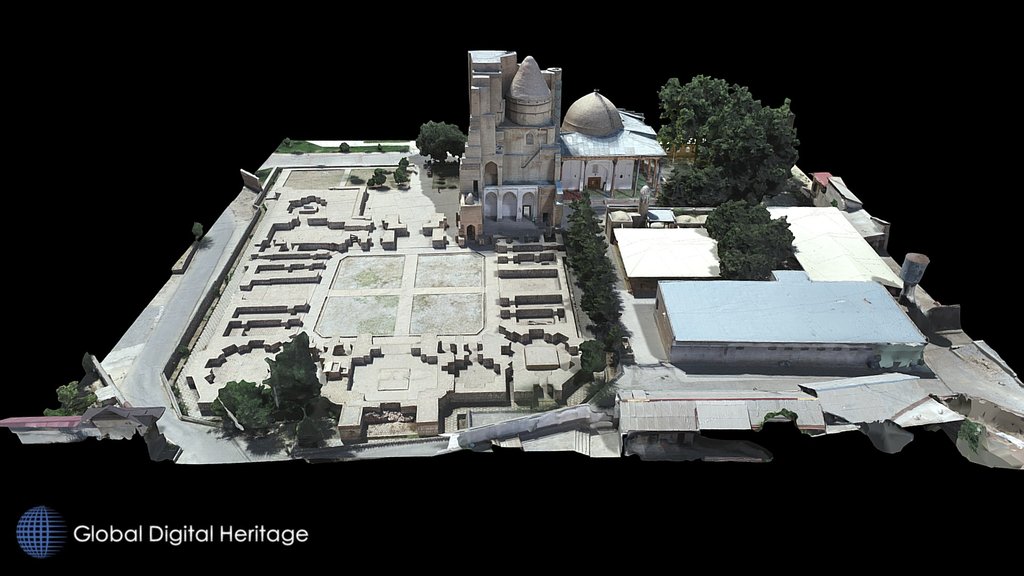
UNESCO describes Dorus Saodat as a vast complex intended as the burial place of the ruling family, with a prayer hall, a mosque and lodgings for the religious community and pilgrims1. When Clavijo visited in 1404, a chamber in which Timur himself was to be buried was still being built3. Timur, however, died at Otrar in February 1405 and was buried in Samarkand, in the mausoleum of his grandson Muhammad Sultan, the Gur-e-Amir, rather than in the family burial ground at Kesh7,8,15. Jahangir and another son, Umar Shaykh (d. 1394), lie in Shahrisabz, not in the Gur-e-Amir2. Of the complex, only part of the portal, Jahangir’s tomb and the mosque survive; excavated ruins were conserved in 1994–199611.
Arsitektur
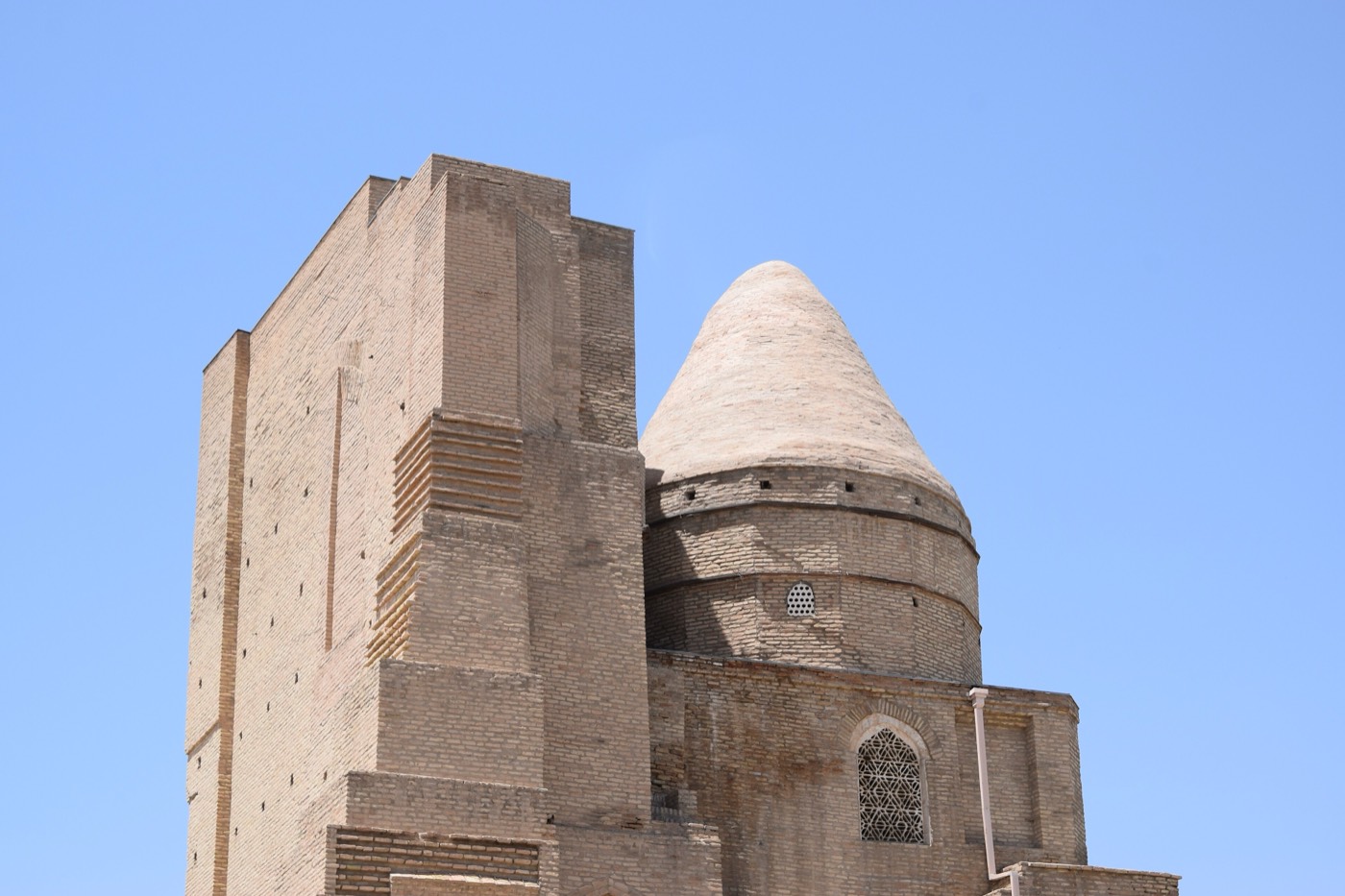
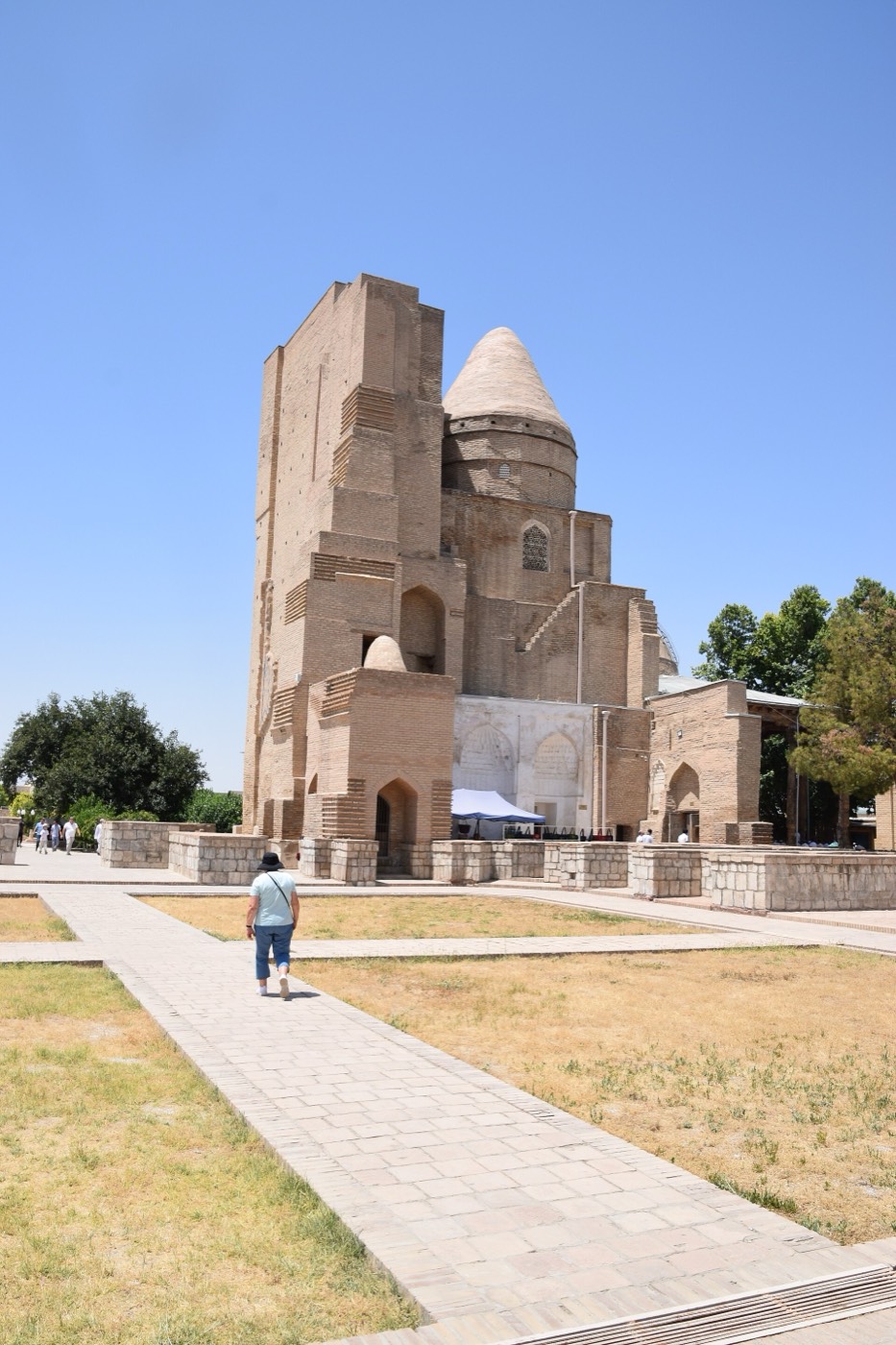
Jahangir’s mausoleum, one of the few parts of the complex still standing, is a brick tomb crowned by a conical dome10,11. UNESCO notes that the complex’s main façade was faced with white marble, and calls Timur’s tomb, also of white marble, a masterpiece of the architecture of the period and one of the finest memorials in Central Asia1. Archnet lists it as a Timurid funerary complex in the Barlas cemetery, opposite the Dar al-Tilavah complex9. Excavations in 1973–1975, 1981–1985 and 1994 uncovered ruins of the complex11.
The complex lies within the Historic Centre of Shakhrisyabz, which UNESCO placed on the List of World Heritage in Danger in 20161. During a regeneration campaign in 2014–2016, many houses were demolished between the Aq Saray and the Kök Gunbad mosque2.
Interior
The 3D scan by Global Digital Heritage, which digitised the Amir Timur Crypt in a campaign launched in June 2021, takes you down into the burial chamber prepared for Timur12. The crypt lies at the back of the Dorus Saodat complex13. The chamber holds the stone casket intended for Timur; UNESCO describes his tomb here as made of white marble1,12. Timur was never laid in it: he was buried in the Gur-e-Amir in Samarkand7,8.
Yang perlu diperhatikan
- The conical dome over Jahangir’s brick mausoleum10.
- The surviving part of the portal; the complex’s main façade was once faced with white marble1,11.
- The crypt at the back of the complex, prepared for Timur’s own burial3,13.
- Timur’s white-marble tomb, which UNESCO calls one of the finest memorials in Central Asia1.
Kunjungan
- The crypt prepared for Timur is at the back of the Dorus Saodat complex13.
- Only part of the portal, Jahangir’s tomb and the mosque still stand; the rest of the complex survives as conserved ruins11.
- The complex is part of the Historic Centre of Shakhrisyabz, on UNESCO’s List of World Heritage in Danger since 20161.
Informasi resmi: Regional Inspection for the Protection and Use of Cultural Heritage Sites, under Uzbekistan’s culture ministry, with the regional authorities (as described by UNESCO)Petunjuk arahBuka di OpenStreetMapTur berpemandu di Shahrisabz