Cette partie n’a pas encore été traduite ; elle est donc affichée en anglais.
Histoire
Pari Bibi, whose name was Iran Dukht Rahmat Banu, was the daughter of Shaista Khan, Mughal subahdar (governor) of Bengal1. Shaista Khan was a son of Asif Khan and a grandson of I’timad-ud-Daulah, in whose tomb at Agra Banglapedia sees a prototype of the plan used here3,4. She married Aurangzeb’s son Prince Muhammad Azam on 3 May 1668 and lived with him in Dhaka1. Azam began Lalbagh Fort in 1678, during his 15 months as viceroy of Bengal, but was recalled before finishing it2. Pari Bibi died young in 1684, during her father’s second term as governor, and was buried in the fort east of its mosque; Shaista Khan built the tomb over her grave1,5.
Shaista Khan took her death as a bad omen and gave up work on the fort, which was never finished1,2. In 1896 the Bengal government’s list of ancient monuments called the tomb “unique in Lower Bengal”6. The Department of Archaeology of Bangladesh has since excavated the fort, finding the remains of 26 or 27 structures with water supply, fountains and roof gardens, and has restored its buildings2. Lalbagh Fort is one of the department’s protected monuments, and since 2023 it has been part of the UNESCO Tentative List entry “Mughal Forts on Fluvial Terrains in Dhaka”7,8. Archnet reports a speculation by Begum L. Habibullah that the tomb in fact holds the Ahom princess Ramani Gabharu5.
Architecture
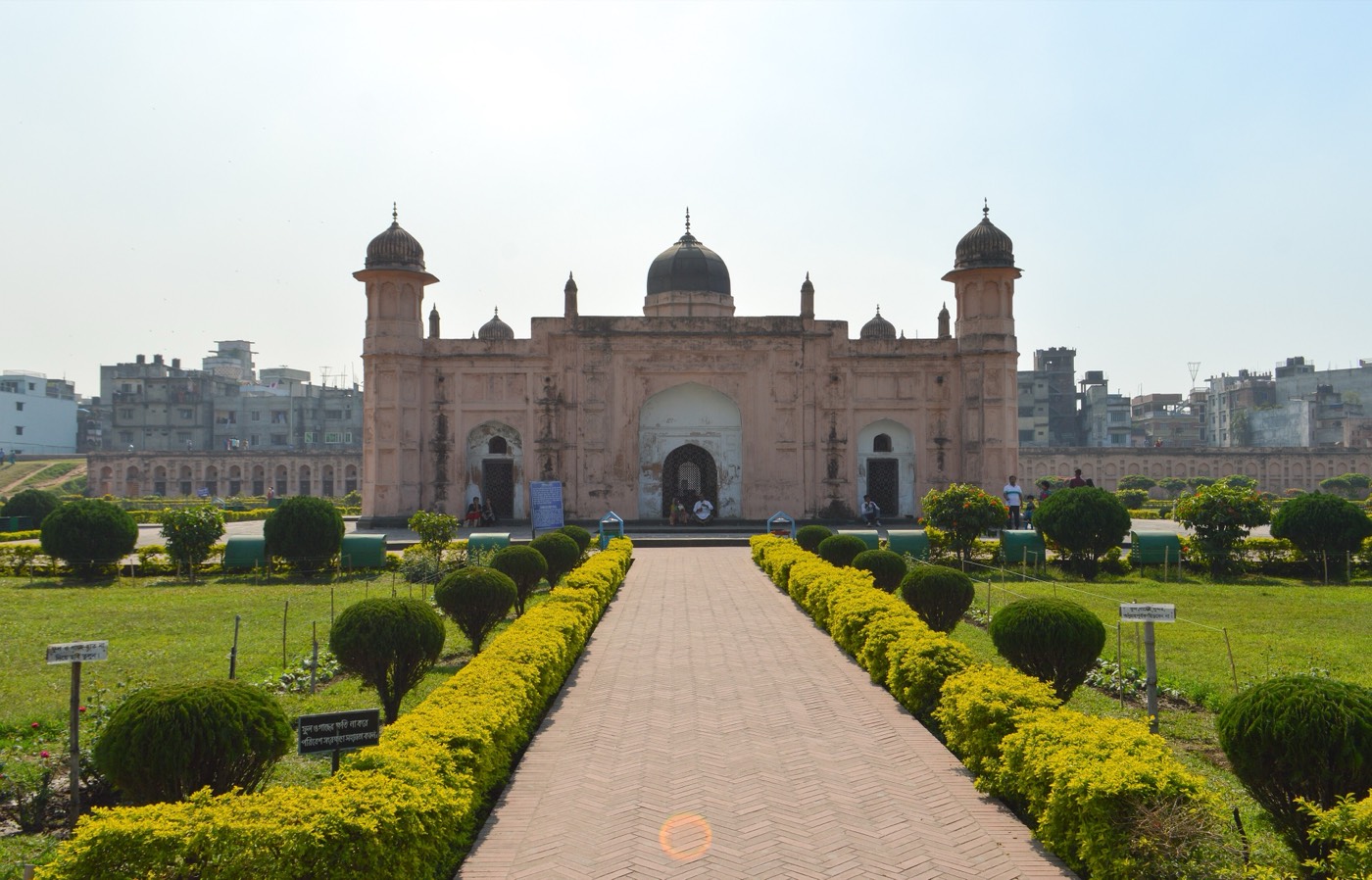
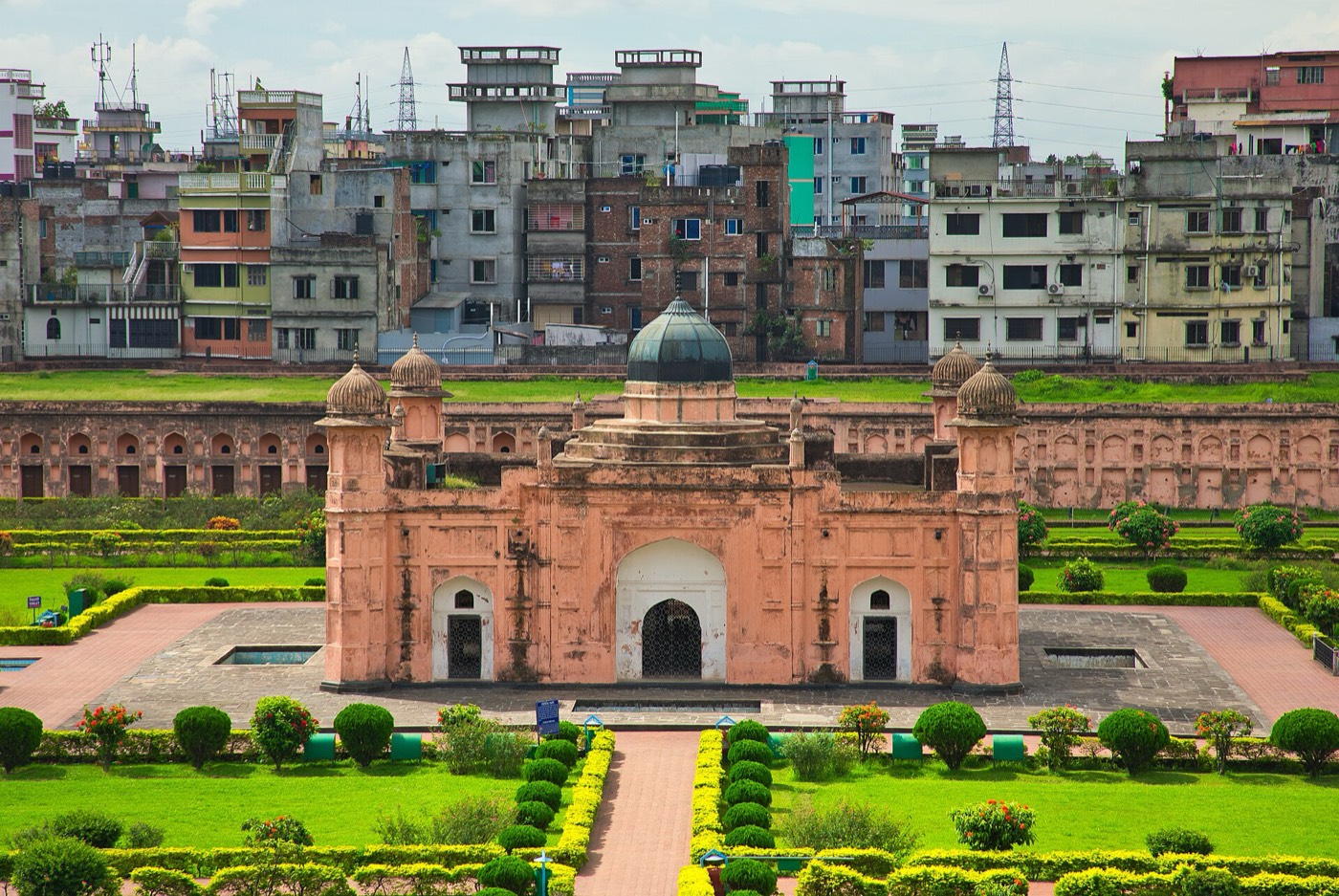
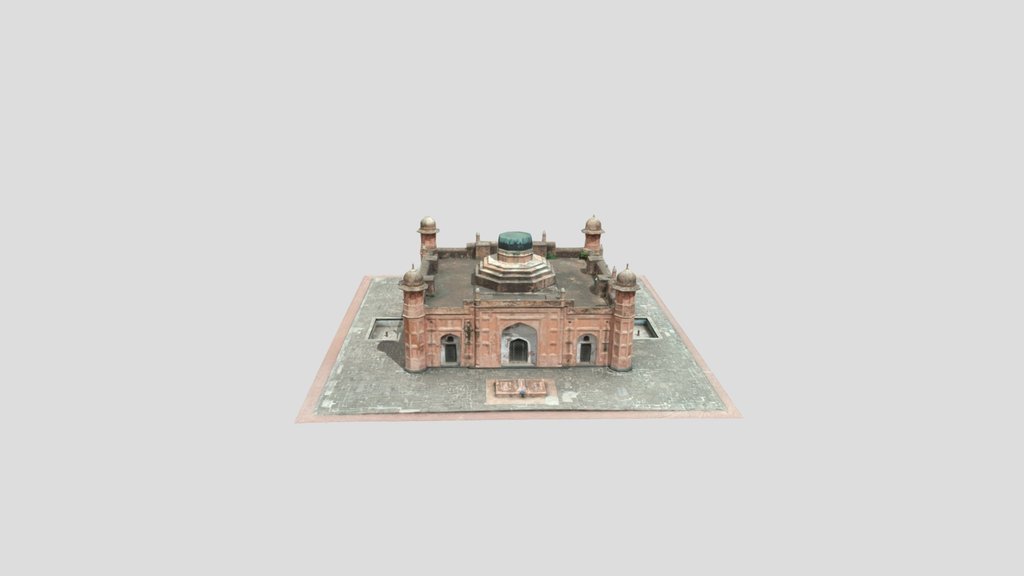
The tomb stands at the centre of the fort, on one east-west line with the Diwan-i-Aam and hammam to the east and the three-domed mosque to the west; a water channel with fountains links the three buildings2. It is square in plan, with eight rooms around a square central chamber: passages in the middle of each side and chambers at the corners, a version of the plan that Banglapedia traces to the tomb of I’timad-ud-Daulah at Agra (c. 1622-1628)1,3. Octagonal towers topped by kiosks stand at the four corners1. Each of the four faces has a central arched entrance in a tall alcove framed by a rectangular fronton, flanked by smaller arched alcoves with lintelled doors1.
Outside, the walls were plastered like those of other Mughal buildings in Dhaka1. The roof is corbelled, with stone slabs laid in overlapping courses, a method Banglapedia compares to the roofing of Hindu temples1,5. Over the central chamber rises an octagonal false dome sheathed in metal: copper according to the 1896 list, and brass, originally gilded, according to Banglapedia1,2,6. Asma Serajuddin notes that in a region that built almost wholly in brick, the tomb stands out for its imported stone: marble from Jaipur, black basalt from Gaya and grey sandstone from Chunar3.
Intérieur
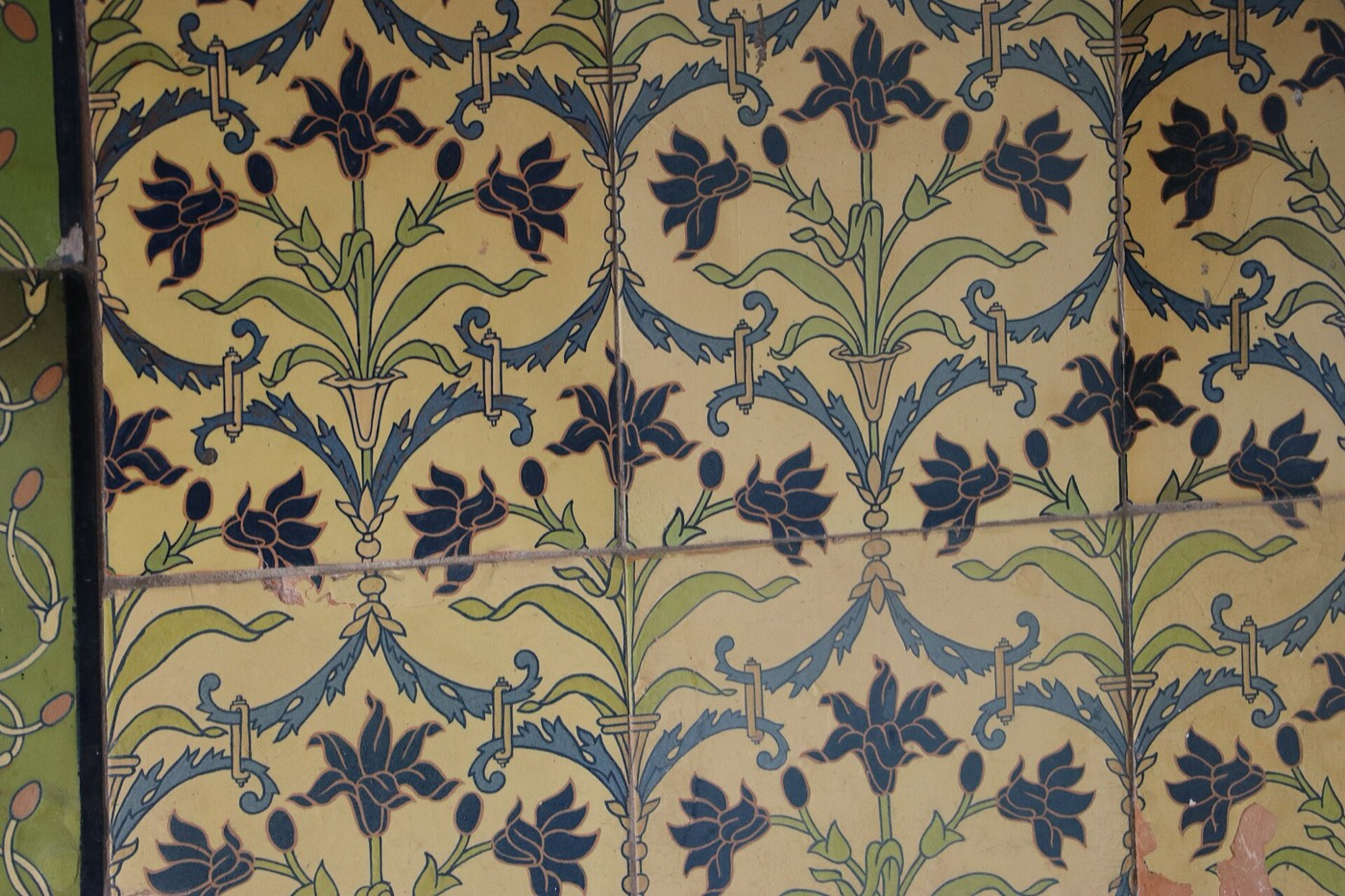
The central chamber, which holds Pari Bibi’s grave, is lined entirely with white marble1,2. Archnet adds that it is entered only from the south, through a sandalwood door decorated with Chinese motifs, while pierced marble screens close the openings on the other three sides5. The 1896 list describes an ornamented floor of marble and basalt6. The four side rooms have a stone dado about a metre high1. The four corner rooms had a dado of floral glazed tiles; those seen today were restored on the model of two originals that survived in the north-east room1,2. A small grave in the south-east corner room is said to be that of Shamsad Begum, whom one Banglapedia article calls Pari Bibi’s daughter and another a possible relative1,2. Underground pipes seem to have crossed the tomb from north to south and east to west, probably to feed the fountains outside1.
À observer
- The marble-lined central chamber under its octagonal false dome1,2.
- Floral glazed tiles in the corner rooms, restored from two surviving originals1,2.
- The corbelled stone roof, laid in overlapping courses1,5.
- The east-west axis that links the tomb, the Diwan-i-Aam and the mosque by a water channel with fountains2.
- The kiosk-topped octagonal towers at the four corners1.
Visite
- The tomb lies inside Lalbagh Fort, one of the Department of Archaeology’s ticketed sites; the department also runs the Lalbagh Fort Museum there8,9.
- The department’s website links to e-tickets for Lalbagh Fort10.
- Lalbagh Fort is the palace fort in the 2023 UNESCO Tentative List entry “Mughal Forts on Fluvial Terrains in Dhaka”, which also includes three river forts near the city2,7.
Informations officielles: Department of Archaeology, BangladeshItinéraireOuvrir dans OpenStreetMapVisites guidées : Dacca