Cette partie n’a pas encore été traduite ; elle est donc affichée en anglais.
Histoire
Ahmed I was born in Manisa on 28 April 1590 and came to the throne on the death of his father, Mehmed III, on 22 December 16033. His great foundation in Istanbul was the Sultan Ahmed complex on the edge of the Hippodrome (At Meydanı), built between 1609 and 1620 by the chief architect Sedefkâr Mehmed Ağa2,7,8. TDV relates that the sultan himself worked with a golden pickaxe when the mosque's foundations were laid3. The mosque opened for worship in 1616, and the complex also had a madrasa, a primary school, a hospital, a public kitchen (imaret), shops, fountains, a Qur'an school (darülkurra) and the tomb2. Ahmed I died on 22 November 1617, after a stomach illness of fifty-one days3.
The tomb was begun after his death and completed in 1619 by his son Osman II2. Osman II was himself murdered at Yedikule in May 1622; his body was brought in secret to Topkapı Palace and, after a funeral prayer the next morning, buried in his father's tomb4. Murad IV, Ahmed I's son by Kösem Sultan, died on 8 February 1640, and his coffin was carried to the tomb in a large procession, with the three horses he had ridden on campaign, saddled backwards, led before the coffin5. Kösem Sultan was killed in the palace harem in September 1651 and buried beside her husband6. TDV counts 36 cenotaphs in the tomb2.
Architecture
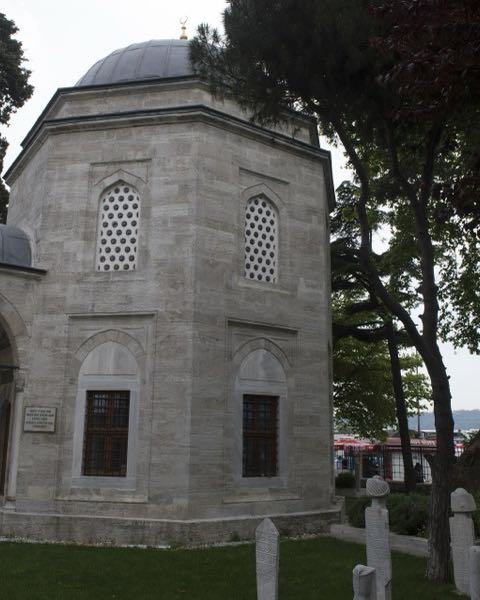
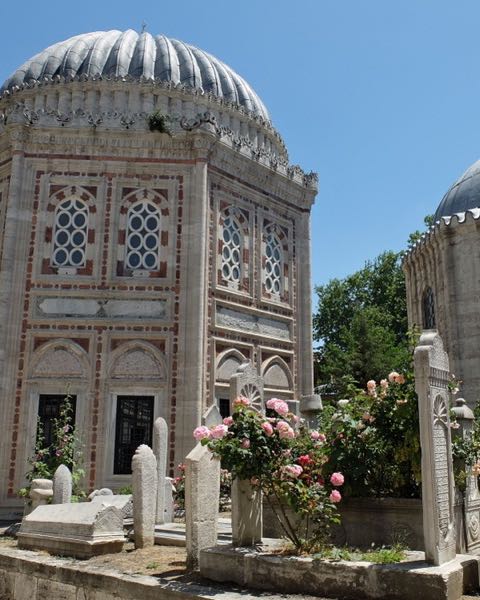
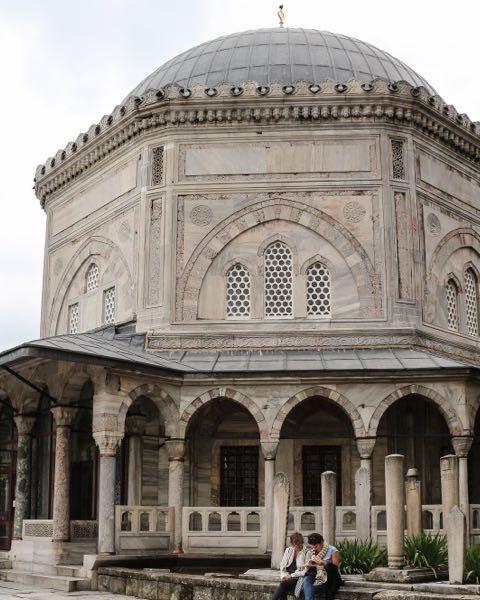
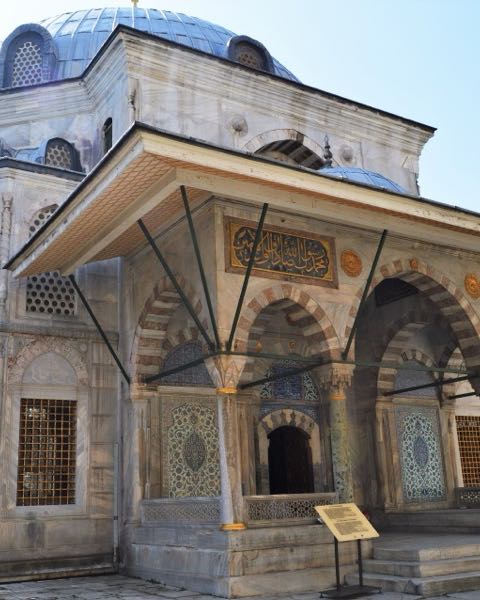
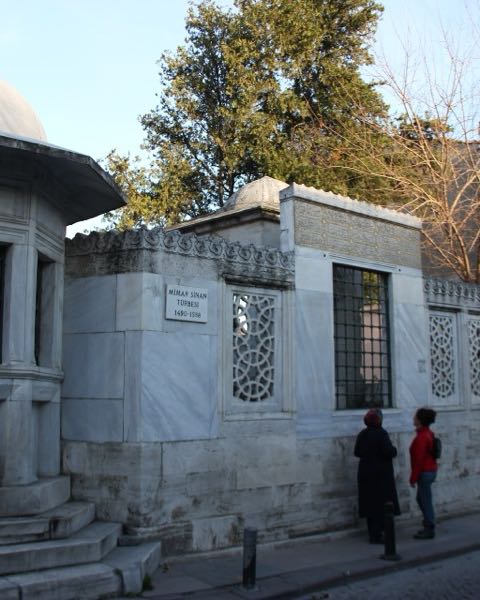
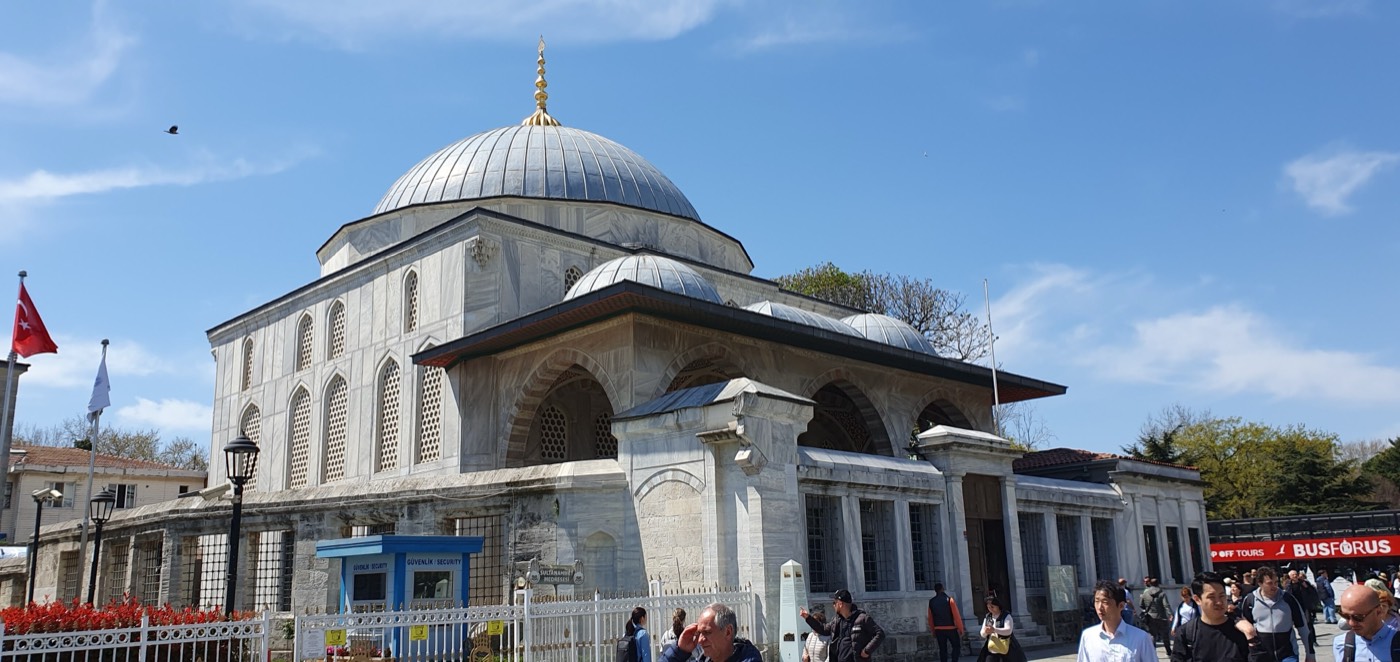
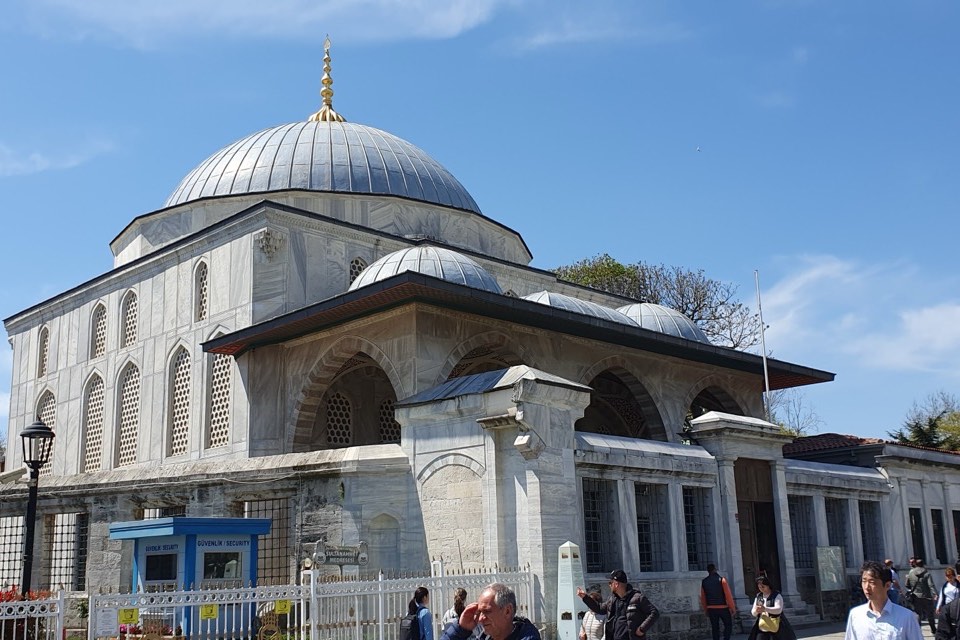
The tomb and the darülkurra share a walled enclosure at the north-east corner of the complex, facing the Hippodrome2. The tomb is a square building with slightly chamfered corners, roofed by a large dome on squinches, with a portico of three bays in front2. Opposite the door an eyvan (a vaulted recess) projects towards the darülkurra, a square domed building whose east wall has a large arched opening placed to give a view of the tomb, and of Ahmed I's cenotaph in particular2. The outer walls are faced with marble and divided by mouldings2.
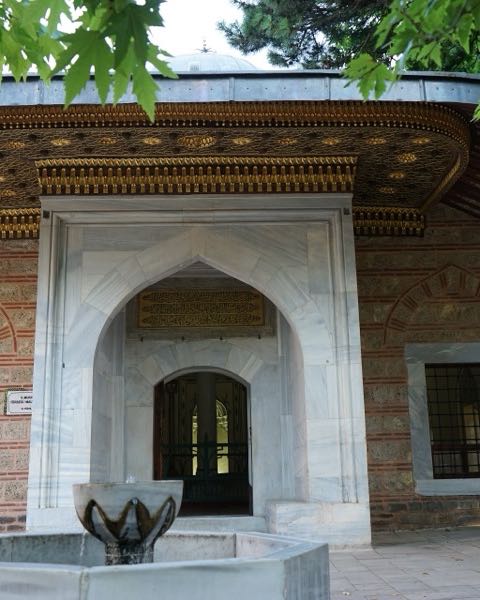
The door has a shell-shaped hood with an inscription above it, and its leaves are faced with ebony and inlaid with ivory, mother-of-pearl and silver; the ceiling of the doorway carries a dense floral design on marble2. Two windows in the enclosure wall, one towards the Hippodrome and one towards the madrasa, were made as sebils (water dispensers) and were probably finished with the tomb in 16192. A third sebil, at the corner facing the Hippodrome, was replaced in the mid-19th century by a timekeeper's room (muvakkithane)2.
Intérieur
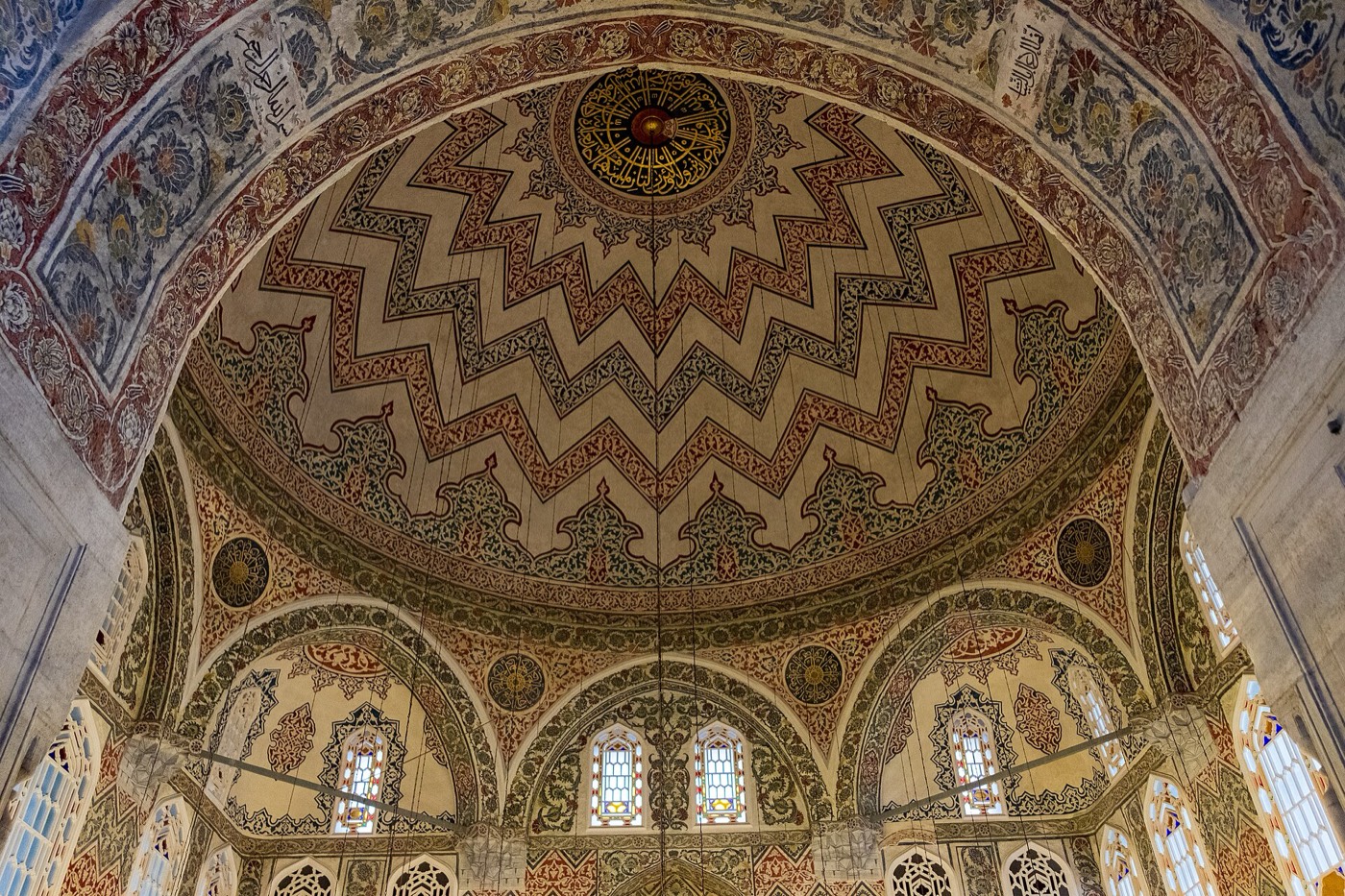
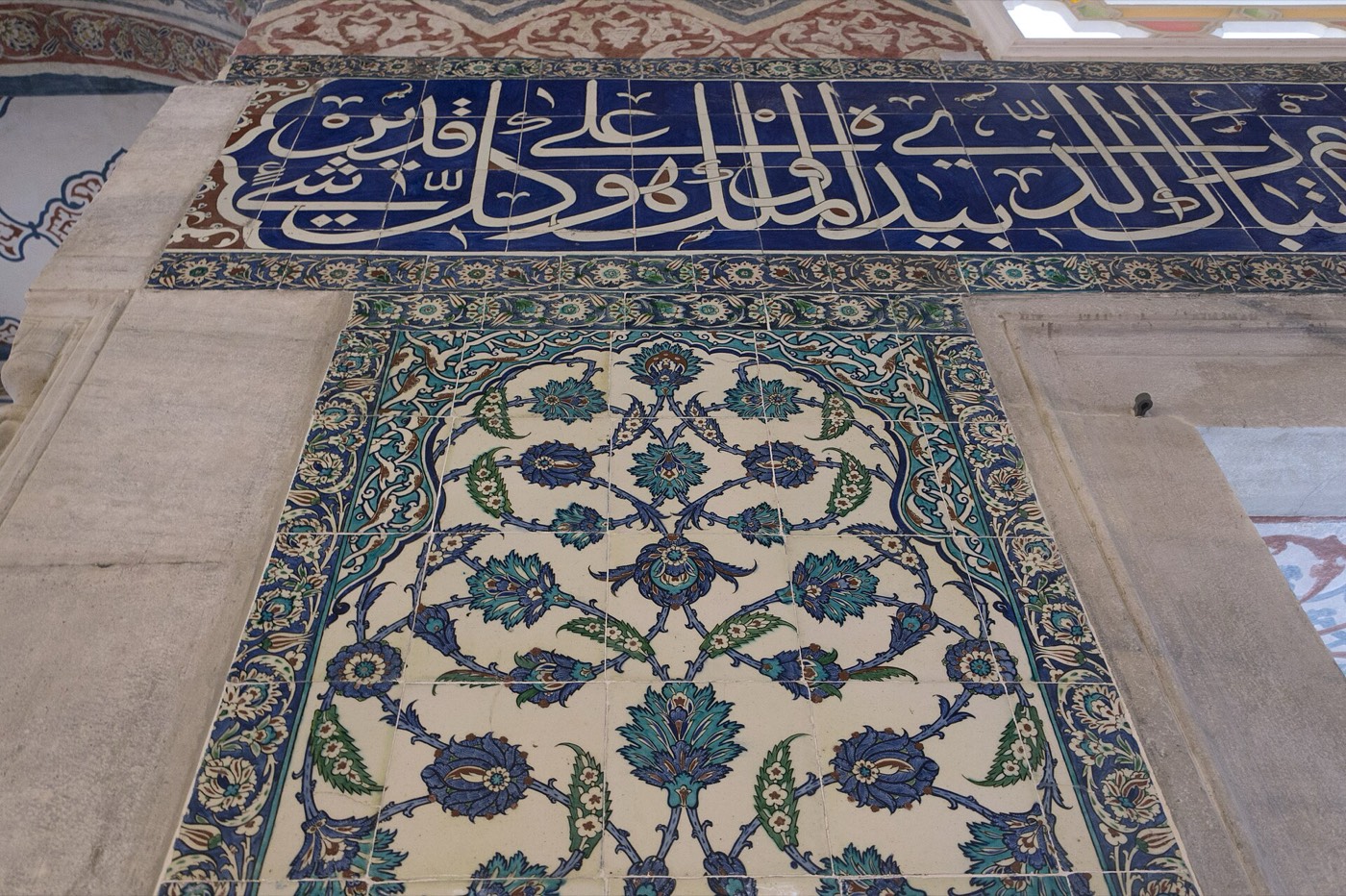
Inside, the walls between the windows of the lower row are faced with underglaze Iznik tiles with floral designs, and a band of tile inscriptions runs around the room above them2. The window recesses have tiles of other colours and arrangements2. From the upper row of windows to the top of the dome the decoration is painted (kalem işi), and TDV notes that its zigzag pattern recalls the covers of the Kaaba2. The 36 cenotaphs include those of Ahmed I, Kösem Sultan, Osman II and Murad IV, among other members of the dynasty2,8. The eyvan opposite the entrance reaches towards the darülkurra, which TDV recorded in 2009 as a store of the Istanbul Tombs Museum Directorate2.
À observer
- The ebony door leaves inlaid with ivory, mother-of-pearl and silver, under a shell-shaped hood2.
- Underglaze Iznik tiles with floral designs, crowned by a band of tile inscriptions2.
- The painted zigzag pattern of the dome, which TDV compares to the covers of the Kaaba2.
- Thirty-six cenotaphs, among them those of Ahmed I, Kösem Sultan, Osman II and Murad IV2.
- The darülkurra next door, with an arched opening facing Ahmed I's cenotaph2.
Visite
- The tomb stands outside the north-east corner of the mosque's outer courtyard, in its own walled enclosure facing the Hippodrome (At Meydanı)2.
- It is one of the 122 tombs in Istanbul assigned to the culture ministry's Istanbul Tombs Museum Directorate9.
- UNESCO names the 17th-century Blue Mosque among the monuments of the four areas of the World Heritage property 'Historic Areas of Istanbul', inscribed in 1985; Kültür Portalı places the mosque in the Sultanahmet Urban Archaeological Site, one of those areas1,8.
Informations officielles: Istanbul Tombs Museum Directorate (İstanbul Türbeler Müzesi Müdürlüğü), Republic of Türkiye Ministry of Culture and TourismItinéraireOuvrir dans OpenStreetMapVisites guidées : Istanbul