Questa parte non è ancora stata tradotta, perciò è mostrata in inglese.
Storia
Kunya-Urgench, on the left bank of the Amu Darya in north-western Turkmenistan, occupies the site of Gurganj, the capital of Khwarazm from the 12th century1,2. From 1097 the province was ruled by a hereditary and largely independent line of Khwarazmshahs, descendants of Anushtigin, a Turkish slave commander who had governed it for the Seljuks8. Shahs such as Il-Arslan (r. 1156-1172) and his son Tekesh (r. 1172-1200) built an extensive but short-lived empire north of the Oxus and in Iran, which collapsed under the Mongol invasion4,5,8. Genghis Khan destroyed Gurganj in 1221; it was rebuilt, but in the 16th century the capital moved to Khiva and the old city was abandoned2.
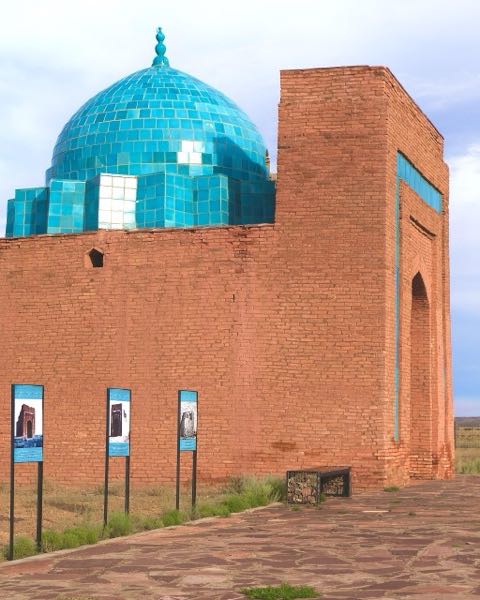
Two square brick tombs in the south of the ruins bear these rulers’ names by tradition only: Archnet calls the link with Il-Arslan a popular attribution and says the Tekesh tomb’s date and patron are not established4,5. ICOMOS dates them to about 1150 and about 1195, each with a question mark, while Archnet says most scholars place the ‘Il-Arslan’ building in the early 13th century2,4. Archnet and IRCICA list the smaller tomb under the name of the theologian Fakhr al-Din al-Razi, who according to Britannica died near Herat in 1209; locally the larger is called Gokgumbaz, ‘blue cupola’, or Sheikh Sherip Baba4,5,6,9. Both were restored from the 1980s and joined the World Heritage List in 20051,2,3.
Architettura
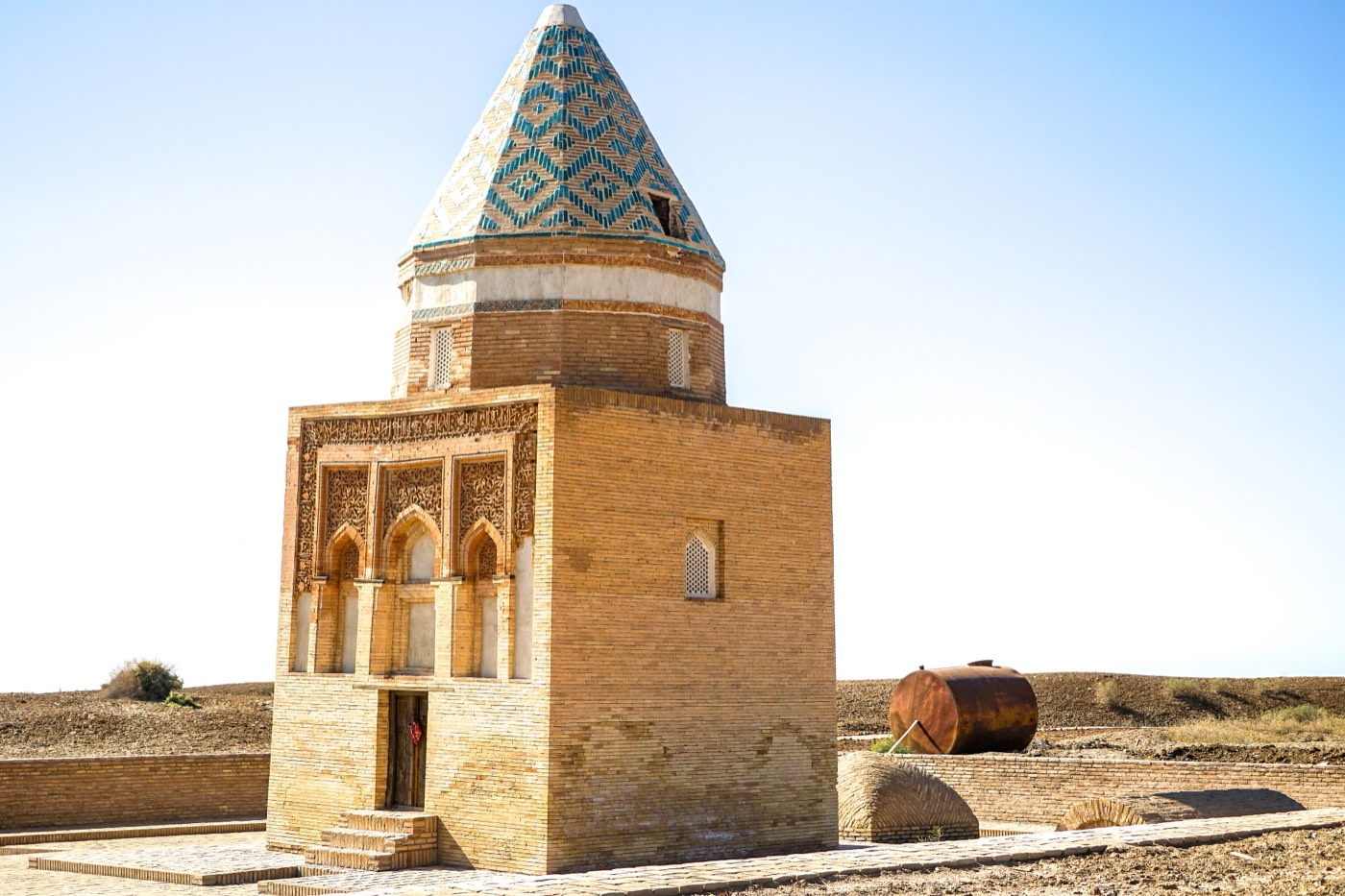
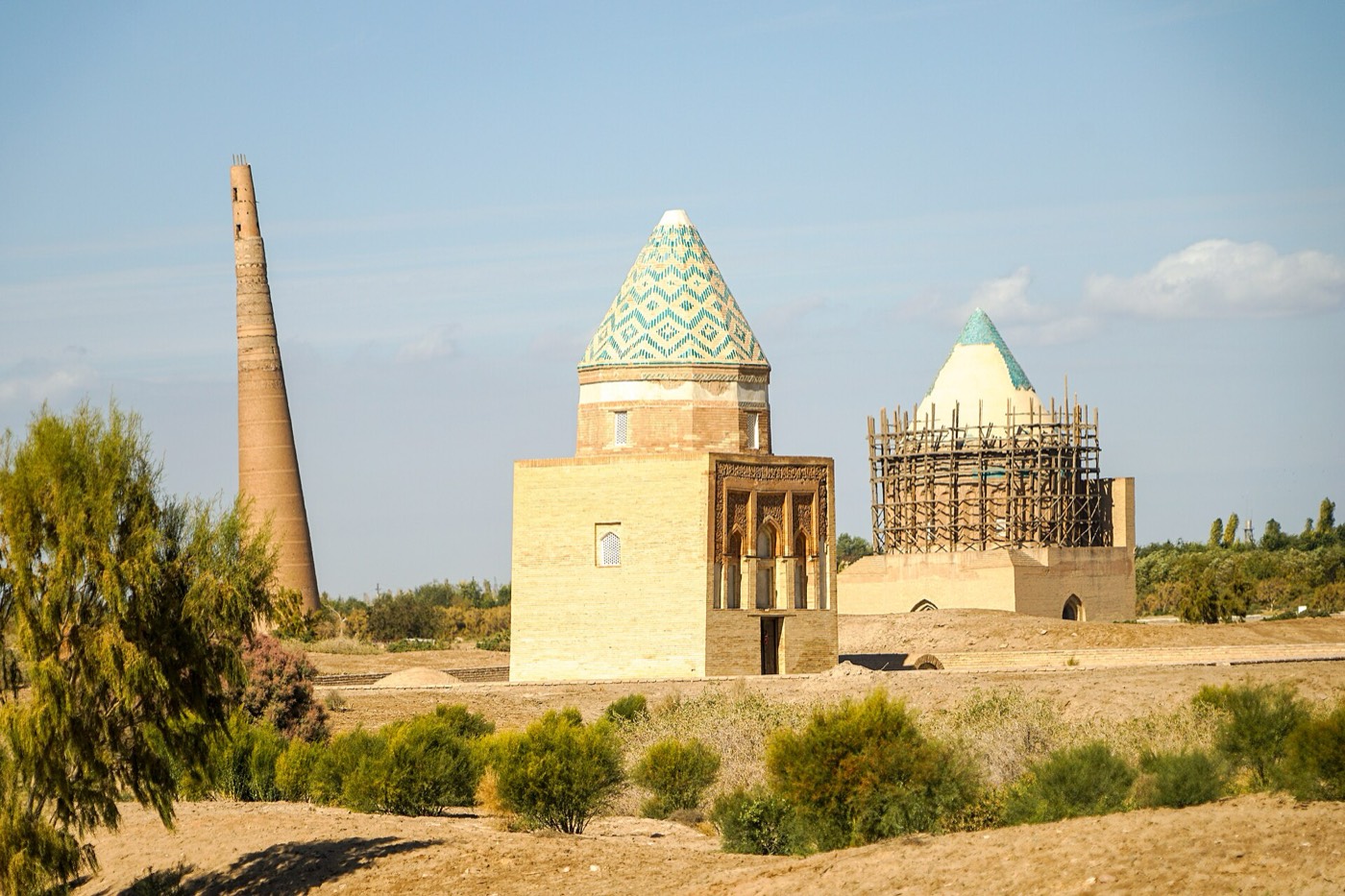
ICOMOS describes both as square brick tombs with conical roofs, the Tekesh tomb being the larger2. The ‘Il-Arslan’ tomb is a tapering brick cube under a twelve-sided drum and a twelve-sided pyramidal roof, decorated with blue glazed tiles laid vertically in diagonal squares against plain brick3,4. Carved terracotta inscriptions frame its entrance; Archnet explains that such facings were laid out in brick on the ground, coated with clay, carved, cut into panels, fired and reassembled on the wall2,4. Archnet notes the building’s simple form and its stress on the silhouette and colour of the roof, and sees its influence in the Tekesh tomb to the north4.
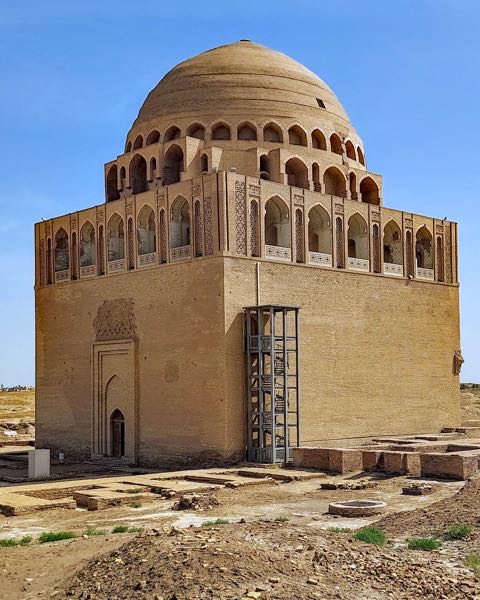
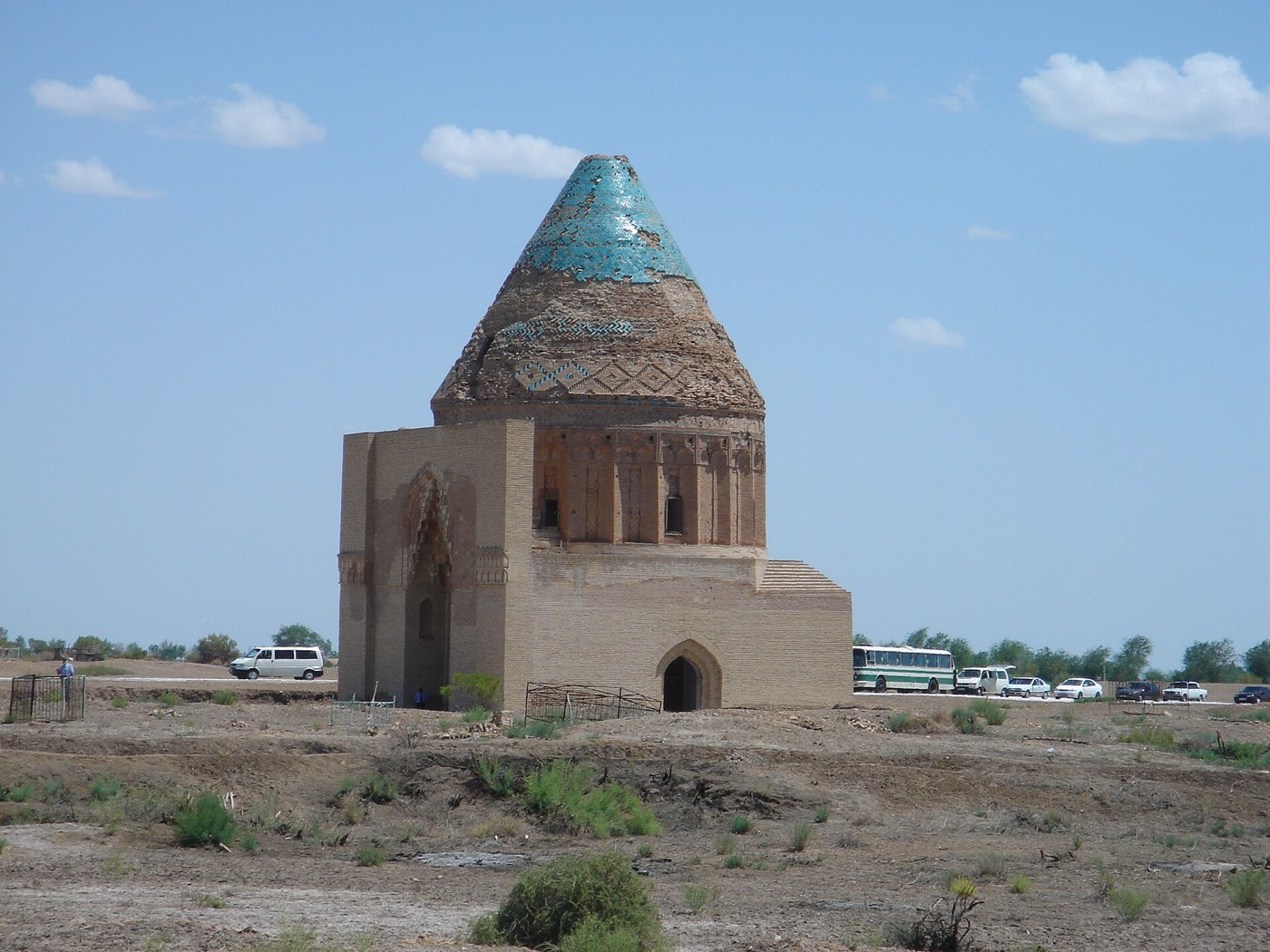
The Tekesh tomb measures 11.45 by 11.45 m, and the nomination file gives its 24-sided conical roof a height of 18 m3. Its corners are cut back to a partial octagon, and a drum of terracotta-inset panels alternating with triangular flanges, with muqarnas between them, carries a double dome: an inner dome under the conical shell5. Blue tiles laid in a herringbone pattern, some of them still in place, decorate the roof; a frieze of glazed tiles with raised calligraphy runs round its base, and muqarnas line the portal arch2,5. IRCICA reports annex buildings found in excavations, evidence that the tomb belonged to a larger complex7. Archnet calls it an elaborate example of the Khwarazmian brick cube under a pyramidal roof, drawing on both the Seljuk tomb tower and the domed square mausoleum5.
Interno
In the ‘Il-Arslan’ tomb daylight enters through perforated stone grilles in small arched windows and in the drum above them4; the restoration of the 1980s repaired the interior, fitted the windows with lattice screens (panjara) and added carved doors3. In the Tekesh tomb the chamfered corners turn the square room into a partial octagon that carries the drum and an inner dome, hidden beneath the conical outer shell5. Its brickwork was conserved and its plaster renewed in works that began in 1983, but in 2004 the nomination file described the outer dome as badly eroded and partly collapsed3.
Cosa osservare
- The twelve-sided roof of the ‘Il-Arslan’ tomb, its blue tiles laid in diagonal squares4.
- Carved terracotta inscriptions framing the entrance of the ‘Il-Arslan’ tomb2,4.
- Herringbone tilework and a band of raised calligraphy on the Tekesh tomb’s conical roof5.
- The flanged drum of the Tekesh tomb, with muqarnas between the flanges5.
- The Kutlug-Timur minaret near the Tekesh tomb, about 60 m high2,5.
Visita
- Both tombs lie in the southern section of the World Heritage property, which also holds the Kutlug-Timur minaret and the Turabek Khanum mausoleum2.
- The site museum is in the Dash Mosque, an early 20th-century building at the eastern entrance of the northern section2.
- UNESCO notes that Kunya-Urgench is still a pilgrimage centre and that most of its visitors are pilgrims from the region1.
Informazioni ufficiali: State Historical and Cultural Park “Kunya-Urgench”, with the National Department for the Protection, Study and Restoration of the Historical and Cultural Monuments in Turkmenistan, based in Ashgabat (as described by UNESCO)Indicazioni stradaliApri in OpenStreetMapVisite guidate: Kunya-Urgench