Questa parte non è ancora stata tradotta, perciò è mostrata in inglese.
Storia
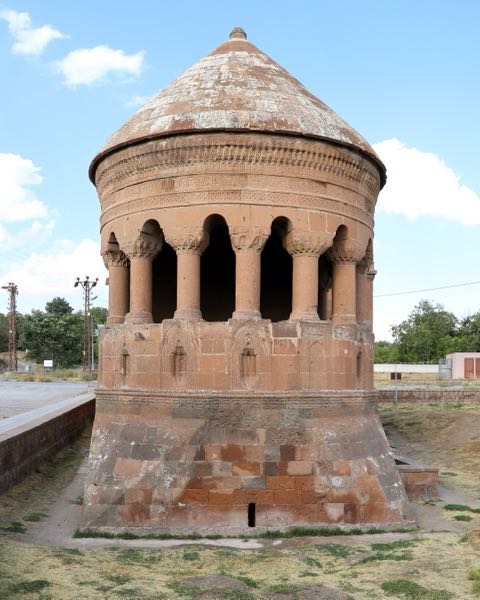
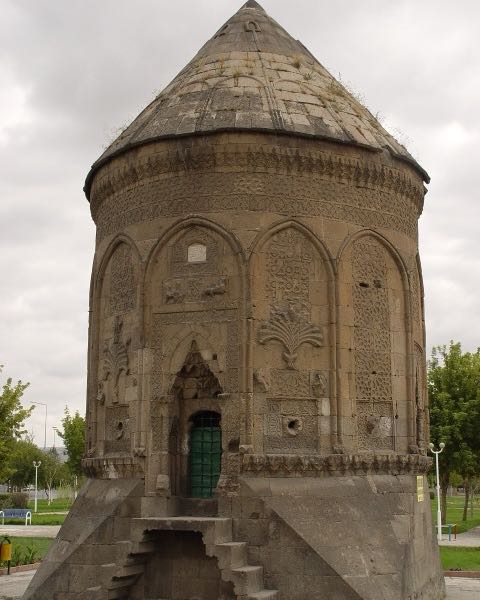
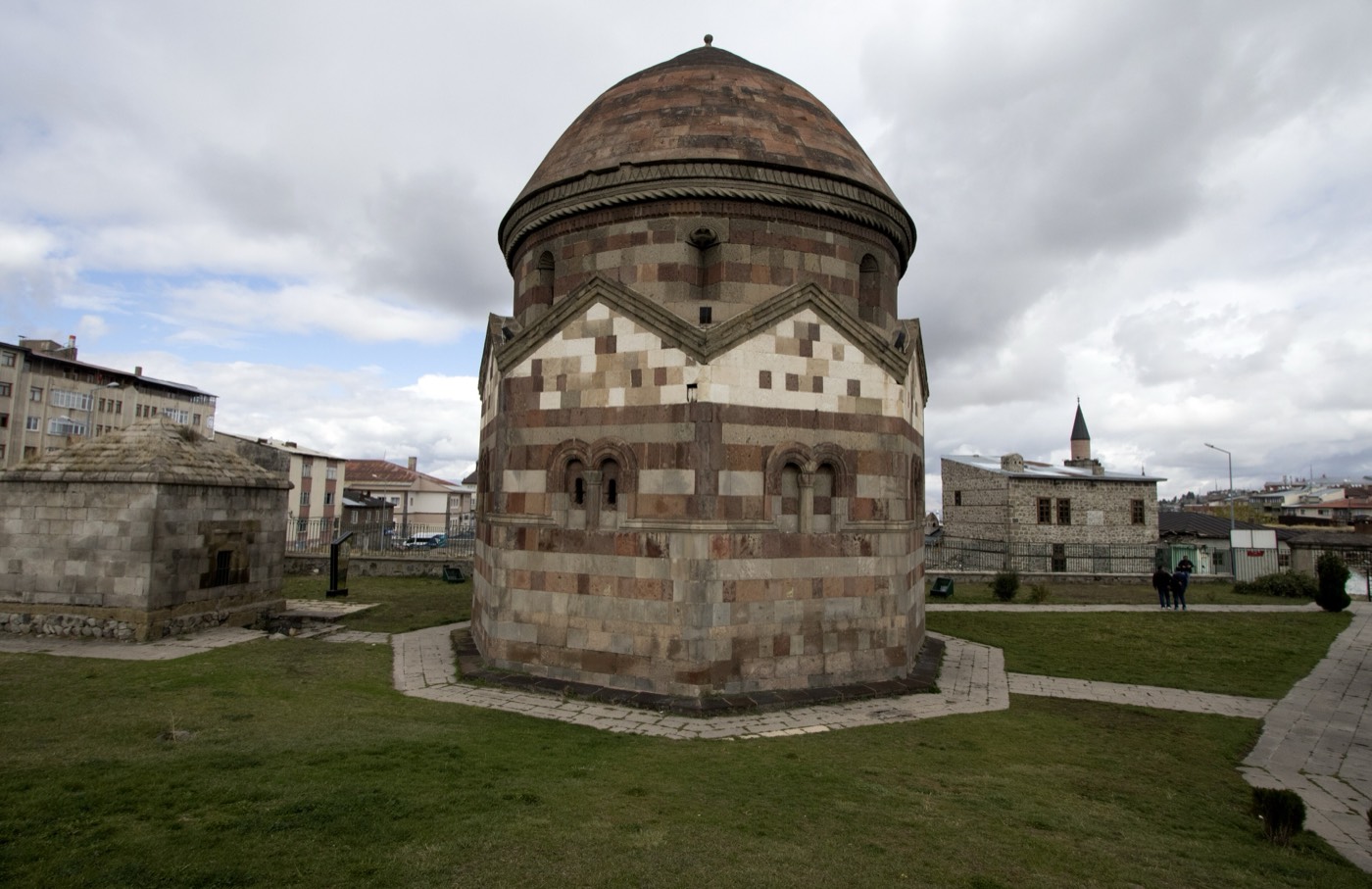
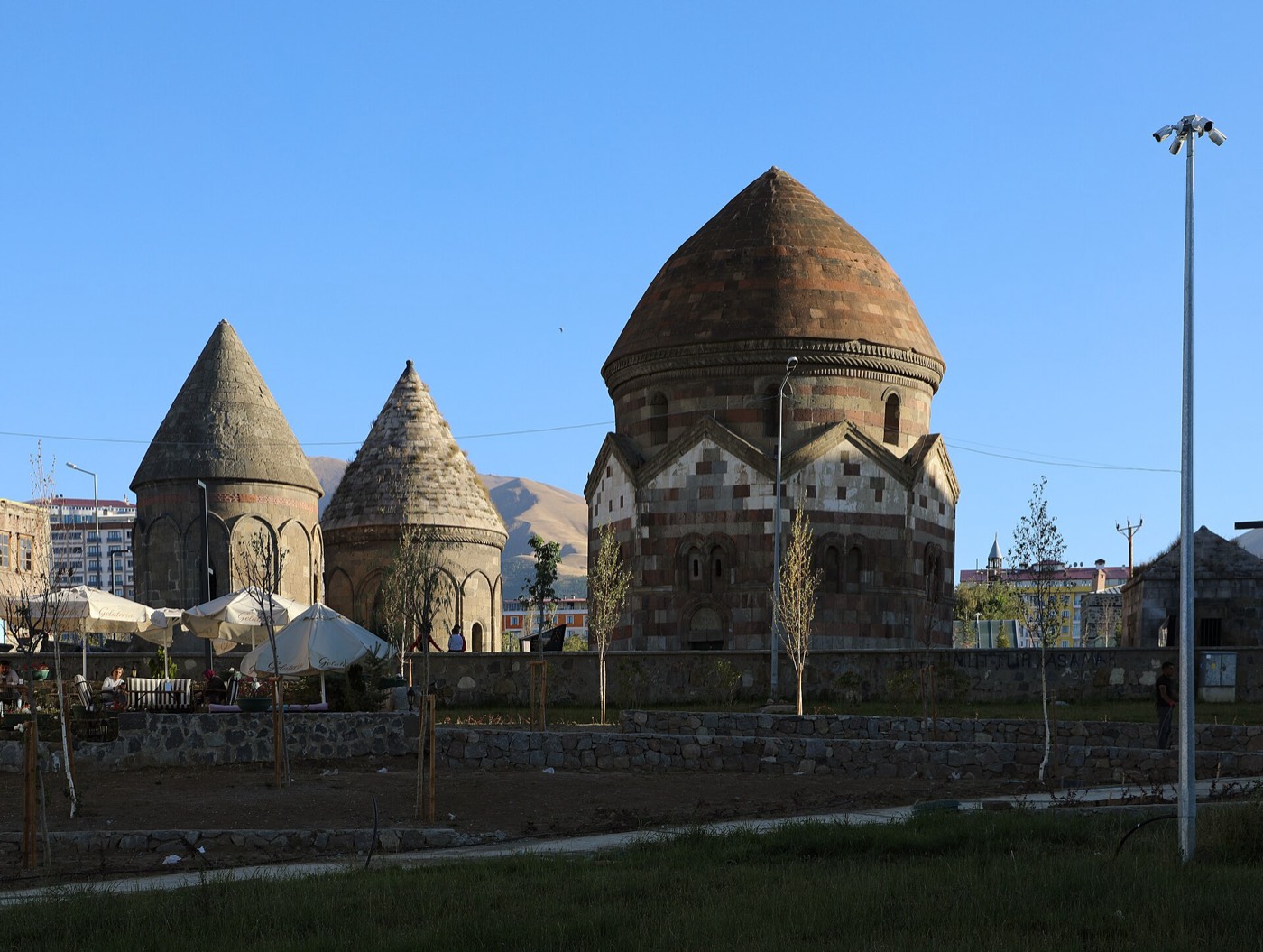
The Saltukids, one of the Turkish principalities founded in Anatolia after the battle of Malazgirt in 1071, ruled Erzurum and its region4,5. The largest of the Üç Kümbetler (“three kümbets”), behind the Çifte Minareli Medrese in central Erzurum, is traditionally held to be Emir Saltuk's tomb1,2. No inscription records its builder or date2,6. TDV says researchers agree it may have been built under the Saltukid emir İzzeddin Saltuk in the second half of the 12th century, and Kültür Portalı gives the late 12th century; Erzurum's culture directorate accepts it as İzzeddin Saltuk's tomb but dates it to the second half of the 13th century1,2,6. The two smaller kümbets are dated to the 14th century1,2,6.
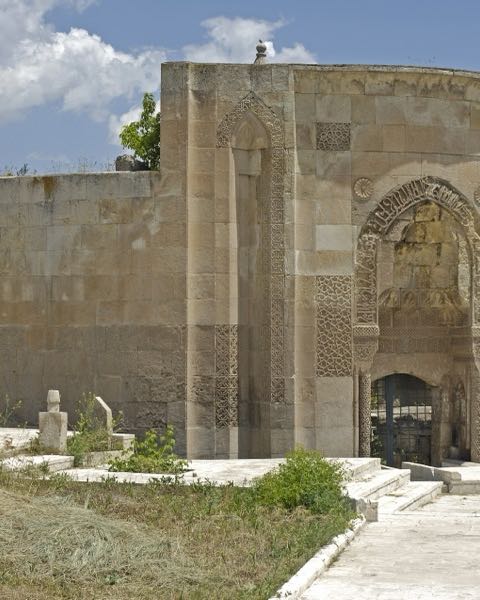
Next to the three tombs stands a small square building that Kültür Portalı says has been read either as a kümbet or as a masjid; Erzurum's directorate and TDV count it as a kümbet, perhaps of the 13th century, with an interior of 3.19 by 3.19 m1,2,6. The Ministry of National Education repaired the kümbets in 19561. The Erzurum Archaeology Museum, built between 2018 and 2021, now stands on the site, in the Rabia Ana quarter3. Kültür Portalı and TDV link the animal reliefs with the twelve-animal calendar of the Central Asian Turks, while Erzurum's directorate notes that only five animals appear1,2,6.
Architettura
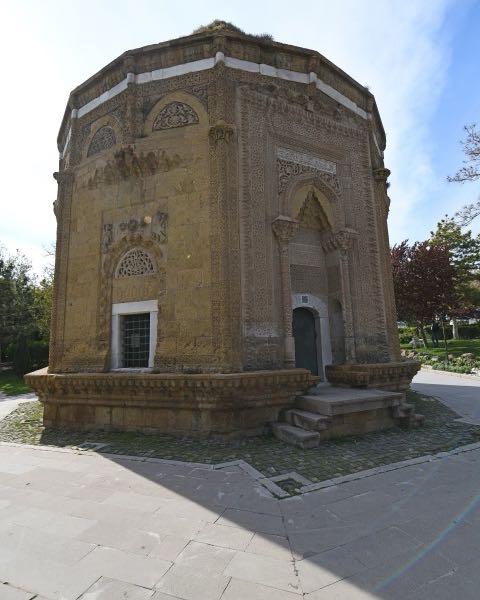
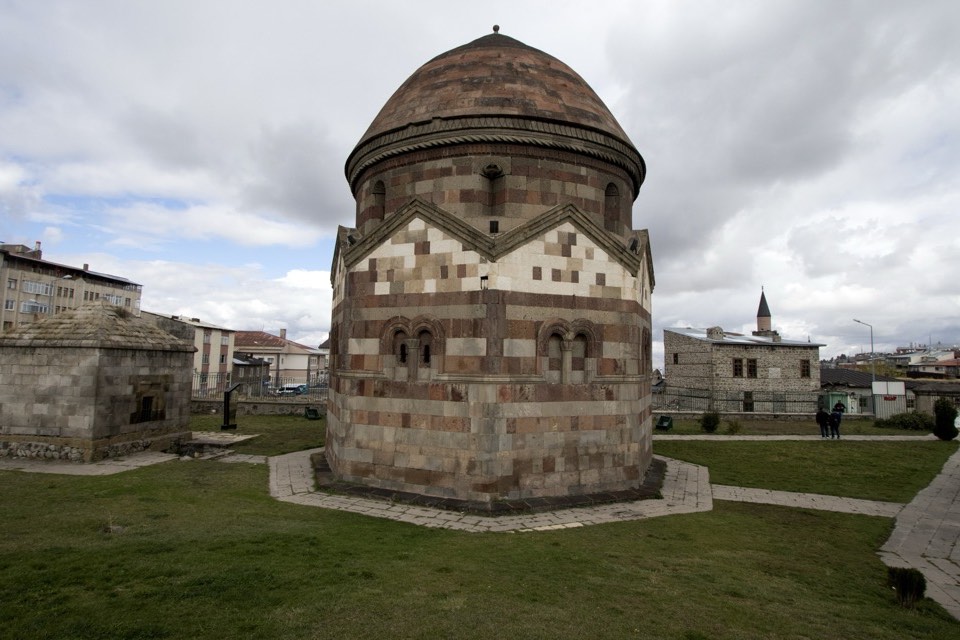
The Emir Saltuk Kümbeti is an octagonal tower over a crypt2,6. Each of its eight faces ends in a triangular pediment, and above them a cylindrical drum carries a low cap that is closer to a dome than to the usual cone, finished with a stone finial1,2,6. The walls are of cut stone in alternating colours: Kültür Portalı and TDV speak of two colours, Erzurum's directorate of red, white and grey1,2,6. Twin round-arched windows open on the four faces that look to the cardinal points, and blind ones on the diagonal faces keep the design symmetrical2,6. The entrance on the north has a flat lintel under a tympanum decorated with six-pointed stars2,6.
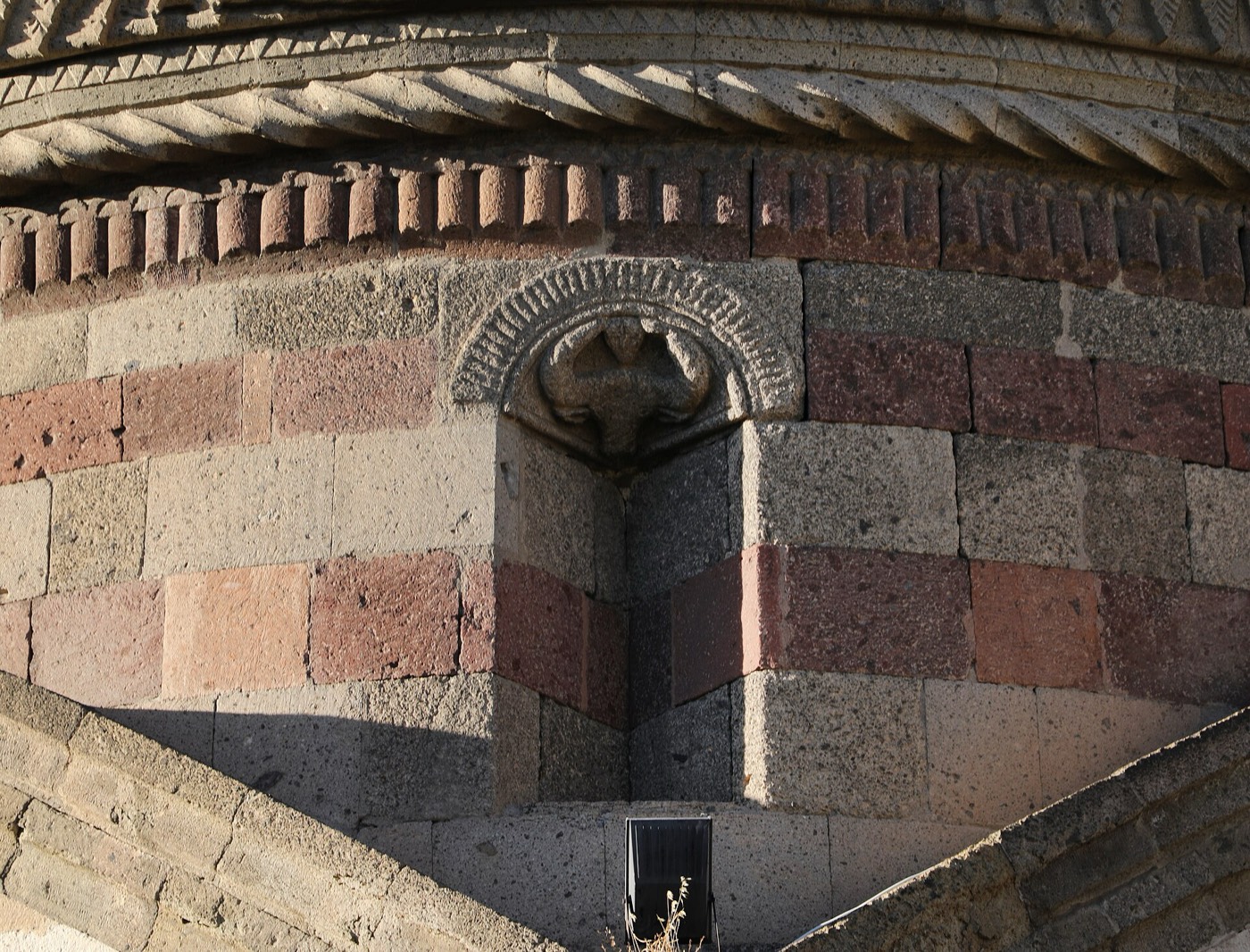
Eight niches of triangular section sit in the drum above the corners of the octagon, each with a different relief2,6. Going round from the right of the north door, TDV lists a pair of dragons with intertwined bodies, an animal that may be a bat, an eagle with spread wings, a long-eared animal that may be a hare, a bull's head with a human head between its horns, two plant motifs and a figure with an eagle's head and a human body6. Erzurum's directorate reads some of them differently, naming affronted griffins and dragons, a shell and stylised trees of life, and Kültür Portalı also mentions a snake1,2. A thick twisted moulding runs around the drum, followed by a scalloped border and a row of motifs resembling rams' heads at the foot of the cap2.
Interno
The kümbet is entered at ground level into an octagonal room lit by four pairs of slit windows set high in the walls, with no mihrab niche2. Shell-shaped niches fill the corners at the foot of the wide, high dome, and their insides are coloured red with root dye2,6. From inside, on the north side, five steps lead down through a small pointed doorway to the crypt, a windowless rectangular room under a barrel vault2,6. TDV records a sarcophagus in it, while Erzurum's directorate says it holds no grave or sarcophagus and notes that the crypts of the other Erzurum kümbets are entered from outside2,6.
Cosa osservare
- The bull's head with a human head between its horns, in one of the eight drum niches1,6.
- The low, dome-like stone cap above the drum, unlike the usual conical roofs2.
- Masonry in stones of alternating colours around the octagonal body1,2.
- The north door's tympanum with roundels of six-pointed stars2.
- The crypt reached from inside the tomb by five steps, an arrangement Erzurum's directorate calls unique2.
Visita
- The Üç Kümbetler stand behind the Çifte Minareli Medrese in the Yakutiye district of central Erzurum and can be reached on foot from Cumhuriyet Caddesi1,2.
- The Erzurum Archaeology Museum, completed in 2021, is at the same site3.
- The Emir Saltuk Kümbeti is the largest of the group; the owners of the others are unknown1,2.
Informazioni ufficiali: Republic of Türkiye Ministry of Culture and Tourism (Kültür Portalı) and the Erzurum Provincial Directorate of Culture and TourismIndicazioni stradaliApri in OpenStreetMapVisite guidate: Erzurum