Этот раздел ещё не переведён, поэтому он показан на английском языке.
История
Gazi Evrenos Bey led Ottoman frontier raiders (akıncı) in the conquest of the Balkans under Orhan, Murad I and Bayezid I, and his sons Ali Bey and İsa Bey succeeded him as raider commanders in Rumelia6. After 1384 he founded Yenice-i Vardar, “the new town near the Vardar”, today Giannitsa, on estates granted by Sultan Murad I, and made it an endowment administered by his descendants3. He died there in Shawwal 820 (November 1417) and was buried in a türbe; his grave inscription gives him the title “king of the ghazis and holy warriors”5,6. Members of his family were buried around him, and the place gradually took on the character of a shrine1,3.
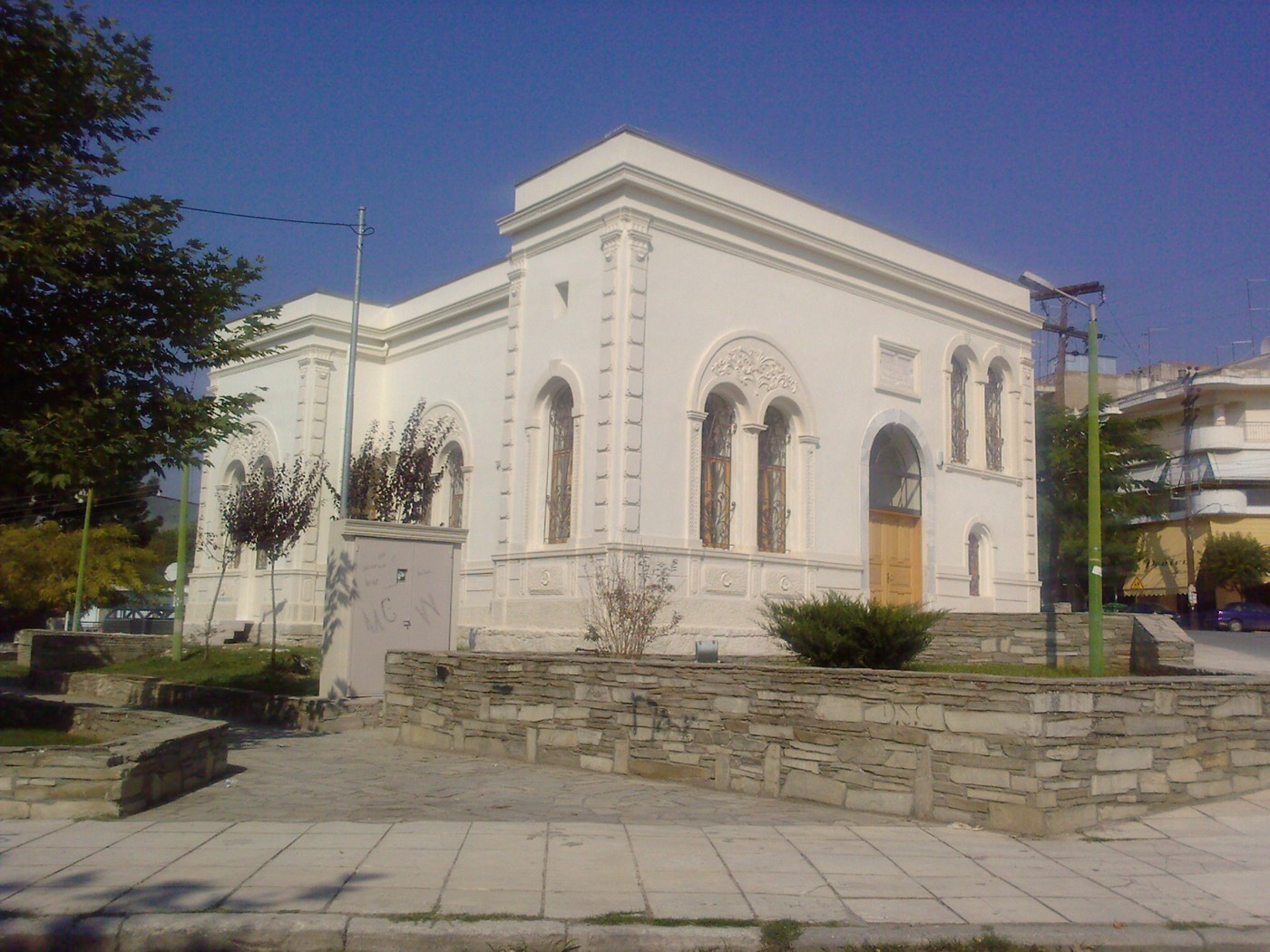
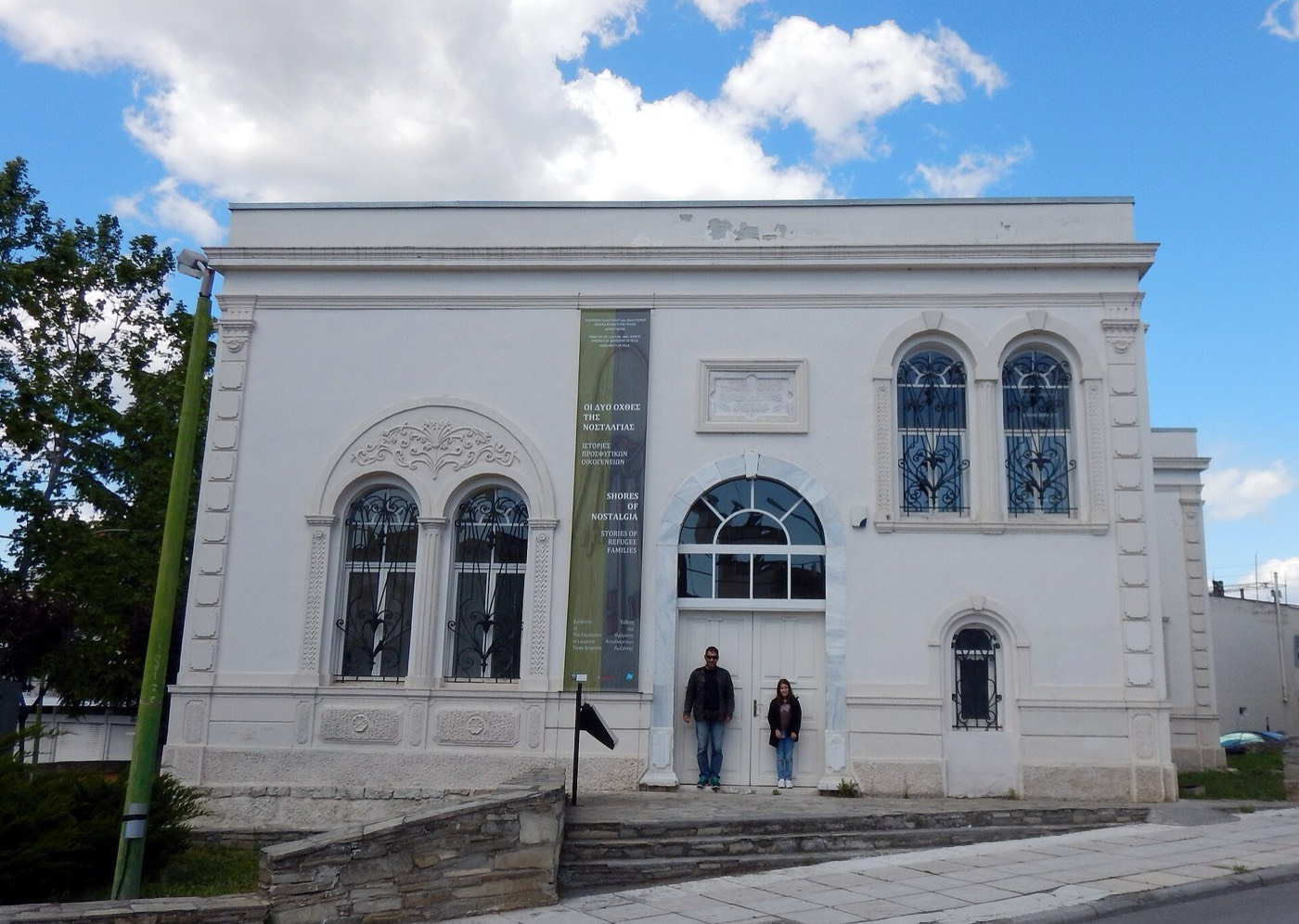
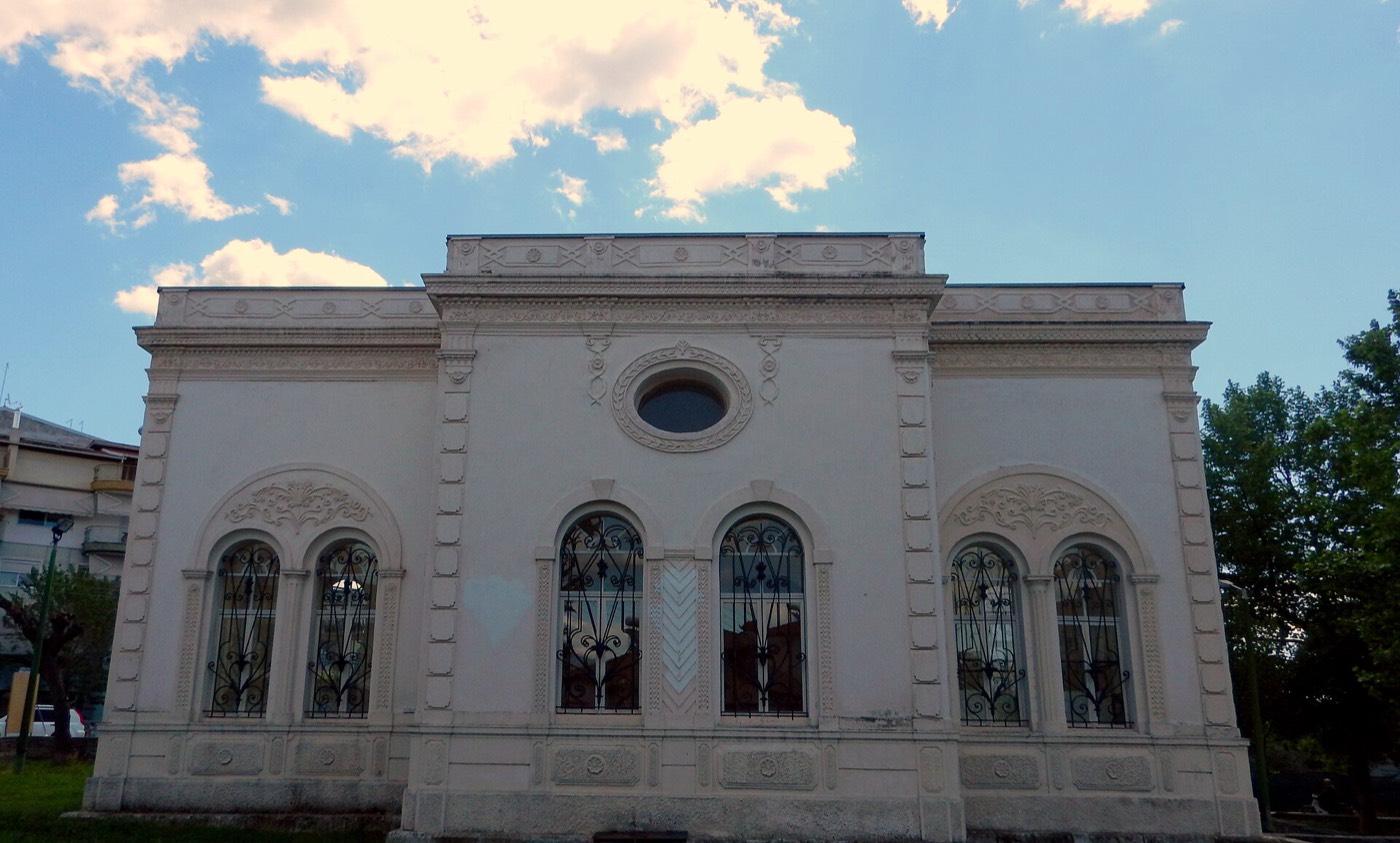
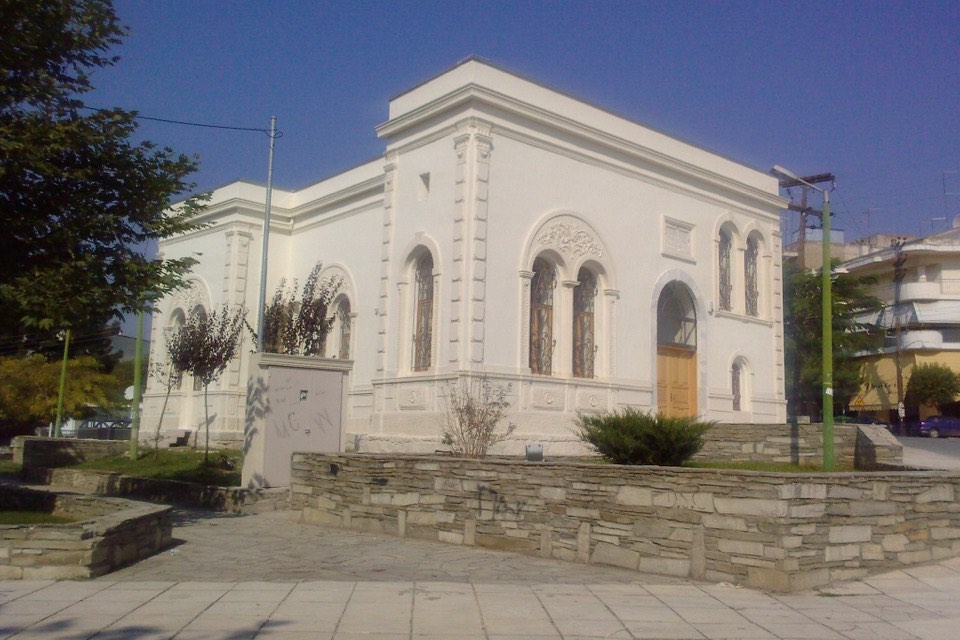
Evliya Çelebi, visiting in 1668, described a domed türbe lit by windows on every side, with Evrenos’s marble sarcophagus in a chamber three steps below the floor and a second marble cenotaph in the hall above; he said he had seen no türbe so splendid anywhere5. In 1885-1886 Mehmed Şefik Pasha, trustee of the Gazi Evrenos endowment, rebuilt the old türbe in a 19th-century European style; an inscription over the entrance records a further repair in 19107. The building was sold at auction in March 1937, and from 1942 to 1978 it housed a cotton-ginning works8. The municipality bought it in 1984 and ceded it to the Ministry of Culture for 99 years8.
Архитектура
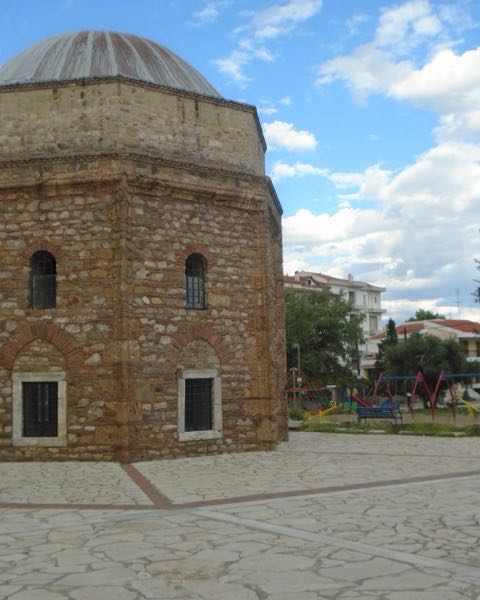
The Ministry describes the first türbe as an imposing single-room building on a square plan with a lead-covered dome, while Androudis and Triantafyllidou describe the 15th-century core as an almost square, open türbe resting on four square piers1,8. After the mid-17th century the core was extended to the south; with a mihrab and further rooms the building also served as a mosque, and it now has a T-shaped plan1,3. Its present form comes from the work of 1885-1886 and from the radical reconstruction of 1908-19103,7. Writing for TDV in 1996, Semavi Eyice described a square brick building without a dome, with large windows, and judged from the very plain decoration and lettering of the grave slab that it was made at a later date5.
The building was restored in the 2000s at the municipality’s initiative, in collaboration with the 11th Ephorate of Byzantine Antiquities8. An excavation in the north-west part found a male burial linked to the 15th-century core; the Ministry describes a cist grave at a lower level against the west wall, its walls painted with aniconic imitations of marble revetment1,8. Machiel Kiel, writing for TDV, dates the restoration to 2005-2006 and says that Evrenos’s grave was opened during the works and his bones taken to Thessaloniki7.
Интерьер
Today the mausoleum works as a museum, with small exhibitions on the Ottoman town in its entrance hall8. The marble inscribed slab from Evrenos’s grave is displayed inside; it gives the day of his death, Wednesday 17 November 14171. Below floor level, against the west wall, lies the excavated cist grave with its painted imitation marble1. Of the frescoes added in the 19th or early 20th century only a small part, imitating marble revetment on the lower walls, survives; the landscapes painted higher up, probably views of Giannitsa, are known from early photographs3.
На что обратить внимание
- The marble grave slab dating Evrenos’s death to Wednesday 17 November 14171.
- The cist grave found below floor level against the west wall, painted to imitate marble revetment1.
- The European-style building left by the 1885-1886 rebuilding and the 1908-1910 reconstruction3,7.
- The Gazi Evrenos baths nearby, a double hammam of the late 14th century3.
- The clock tower to the north, built in 1753-1754 by Şerif Ahmed Evrenosoğlu3.
Посещение
- The mausoleum stands in the centre of Giannitsa, at the junction of Strantzis, Tavoulari and Karaoli & Dimitriou streets2,3.
- It occasionally hosts temporary exhibitions3.
- The Gazi Evrenos baths lie just south-east of the mausoleum, and the clock tower to its north3.
Официальная информация: Ephorate of Antiquities of Pella (Εφορεία Αρχαιοτήτων Πέλλας), Hellenic Ministry of CultureКак добратьсяОткрыть в OpenStreetMapЭкскурсии с гидом: Яница