Esta parte ainda não foi traduzida, por isso aparece em inglês.
História
The Kasimov Khanate grew out of Muscovy’s defeat near Suzdal in 1445: Grand Prince Vasily II had to grant Kasim Khan, son of Ulugh Muhammad, a domain on the Oka, and the khanate and its capital, Kasimov, took his name5,6. Its khans, vassals of Moscow, came from the ruling houses of Kazan, Crimea, Siberia and other khanates6. Shah Ali, son of Sheikh Auliyar of the line of the khans of Astrakhan, ruled Kasimov several times between 1516 and 1567 and was three times khan of Kazan5,6. He took part in Ivan IV’s campaigns against Kazan in 1546-15522. In 1555, twelve years before his death, he had the tekie built as his tomb2,3.
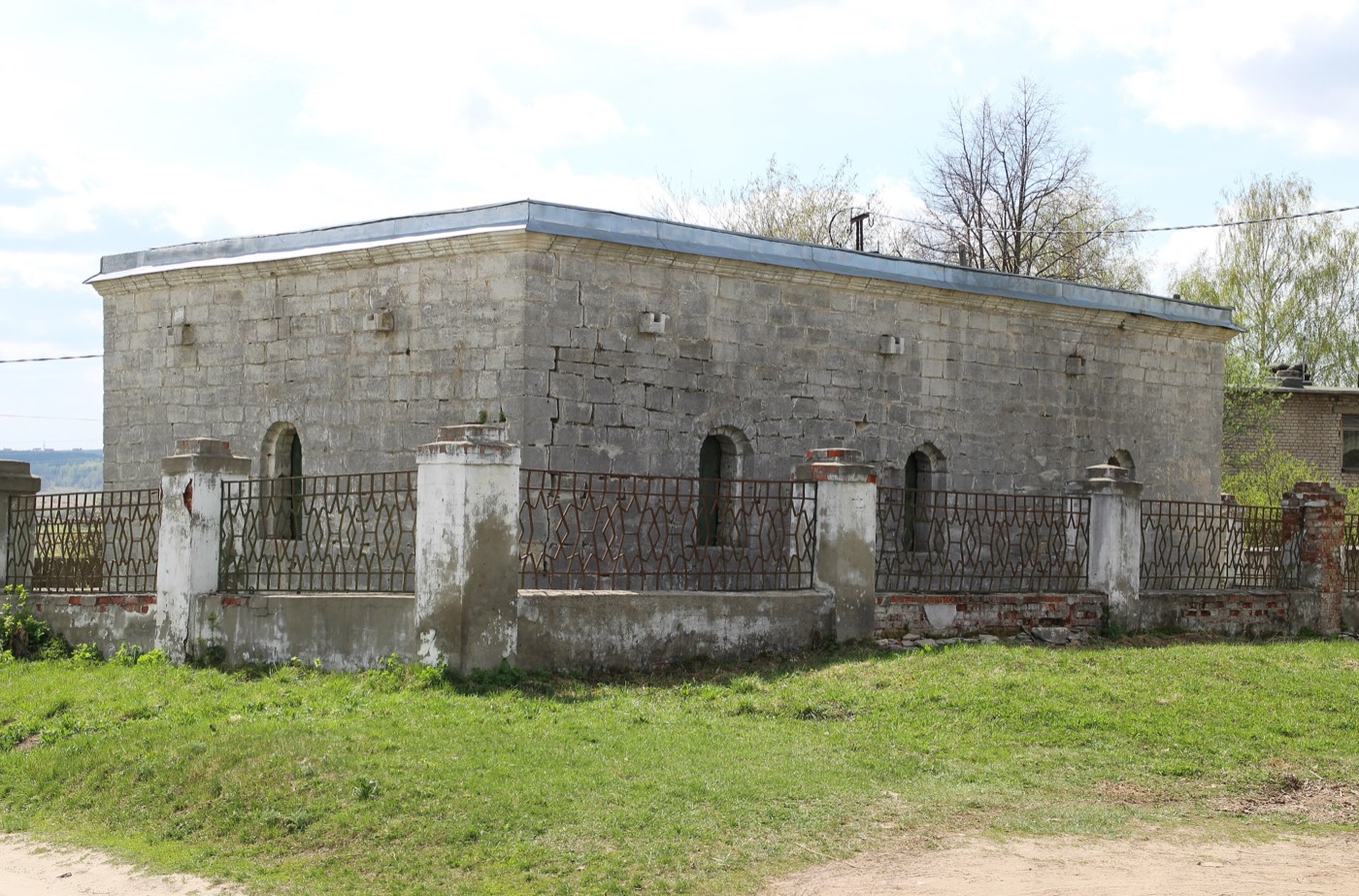
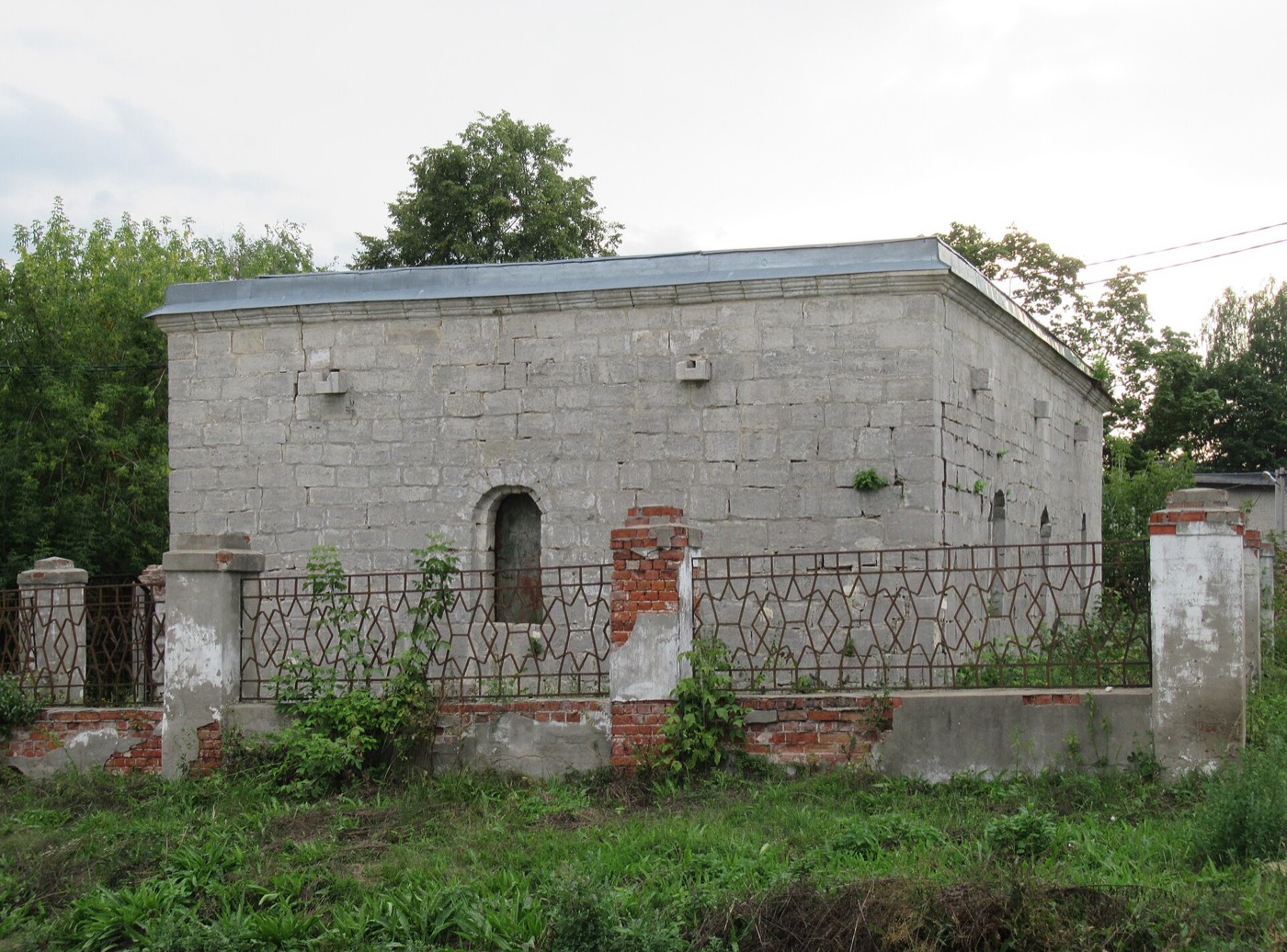
Shah Ali was buried here in 1567, as were his wife Bulyak-Shah and close relatives2. In 1768 the academician Pallas saw the dead in wooden coffins with metal corners on low wooden platforms, wrapped in silk shrouds4. The building was repaired in 1841-1845 under the Ryazan provincial architect N. I. Voronikhin, and again in 1887, when it received iron doors and shutters and an iron fence on a high brick base4. Protected by a decree of the Council of Ministers of the RSFSR of 30 August 1960, it is now a monument of federal significance1. Test pits dug in 2020 for a restoration programme found no layers older than the mid-16th century4.
Arquitetura
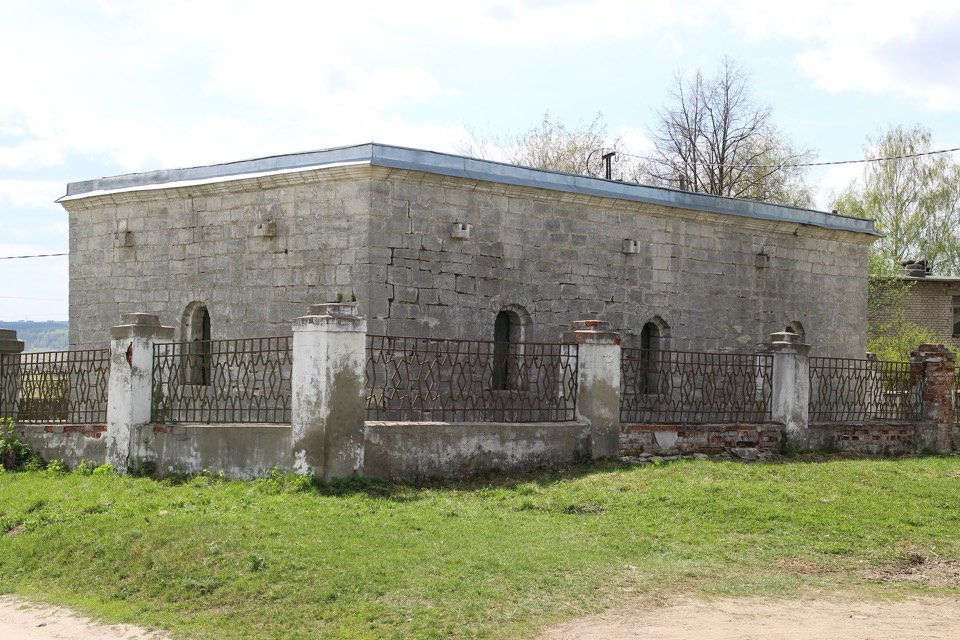
The tekie is a rectangular single-storey building of dressed white limestone, 13.5 by 8.5 m and about 5 m high, with a flat roof behind a parapet and stone spouts to drain the rain1,3,4. A very thick inner wall, about 2.13 m by Velyaminov-Zernov’s measurement, divides it into two unequal rooms1,2,4. The larger is the burial chamber, lit by four small arched windows; the smaller, about a third of the area, served for commemorative rites and the reading of the Quran and has its own door on the west side1,2,3. Each room is covered by a closed vault hidden behind the parapet; the original form of the roof is not known3. A narrow stone stair outside, to the right of the entrance, leads down to the crypt under the burial chamber, whose floor lies almost 4 m below ground3,4.
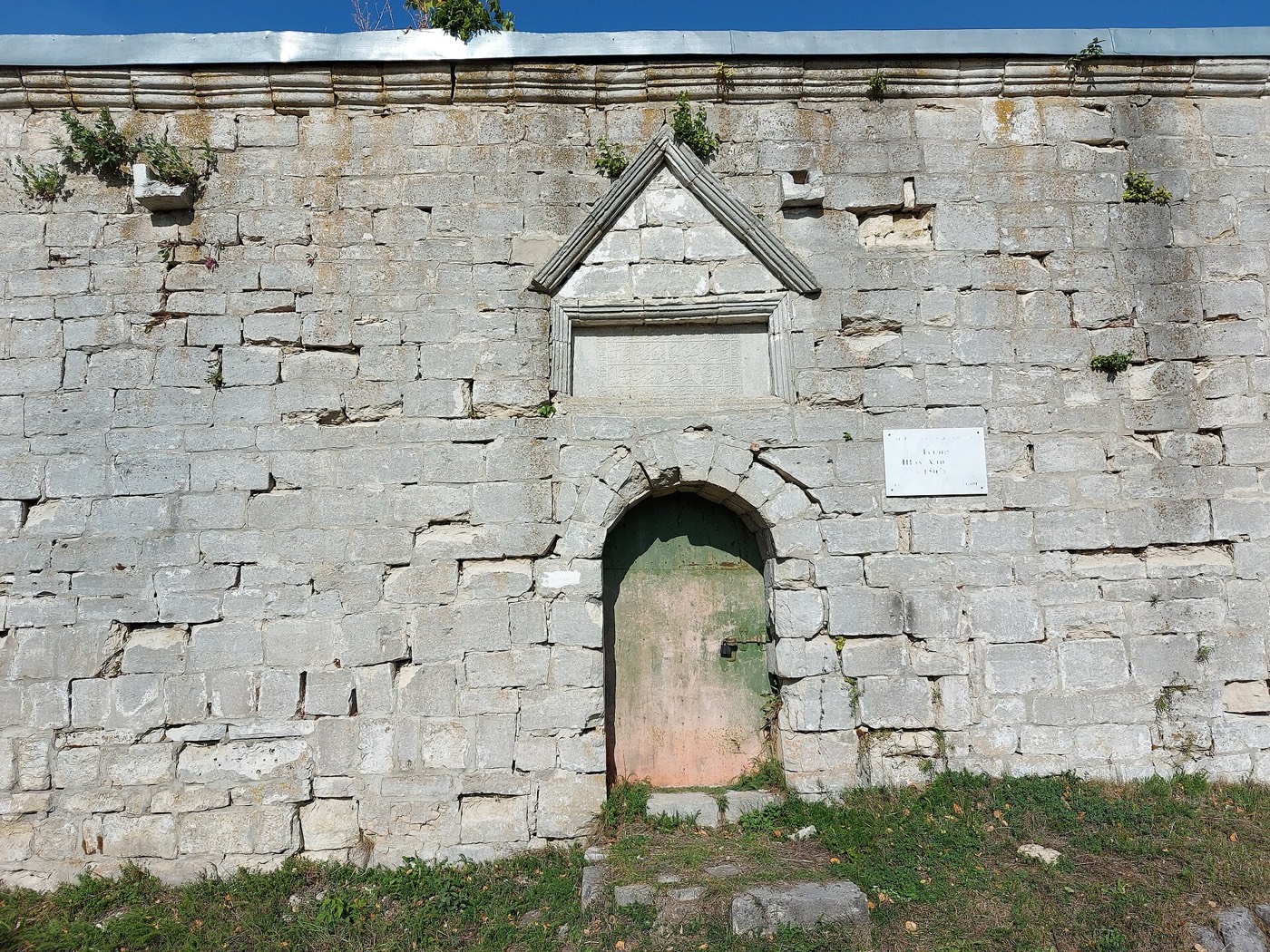
The only ornament is at the entrance: a white-stone slab in a profiled frame, carved in thuluth script, under a pointed two-pitched cornice1,2,3. Its central text names the builder and the date, and the band around it quotes the Throne Verse of the Quran (2:255)4. The Tatar Encyclopedia compares the plan and building technique with mausoleums at Bolgar and other Golden Horde sites, and calls the tekie the only almost entirely preserved Golden Horde mausoleum with several chambers3. The archaeologists F. A. Akhmetgalin and Sh. Sh. Amirov link its three parts, a room for commemoration, a room for the gravestones and a crypt for the dead, to Sufi traditions of the Golden Horde period4.
Interior
The burial chamber holds eight gravestones and low rectangular stone platforms (mastaba) that mark the burials in the crypt below4. Velyaminov-Zernov concluded from their inscriptions that Shah Ali, his wife Bulak-Shad and six relatives lie here, while Pallas in 1768 and A. V. Selivanov in 1886 found the remains of nine people4. The Tatar Encyclopedia likewise speaks of Shah Ali and eight members of his family3. The inscribed stones are badly damaged, more by people than by time, and among them lies the broken gravestone of Shah Ali4. The smaller room, meant for the reading of the Quran, was lit by one window and had an earthen floor3. In the crypt, where Pallas saw the coffins in 1768, no remains are visible today4.
O que observar
- The foundation slab of 1555 over the entrance, carved in thuluth script1,3.
- The pointed two-pitched cornice above the slab, the building’s only other ornament2.
- The broken gravestone of Shah Ali among the inscribed slabs of the burial chamber4.
- The outside stair down to the crypt, whose floor lies almost 4 m below ground3,4.
- Walls of dressed white limestone, left unplastered1,3.
Visita
- The tekie stands at Ploshchad Pobedy 9b in Kasimov, with its south-west front facing the Oka, inside a metal fence on a stone base1.
- The crypt is reached by a narrow stone stair outside, to the right of the entrance3,4.
- The Khan’s Mosque, also a federal monument, housed the town museum from 1939; in 2026 the museum’s website described its exhibitions there as closed8.
Informações oficiais: Kasimov Historical-Cultural Museum-Reserve (municipal), which presents the tekie among Kasimov’s heritage sites; protected as a monument of federal significance in the Russian state registerComo chegarAbrir no OpenStreetMapVisitas guiadas: Kasimov